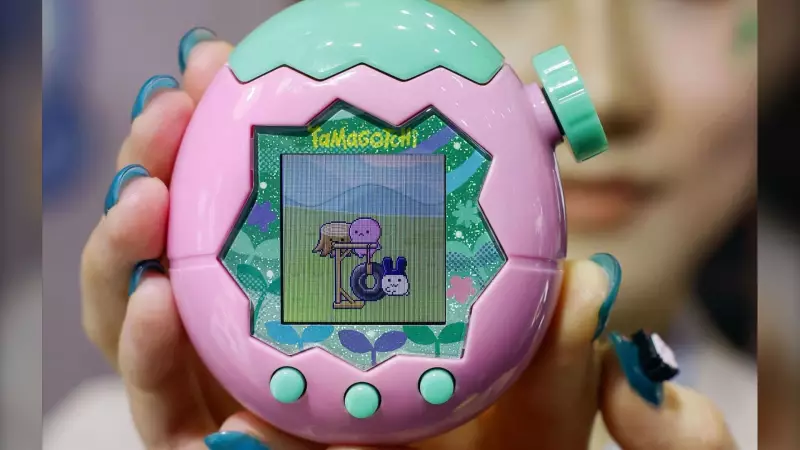
In an era dominated by sophisticated smartphones and immersive virtual reality, a simple digital toy from the 1990s is experiencing a remarkable and enduring revival. The Tamagotchi, a handheld virtual pet, continues to capture hearts and attention well into 2026, defying expectations of obsolescence. Its sustained popularity raises intriguing questions about nostalgia, simplicity in technology, and the timeless human desire for companionship.
From Tokyo to Toronto: A Digital Companion's Enduring Appeal
The evidence of this ongoing craze was on full display in August 2025 at the Tokyo Big Sight convention centre, where fans eagerly showcased the latest iteration, the Tamagotchi Paradise. This scene, captured by photographers, is not an isolated event but part of a broader, global trend. The core appeal remains unchanged: users care for a pixelated creature, feeding, cleaning up after, and playing with it to ensure its survival and happiness. This straightforward loop of nurturing responsibility, first introduced in the mid-90s, has proven to be a timeless formula.
Analysts point to several factors for its lasting relevance. In a digital landscape often criticized for being overwhelming and algorithm-driven, the Tamagotchi offers a contained, predictable, and low-stakes form of engagement. It provides a sense of accomplishment and attachment without the social pressure or infinite scroll of modern apps. Furthermore, for adults who owned the original devices, the new models evoke a powerful sense of nostalgia, serving as a tangible link to their childhoods.

More Than a Toy: A Cultural Artifact and Tech Antidote
The Tamagotchi's resurgence is also a commentary on contemporary technology consumption. As devices become more complex and integrated into every aspect of life, there is a growing appreciation for tech that is purpose-limited and fun. The Tamagotchi is a single-function device; it cannot send emails, track fitness, or bombard the user with notifications. This simplicity is increasingly viewed as a feature, not a flaw. It represents a digital detox of sorts—a conscious choice to engage with a less demanding form of technology.
Manufacturers have cleverly sustained interest by releasing new models with updated features, colours, and collaborations, like the Tamagotchi Paradise, while faithfully maintaining the original gameplay. This strategy attracts both collectors and new generations of users. The device has transcended its status as a mere toy to become a cultural artifact, symbolizing a specific moment in tech history while continuously adapting to the present.
What the Future Holds for Digital Nostalgia
The Tamagotchi's journey from 1990s fad to 2026 mainstay demonstrates that in technology, emotional connection often outweighs raw processing power. Its success has paved the way for the revival of other retro tech and games, proving there is a substantial market for products that blend nostalgia with modern convenience. As we move further into a complex digital future, the demand for simple, comforting, and familiar tech interfaces is likely to persist, if not grow.
Ultimately, the Tamagotchi's ongoing relevance is a testament to a fundamental human experience: the joy of care and companionship. It reminds us that sometimes, the most enduring technology isn't about connecting us to the world wide web, but about connecting us to a simple, pixelated friend that needs to be fed.