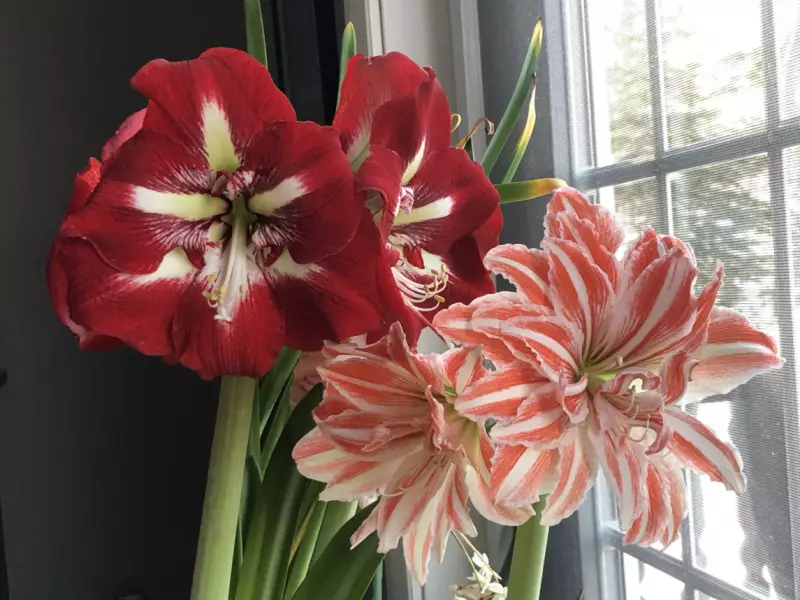
Gardeners across Canada are sharing stories of spectacular floral displays and seeking advice for winter plant care. In a recent gardening column, expert Helen Chesnat addressed a reader's amazement over an amaryllis bulb that produced an exceptional show.
Amaryllis Bulbs: A Display of Floral Abundance
Published on January 11, 2026, the column responded to a gardener who was astounded by a bulb that sent up two sturdy stems, each bearing five enormous blooms. Chesnat clarified that while such a performance is impressive, it is not entirely unusual.
"It is actually not unusual for an amaryllis bulb to produce two flower stems, especially from a newly purchased bulb," Chesnat explained. She noted that it is more common for each stem to carry four flowers, meaning the reader's bulb delivered a true bonus with its five blooms per stem.

The Dahlia Dilemma: To Dig or Not to Dig?
The column also tackled a common seasonal question for coastal gardeners: whether to dig up dahlia tubers for winter storage. A gardener in a new coastal plot had left tubers in the ground, believing it was unnecessary to dig them up in that milder climate, but later had doubts.
Chesnat's advice hinges on several local factors. She shared her personal method, stating, "Because my soil is light, sand-based, quick to drain of excess moisture and not loaded with tuber-munching soil insects, I leave dahlia tubers in the ground." For added protection during cold snaps, she covers the tuber locations with soil and a pile of leafy mulch.
Lessons from Experience and Plant Resilience
This strategy, however, is not foolproof. Chesnat recounted a recent experience where new dahlia tubers planted alongside older, established clumps were lost after a severe winter. The newer, less mature tubers froze, while the older, tougher varieties survived.
The decision ultimately depends on soil conditions, the specific dahlia variety, and the tuber's maturity. "My pink cactus dahlia clumps, long-standing in the garden, were very mature, tough, and more resistant to challenging conditions than the more newly planted tubers," she noted.
Chesnat concluded with an important maintenance tip: even the most resilient dahlia clumps should be lifted and divided every few years to remove damaged parts and rejuvenate the plant for continued vigorous growth and blooming.