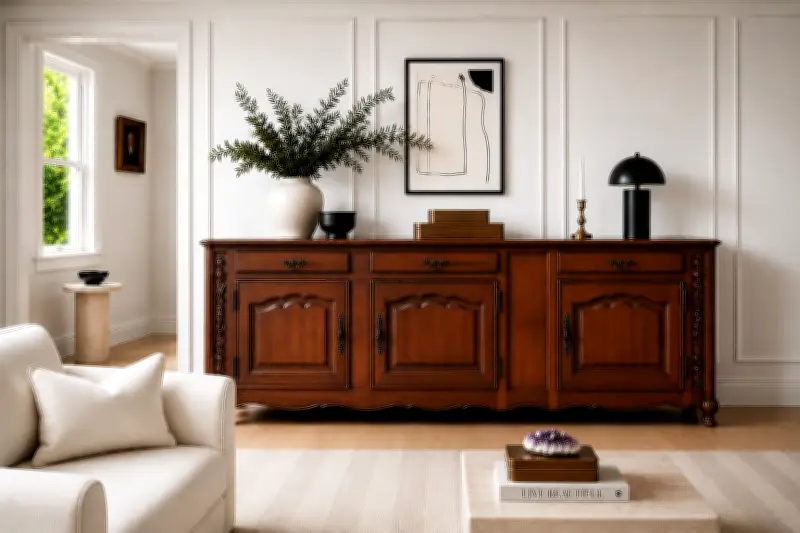
For much of the past two decades, interior design has been locked in a love affair with pale woods, minimalist lines, and shades of white, beige, and grey. Heavy mahogany sideboards, dark walnut dining tables, and richly stained oak cabinets—once the pride of family homes—have been pushed aside in favor of Scandinavian-inspired simplicity. However, tastes appear to be changing, with signs that brown furniture may be making a comeback.
The Shift in Design Trends
Part of the shift comes from design fatigue. Trends rarely disappear permanently; they cycle in and out as each generation reacts against tastes that came before. After years of pale interiors dominated by boucle chairs and bleached oak, specifiers are rediscovering the warmth and depth that darker wood furniture can suffuse. Brown furniture introduces richness and a sense of permanence that minimalist interiors can sometimes lack. A dark walnut chest or dining table can lend visual gravity, grounding rooms that might otherwise feel faddishly temporary.
Quality and Craftsmanship
As we travel, we see a growing appreciation for craftsmanship. Old-school brown furniture was typically built to high standards using solid hardwoods, hand-cut joinery, and techniques designed to transcend generations. In contrast, many contemporary furniture pieces are mass-produced from composite materials with a shorter lifespan. As consumers become more conscious of quality and sustainability, antique furniture looks suddenly appealing. A structurally sound century-old oak dresser offers a compelling alternative to disposable flat-pack that might not survive a single house move.

Economic Realities
Economic realities also contribute to the revival. Many high-quality antiques remain relatively affordable because younger buyers have largely ignored them for years. In many cases, a solid brown credenza costs way less than a newly manufactured particleboard imitation. The one featured today cost an astonishingly affordable $240 from a branch of Value Village in Cape Breton, and deals like this are commonplace province to province. But we are mindful that price points are rising, so bag those deals while you still can.
Social Media's Role
Social media has played an unexpected role as well. Platforms centered on interiors and lifestyle trends move quickly, and aesthetics once considered unfashionable can rapidly become desirable again. 'Dark academia,' heritage-inspired decorating, and maximalist interiors have all gained popularity, celebrating moody libraries, layered textures, vintage art, and deep wood tones. In these spaces, brown furniture no longer appears old-fashioned; it feels atmospheric and sophisticated.
Individuality in Home Décor
Another factor behind the resurgence is the changing attitude toward individuality in home décor. Pursuing the minimalist oeuvre, many interiors began to resemble one another, with carefully curated simplicity dominating style magazines and social feeds alike. Increasingly, homeowners aspire to arranging spaces that feel imbued with a little history. In turn, patina and subtle imperfections become part of the appeal rather than flaws to eliminate.
Mixing Old and New
Brown furniture also works surprisingly well when mixed with contemporary elements. The comeback is not about recreating fully traditional interiors with matching dining suites and formal parlors. It is about playing with contrast: a single dark wood cabinet or dining table can add perceived depth within an otherwise modern room. This blend of old and new feels eminently more relaxed than the heavily coordinated interiors of previous generations.
Sustainability Concerns
Sustainability concerns further strengthen interest in old-school brown pieces. The environmental cost of fast furniture is hard to ignore, with millions of cheaply made items ending up in landfills every year, while buying second hand reduces demand for new manufacture. Antique (or 'junktique'—our term for pieces with no provenance) furniture, which is often repairable rather than disposable, naturally aligns with responsible, sustainable living.

The Future of Brown Furniture
The return of brown furniture, however, does not mean every piece is suddenly fashionable. Some remain difficult to integrate into smaller modern homes, but the broader shift in taste is noticeable. Consumers and designers alike are becoming more open to depth, ornamentation, and warmth after years dominated by pale minimalism. In many ways, the revival reflects a larger cultural shift. People, as the world spins ever faster, crave a sense of permanence that resonates in uncertain times.
Once dismissed as passé, brown furniture has emerged as a defining aspect of the next design cycle—proof that in interiors, as in fashion, everything that goes around comes around. With little remaining out of style forever.