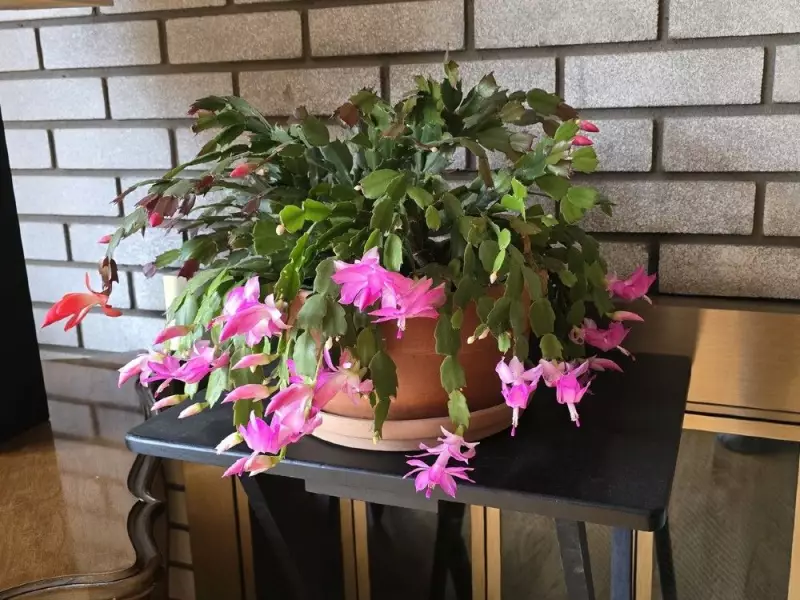
As a blanket of snow covers the landscape, many Canadians long for a burst of colour. The beloved holiday cactus offers a vibrant solution, bringing mid-winter cheer indoors with its spectacular blooms.
Three Types of Holiday Cacti for Your Home
Contrary to their desert-dwelling cousins, holiday cacti are native to the shady, humid coastal mountains and subtropical rainforests of south-eastern Brazil. They are thornless and come in three primary varieties, each named for its typical flowering period in the northern hemisphere.
The Christmas cactus (Schlumbergera russelliana) features stem segments with rounded, symmetrical teeth. Its flowers produce distinctive pink pollen, and this plant generally flowers later in December.

The Thanksgiving cactus (Schlumbergera truncata), also known as the crab or claw cactus, has stem segments with pointed teeth. The pollen from its flowers is yellow, and it typically blooms between the Canadian and American Thanksgiving holidays.
The Easter cactus, a hybrid called Rhipsalidopsis gaertneri, boasts daisy-like flowers in many colours and blooms in late spring. With maturity, it develops into a branching, pendant shrub with a woody base. If pollinated, it can produce a dull red, oblong fruit.
What Triggers These Colourful Blooms?
The spectacular display of holiday cacti is not random; it is a precise response to environmental cues. These plants are short-day plants, meaning bud formation requires specific conditions.
To set buds, they need approximately six weeks with 14 to 16 hours of uninterrupted darkness each day, combined with cooler temperatures ideally between 10°C and 20°C. This mimics the natural light and temperature shifts of autumn.
How to Successfully Force Blooms Indoors
Gardeners can replicate these conditions artificially to encourage flowering. Placing the plant in a consistently dark room or covering it with a dark cloth or box at night can provide the required darkness. Ensuring the plant experiences cooler temperatures during these dark periods is also crucial for bud formation.
A critical tip for success: once buds are fully formed, avoid moving the plant. Environmental shock at this stage can cause bud burst, where the plant drops its buds before they have a chance to open.
By understanding the unique needs of the Christmas, Thanksgiving, and Easter cacti, Canadian gardeners can enjoy a reliable and dazzling display of colour during the darkest and coldest months of the year.