As funny as it sounds, hair is a great communicator: It can signal health problems and even tell us when we’re not eating enough. But our hair needs us to know a few things, too, like healthier ways to dry it and common hair myths. Examples include the belief that more suds means a better shampoo, that cutting your hair makes it grow faster, and that huge color transformations can happen in hours.
There’s one mistake many of us make with our hair, and it’s causing problems. That mistake is using shampoo and conditioner in the “wrong” places. A hairstylist, trichologist and dermatologist explain more below, but in short, think of the first letter of each word: “S” for “shampoo” on the “scalp,” and “C” for “conditioner” on the “cuticle.” For why that is — and how ignoring that advice can harm your hair — read on.
Where To Use (And Not Use) Shampoo
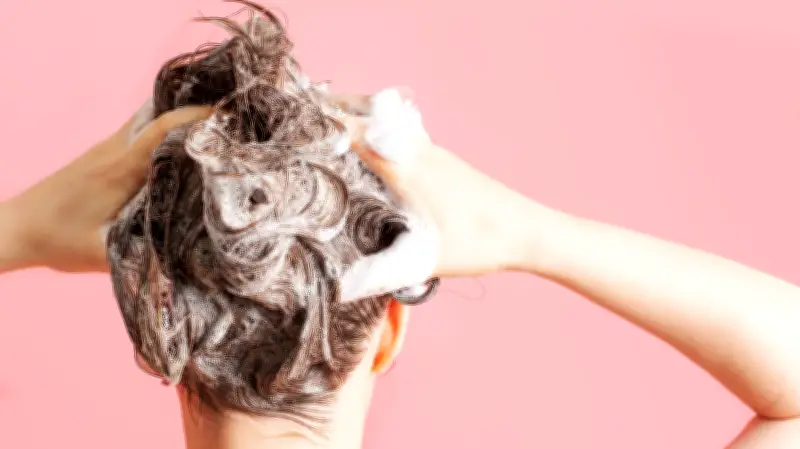
It sounds obvious, but stick with us here: Shampoo is supposed to go where hair grows from, and that’s to clean it from the root.

“Most shampoos are designed to clean the scalp, particularly allowing for the removal of oil and debris around the hair follicle, and hopefully managing a healthy scalp microbiome,” said William Gaunitz, certified trichologist and founder of Advanced Trichology.
Putting shampoo on the ends of your hair is a no-no. Shampoo is important not only because it’s a cleanser but also because it keeps the hair happy and functioning as it should. “A healthy scalp equals healthy hair and hair growth,” added Nikki Corzine, a hairstylist and the owner of Canyon Salon in Westlake Village, California.
Putting shampoo on the ends of your hair, however, is a no-no — especially if your hair is longer, naturally dry, fine or frizzy. “By avoiding the application in those situations, it may prove to provide a healthier lipid layer at the end of the hair, creating more shine and manageability,” Gaunitz explained.
Otherwise, Corzine continued, you’re risking breakage at the ends, given they’re the driest and oldest part of the hair. Plus, the shampoo will get on the ends when you rinse, so you don’t have to put it there.
Where To Use (And Not Use) Conditioner
Conditioner has a different purpose, and therefore goes on a different part of your hair: the cuticle, aka the outer layer of the hair shaft (i.e., not the scalp).
“Conditioner is designed to coat and protect the hair fiber,” said Dr. Dawn Queen, a board-certified dermatologist and hair loss specialist at Park Avenue Dermatology in New York City. “Its job is to smooth the cuticle so that your hair feels softer and looks glossier.”
Gaunitz suggested thinking of it like scales on a fish. “After shampooing, oftentimes the drying nature of shampoo or the pH can cause those scales to be more upright like a porcupine, and conditioner rehydrates the formations of the exterior of the hair and provides hydration, forming a nice, smooth layer on the outside of the hair to make hair more manageable and hydrated, forcing the scales to lie back down,” he explained.
Applying conditioner in other places, such as the scalp, can also create unwanted buildup. “Our scalps create their own oil, which also naturally conditions that hair,” Corzine said. “Adding conditioner to the scalp can just make your hair look more greasy and clog the hair follicles.”
That’s not all, either: It can contribute to additional (and more serious) hair and skin concerns. “This environment can promote overgrowth of the yeast Malassezia, which contributes to dandruff and scalp irritation,” Queen said. “Scalp acne and folliculitis can also be a problem in prone individuals.”
Dandruff can also contribute to hair loss indirectly. Basically, it’s caused by Malassezia. That yeast creates an irritated and inflamed environment, which weakens hair follicles and causes shedding. Plus, scratching the dandruff doesn’t help, and dandruff can be a symptom of health conditions that contribute to hair loss. To keep it simple, though, focus on putting conditioner from the mid-length of your hair to the ends.

Can This Hair Care Mistake Contribute To Hair Loss Or Hair Thinning?
As mentioned, hair loss and thinning are concerns for many people, and they can come into play here. First, let’s be clear that hair loss and hair thinning are two different things, and neither necessarily means you’re about to lose all your hair.
“Hair in the shower is not necessarily balding,” Corzine said. “Thin hair does not mean shedding, and most importantly, balding is not something that happens suddenly.” In fact, hair shedding is a part of the growth phase, and thinning is when hair shrinks over time, which is a pattern of hair loss. “The density looks lower, but the follicles are still alive,” she explained. “Balding is when the follicles are no longer producing hair.”
Queen explained the difference between hair loss and hair thinning like this: “Hair loss is shedding from the root and includes temporary conditions like telogen effluvium and chronic conditions like androgenetic alopecia,” Queen said. “Thinning, on the other hand, refers to a decrease in hair shaft or caliber. … Thinning can also refer to breakage along the hair shaft.” In short, hair loss comes from the root, and hair thinning affects density.
Can misusing shampoo and conditioner contribute to hair loss or thinning? Yes — but indirectly.
“Incorrect use can indirectly contribute to scalp buildup or inflammation, which can worsen shedding in susceptible individuals,” Queen said. “Over-aggressive shampooing can also strip the hair of natural oils, leading to dryness, fragility and breakage.”
Also, for what it’s worth, this would take time. “It would take many years of ongoing improper use for negatives to occur,” Gaunitz said. “It’s also typical that internal factors play a larger role than external ones for hair thinning and hair loss.” Those internal factors are the aforementioned health conditions, such as dermatitis, increased stress, hormone fluctuations, vitamin deficiencies and more.
The matter of appearance also arises here. While you might not experience hair thinning or hair loss in reality, it may look that way. “Conditioner, when used on the scalp, can also weigh down the hair, which may create the appearance of decreased hair volume,” Queen said. But again, if that’s too much information to keep up with, just remember what Corzine always tells her clients: “Shampoo the scalp and condition the ends.”