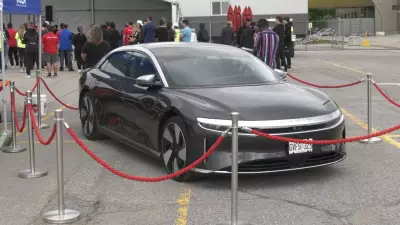
F1: The Movie Drives Car Films Back into Oscar Spotlight with Four Nominations
As an automotive enthusiast, I am absolutely thrilled to witness the remarkable achievement of F1: The Movie securing nominations in four prestigious Oscar categories: Best Picture, Visual Effects, Sound, and Film Editing. This high-octane film features Brad Pitt in the role of Sonny Hayes, a former Formula One prodigy from the 1990s who is desperately seeking redemption and a return to glory. In many ways, this nomination represents a significant comeback for automobile-centric cinema on the grand stage of Hollywood. We have not seen a film so prominently focused on cars receive a Best Picture nomination since the acclaimed Ford v Ferrari back in 2019.
Why Cars and Movies Are a Perfect Match Through History
It is truly a shame that car movies have been underrepresented because automobiles and motion pictures inherently belong together. Both of these transformative technologies fundamentally altered how humanity experiences speed, time, and distance. Remarkably, both came of age during the same pivotal historical era. In 1895, the pioneering Lumière brothers held the world's very first public film screening at the Grand Cafe in Paris. Just a decade earlier, in 1885, Karl Benz introduced the revolutionary Benz Patent-Motorwagen, recognized as the world's first practical automobile. By the roaring 1920s, both the cinematic experience and the automobile had become mass-market phenomena, deeply embedded in modern culture.
The Eternal Debate: What Is the Greatest Car Movie Ever Made?
This historical synergy inevitably leads to the eternal and hotly debated question: What is the single greatest car movie of all time? For me, the answer is simple and definitive: Il Sorpasso. This iconic 1962 Italian road movie, masterfully directed by the comedic virtuoso Dino Risi, stands unparalleled. For those residing in the Toronto area, there is a fantastic opportunity to experience this cinematic gem on the big screen. On February 21, the Toronto Film Society will present Il Sorpasso at the historic Paradise Theatre. My plan, as an ardent fan, is obviously to be there in the audience.

Before I passionately argue my case for Il Sorpasso, it is important to acknowledge that lists ranking the best car movies inevitably summon maelstroms of venom and outrage from devoted fans. Take, for instance, the controversial list published by Vulture titled The 40 Greatest Car Movies Ever Made. First published in 2017 and periodically updated, this list crowns Taxi Driver as the greatest, followed by Mad Max: Fury Road and Ferrari. Conspicuously absent is Steve McQueen's 1968 masterpiece Bullitt, which featured his legendary Highland Green 1968 Ford Mustang GT fastback and some of the most electrifying driving sequences ever captured on film. While Taxi Driver is undeniably a masterpiece, it is a car movie in only the most tangential sense, similar to how Titanic is a movie about boats. Mad Max: Fury Road, in my view, should not rank among the top 400 car movies. As for Ferrari, it was and remains a rather tedious cinematic experience.
Il Sorpasso: A Masterpiece of Comedy, Satire, and Automotive Soul
Il Sorpasso is a car movie that brilliantly succeeds on multiple levels: as a hilarious buddy comedy, a searing social satire, and a profound character study. The film's title derives from the Italian verb sorpassare, meaning to overtake or pass with an automobile, but it carries broader connotations of besting others or leaving someone behind. When released in North America, it was retitled The Easy Life to capitalize on the earlier success of La Dolce Vita.

The film stars the magnetic Vittorio Gassman as Bruno Cortona, a wayward and boastful lothario brimming with braggadocio, who drives a beat-up 1958 Lancia Aurelia B24 convertible. During the August 15 Ferragosto holiday, a desperate Bruno, seeking a telephone, encounters the bookish and reserved law student Roberto Mariani, played by Jean-Louis Trintignant. Bruno persuades Roberto, who neither drinks nor smokes, to join him for a cocktail. This simple invitation spirals into an unforgettable two-day road trip up the historic Via Aurelia from Rome toward the luxurious holiday villas of Tuscany.
As noted by esteemed film critic Phillip Lopate, Il Sorpasso powerfully testifies to the Italian love affair with the car, during the boom years, as a way to satisfy restless nervous energy and provide the illusion of getting ahead.
The Car as Character and Catalyst
The film is powered by utterly magnetic performances. Gassman portrays Bruno's rapacious appetite for women, food, and sensation as a fragile cover for a deep, uneasy spiritual dread. Meanwhile, the iconic Lancia Aurelia B24 convertible itself becomes Roberto's protective cocoon and a symbol of liberation. I could spend my whole life here, Roberto muses. Or at least two hours.
In fact, the Lancia is the film's other starring character. Bruno and Roberto spend nearly half the movie driving. Bruno drives exactly as he lives: recklessly, scornfully, and with impulsive abandon. They constantly push forward, racing toward the next fleeting sensation, never lingering long enough for any genuine, deep feeling to take root.
I like nothing more than driving, Bruno declares. It relaxes me. I'll go anywhere, as long as I'm driving. The automobile acts as the crucial catalyst that helps the introverted Roberto emerge from his shell. He confesses to Bruno, I've spent the two best days of my life with you. Both characters become infatuated, in their separate ways, with the powerful illusion that driving creates: the seductive belief that by speeding forward, by relentlessly pursuing and overtaking what lies ahead, we can somehow stop time itself. Ultimately, the film delivers a poignant revelation: no matter how fast you drive, there are certain immutable forces in life that you can never truly overtake.