U.S. Measles Elimination Status in Jeopardy After 25 Years
The United States is confronting a critical public health challenge as it fights to retain its hard-earned measles elimination status, a designation held for a quarter-century. This struggle comes amid widespread measles outbreaks across the nation and a troubling rise in vaccine skepticism propagated by influential figures within the current administration.
The Grim Milestone and Official Denial
Public health experts indicate that the U.S. reached a sobering threshold on Tuesday, marking one full year of continuous measles transmission—the precise criterion for revoking a country's elimination status. This anniversary coincides exactly with the second-term inauguration of former President Donald Trump, whose administration has appointed prominent anti-vaccine advocates to key public health roles.
Despite this epidemiological reality, the Trump administration is contesting the potential loss of status. Officials argue that multiple distinct outbreaks occurring simultaneously do not constitute a single, continuous chain of transmission. Health and Human Services Deputy Secretary Jim O'Neill asserted on social media in December that no epidemiological evidence links the outbreaks in Texas, Arizona, Utah, and Spartanburg, South Carolina. An HHS spokesperson reinforced this position, stating that based on current data, the United States has not met the threshold for losing its elimination standing.

International Scrutiny and Expert Doubts
The Pan-American Health Organization (PAHO), a regional office of the World Health Organization, has summoned both the U.S. and Mexico—which is also experiencing a significant outbreak—to a crucial meeting in April. During this gathering, both governments will present reports and data, after which PAHO will determine whether to rescind the U.S. elimination status.
However, leading public health specialists express profound skepticism that American officials can successfully demonstrate the outbreaks are unrelated. "I think it will be hard to demonstrate," said Bill Moss, a public health professor and executive director of the International Vaccine Access Center at Johns Hopkins University. "I don't think it'll be successful because there's been a lot of virus transmission across North America." Notably, Canada lost its own measles elimination status in November 2023, underscoring the regional nature of the threat.
The Resurgent Threat of Measles
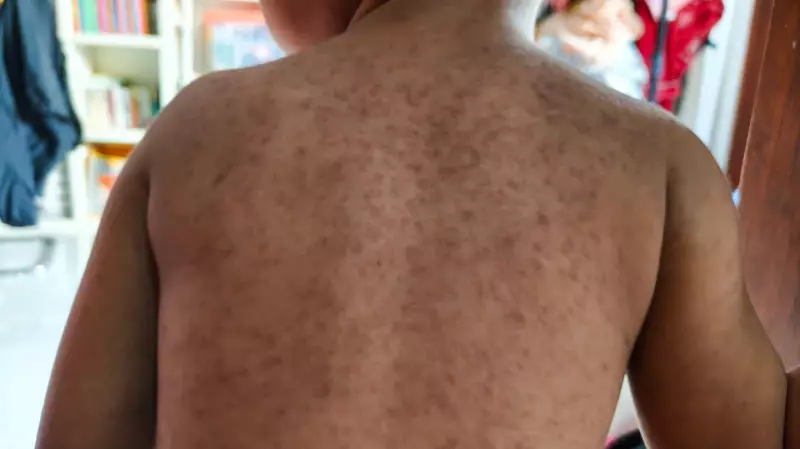
Measles, a highly contagious viral disease characterized by severe rash and high fever, can lead to fatal complications, especially in children. There is no specific cure, making the measles, mumps, and rubella (MMR) vaccine—developed in 1963—the paramount defense. Prior to widespread MMR vaccination, measles claimed an estimated 2 million lives globally each year.
The current U.S. outbreak, which originated in Texas, has infected over 2,000 individuals across nearly every state in the past twelve months. Tragically, two unvaccinated children in Texas and one unvaccinated adult in New Mexico have died. South Carolina has recorded more than 600 cases, with numbers continuing to climb. The overwhelming majority of those infected are unvaccinated children or individuals with unknown vaccination histories.
While losing elimination status would not directly alter daily life for most Americans, Professor Moss emphasized the symbolic blow: "It's an embarrassment after having achieved and maintained elimination for 25 years."
Leadership Fueling the Crisis
Compounding the epidemiological crisis is the leadership of Health and Human Services Secretary Robert F. Kennedy Jr., a former prominent source of vaccine misinformation. Before his appointment, Kennedy founded and led the Children's Health Defense, an anti-vaccine organization known for promoting debunked science. He also campaigned against measles vaccination in Samoa in 2019; a subsequent outbreak there killed 83 people, mostly children under five.

Kennedy has repeatedly made false claims linking vaccines to autism and labeled the COVID-19 vaccine the "deadliest" ever created. Although he insisted during his Senate confirmation hearing that he is not anti-vaccine, his actions suggest otherwise. Early in the measles outbreak, HHS under his direction emphasized unproven treatments and offered only muted endorsement of the MMR vaccine. Kennedy further framed measles vaccination as a "personal choice" rather than a vital public health tool in a Fox News op-ed and promoted unproven remedies like high-dose vitamin A, which reportedly caused kidney damage in some children.
Eroding Trust and Institutional Chaos
The decline in childhood vaccination rates over the past decade stems from eroding trust in public health institutions and the politicization of school vaccine mandates—a trend accelerated by Republican figures and anti-vaccine influencers like Kennedy. "This has been a problem long in the making," Moss observed.
Kennedy's tenure has sown chaos within the agencies tasked with disease control. After firing CDC Director Susan Monarez, who alleged her termination resulted from refusing to endorse anti-vaccine policies, five senior CDC officials resigned for similar reasons. Kennedy also replaced members of the Advisory Committee on Immunization Practices—which sets federal vaccine guidelines—with handpicked anti-vaccine advocates.
Rather than championing immunization campaigns to curb transmission, Kennedy has focused on revising childhood vaccine recommendations. Earlier this month, HHS unveiled a streamlined schedule, reducing recommended childhood vaccines from 18 to 11. While the MMR vaccine remains listed, experts fear this change will foster further confusion and skepticism.
A Dim Outlook for Reversal
The current approach marks a stark departure from the robust, science-based vaccination campaigns needed to reverse the spike in measles cases. With trust in public health authorities critically damaged, the prospect of a effective federal response appears bleak. "We don't have a great shot of reversing this trend if we don't have a trusted public health authority," warned Rachael Piltch-Loeb, an assistant professor at CUNY Graduate School of Public Health and Health Policy.
Reflecting on the administration's track record, Professor Moss offered a grim assessment: "I don't have high hopes given all that we've seen come out of this administration, particularly at HHS." As measles continues to spread, the nation's public health infrastructure faces one of its most severe tests in decades.