United States Formally Withdraws from World Health Organization, Citing Pandemic Management Failures
The United States has officially departed from the World Health Organization (WHO) as of Thursday, following a year of warnings that such a move would severely impact public health both domestically and internationally. The decision, announced by the U.S. government, directly points to perceived failures in the UN health agency's handling of the COVID-19 pandemic as the primary justification.
A Presidential Directive Executed
President Donald Trump initiated the withdrawal process on the very first day of his presidency in 2025 through an executive order. According to a joint press release from the U.S. Departments of Health and State, the nation will now engage with the WHO only in a very limited capacity to facilitate the departure. A senior government health official explicitly stated, "We have no plans to participate as an observer, and we have no plans of rejoining." The U.S. strategy moving forward involves pursuing disease surveillance and other critical public health priorities through direct bilateral partnerships with other countries, rather than operating via an international organization.
Financial Dispute and Legal Contention
The exit is mired in a significant financial dispute. Under U.S. law, the nation was required to provide a one-year notice and settle all outstanding fees—approximately $260 million—prior to withdrawal. However, a U.S. State Department official contested this interpretation, arguing the statute does not explicitly mandate payment before departure. A State Department spokesperson emphasized, "The American people have paid more than enough," in a communication issued earlier on Thursday.

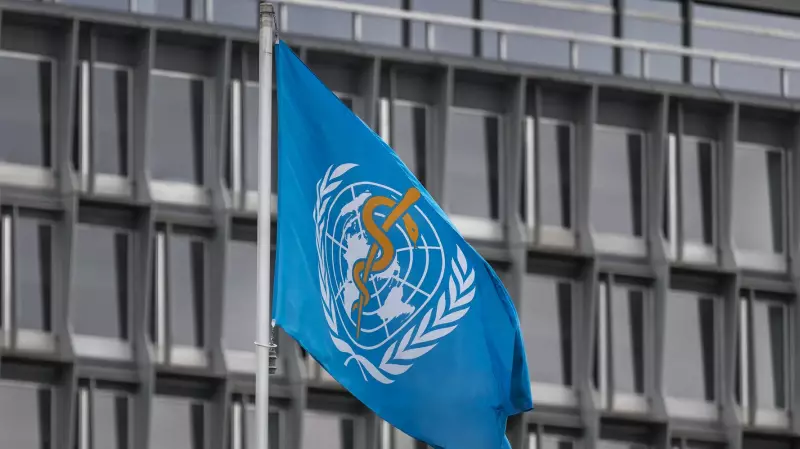
Concurrently, the Department of Health and Human Services (HHS) confirmed the cessation of all U.S. funding contributions to the WHO. An HHS spokesperson explained that President Trump exercised his authority to halt the future transfer of any U.S. government resources to the agency, asserting that the organization had cost the United States trillions of dollars. Witnesses reported that the U.S. flag was removed from outside the WHO headquarters in Geneva on Thursday, symbolizing the formal severance.
Immediate Repercussions and a Hollowed-Out WHO
The departure has instantly precipitated a profound financial crisis for the World Health Organization. As Washington has historically been its largest financial backer—contributing roughly 18% of the agency's total budget—the WHO has been forced to implement drastic cuts. These measures include reducing its management team by half, scaling back operational work, slashing budgets across the board, and planning to shed about a quarter of its staff by mid-year.
The WHO confirmed that the United States has not yet paid its assessed fees for 2024 and 2025. The organization's executive board is scheduled to discuss the U.S. departure and its ramifications during a meeting in February. While the WHO stated it has collaborated and shared information with the U.S. over the past year, the future of this working relationship remains uncertain.
Expert Condemnation and Global Health Risks
Global health experts and observers have universally condemned the move, warning of severe risks. Lawrence Gostin, founding director of the O'Neill Institute for Global Health Law at Georgetown University, labeled the withdrawal "a clear violation of U.S. law," though he conceded that President Trump is "highly likely to get away with it."
Kelly Henning, public health program lead at Bloomberg Philanthropies, articulated the broader danger: "The U.S. withdrawal from WHO could weaken the systems and collaborations the world relies on to detect, prevent, and respond to health threats." This sentiment underscores fears that the action undermines international pandemic preparedness and response frameworks.

No Short-Term Return in Sight
Despite urgent appeals for reconsideration from global health leaders, including WHO Director-General Tedros Adhanom Ghebreyesus, a swift reversal appears improbable. Bill Gates, chair of the Gates Foundation—a major funder of global health initiatives and some WHO programs—commented at the World Economic Forum in Davos that he does not expect the U.S. to rethink its decision in the near term. However, Gates affirmed he would continue advocating for the U.S. to rejoin, stating, "The world needs the World Health Organization."
This withdrawal occurs within a broader context of the U.S. distancing itself from various United Nations bodies. Some analysts express concern that initiatives like President Trump's recently launched Board of Peace could further challenge the UN's overall structure and efficacy. While some critics of the WHO have proposed establishing a new agency to replace it, a proposal reviewed by the Trump administration last year alternatively suggested pushing for internal reforms and asserting American leadership within the existing organization.