Radon Crisis in Canadian Social Housing: 21% of Units Show Dangerous Levels
New investigative data has uncovered a significant public health threat within Canada's social housing system, revealing that 21% of subsidized housing units contain dangerously high levels of carcinogenic radon gas. The true scope of this threat remains largely unknown, as no legislation currently compels public housing authorities to conduct radon testing, leaving tens of thousands of vulnerable residents at risk.
Silent Danger in Subsidized Housing
Eleanor Hubley Manor, a modest one-storey apartment building near Halifax that serves as part of Nova Scotia's subsidized housing network, exemplifies this widespread issue. Provincial testing data spanning nearly a decade has documented the persistent presence of radon gas in this residence, with some units registering levels more than three times above Health Canada's safety guideline of 200 becquerels per cubic metre (Bq/m³).
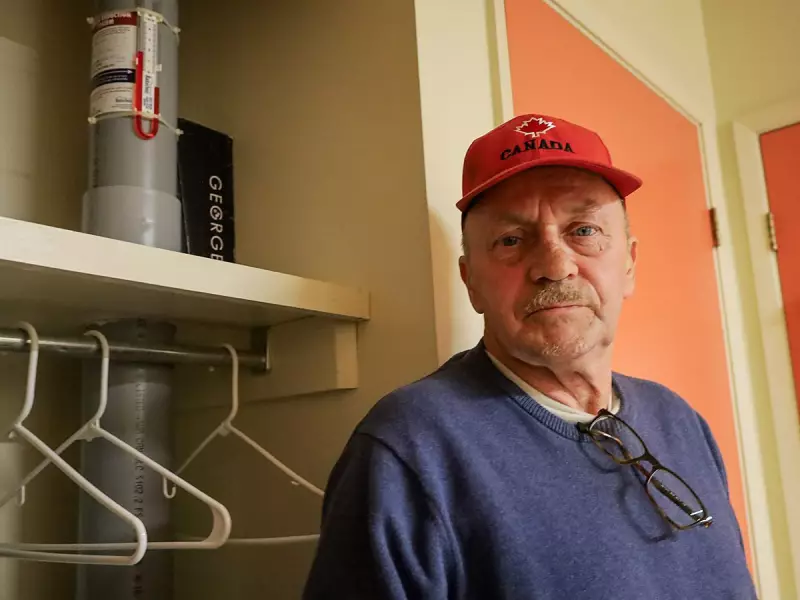
Tenants like Michael Murphy, who resides in the building, report they were never informed about the elevated radon levels that have persisted through multiple testing cycles in 2008, 2013, and 2017. "(Lung cancer) will sneak up on you," Murphy warned. "They should be leaving papers or notes or something to tell the people."

National Scope of the Problem
According to more than 20,000 test results obtained by the Investigative Journalism Bureau and cross-referenced with census and housing data, as many as 45,000 social housing residents across Canada have likely been exposed to radon levels exceeding Health Canada's safety guideline. Many have lived with this exposure for years without any knowledge of the health risks they face daily.
The danger extends beyond social housing. Research led by Canadian radon expert Aaron Goodarzi at the University of Calgary indicates that approximately 18% of all residential properties nationwide have radon levels at or above the current national safety guideline. An additional 24% of homes fall between the World Health Organization's stricter guideline of 100 Bq/m³ and Canada's less stringent standard.
Understanding the Radon Threat
Radon represents an invisible, odourless, and radioactive gas that naturally emanates from soil and becomes trapped within buildings, particularly in basements and lower levels. This silent intruder has earned the distinction of being the leading cause of lung cancer among non-smokers in Canada, responsible for an estimated 3,200 lung-cancer deaths annually according to Health Canada statistics.
What makes this situation particularly alarming is that there are no "radon-free" areas of the country, as Goodarzi's research has confirmed. The gas can accumulate in any building regardless of location, though certain geological conditions and building characteristics can increase concentrations.
Regulatory Gaps and Public Health Implications
The absence of mandatory testing requirements for social housing operators creates a significant regulatory gap that disproportionately affects vulnerable populations. Residents of subsidized housing often have limited housing options due to health conditions, financial constraints, or other circumstances, making them particularly susceptible to prolonged exposure when radon problems exist in their homes.
This investigative revelation highlights a critical public health oversight in housing policy. While radon testing and mitigation technologies exist and have proven effective, the lack of legislative requirements means that many social housing providers do not routinely test their properties, leaving residents unaware of potential health hazards in their living spaces.
The data suggests that Canada faces a substantial but largely unaddressed environmental health challenge that requires immediate attention from policymakers, public health officials, and housing authorities to protect vulnerable citizens from preventable lung cancer risks.