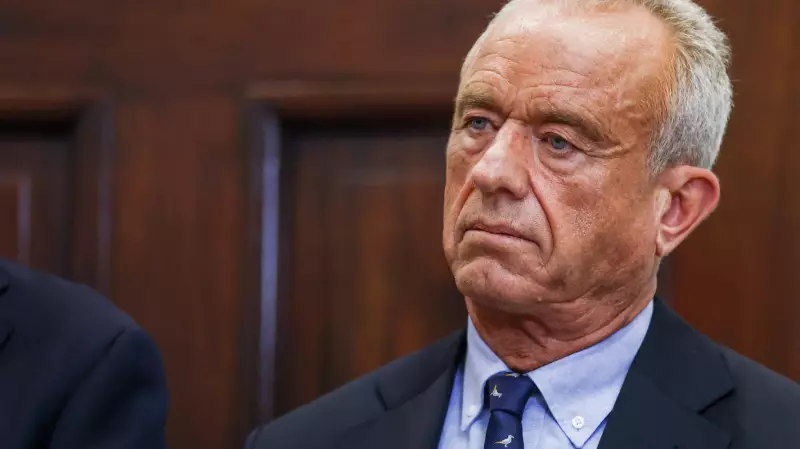
Health and Human Services Secretary Robert F. Kennedy Jr. is reportedly planning significant changes to U.S. childhood vaccine recommendations, a move that comes as the country grapples with its worst measles outbreak in three decades.
Policy Shift Amid a Growing Crisis
According to reports from the Washington Post and The New York Times, Kennedy, a well-known vaccine skeptic, seeks to align the American immunization schedule with that of Denmark. This would involve stopping recommendations for most childhood vaccines. However, Danish public health officials have cautioned that the two nations cannot be directly compared due to differing health needs and Denmark's system of universal health care. It remains unclear exactly which vaccines might be affected.
This proposed review unfolds against a backdrop of surging measles cases. Measles, declared eradicated in the U.S. in 2000, has returned with force. The Centers for Disease Control and Prevention (CDC) reports 1,958 confirmed cases this year, marking the largest outbreak since 1991. South Carolina is experiencing a significant uptick, with 144 cases reported as of last Friday, primarily among unvaccinated school children. Another 224 people are in quarantine due to exposure, and four are in isolation.

Deaths and Declining Vaccination Rates
The outbreak has turned deadly. Two unvaccinated children in Texas and one unvaccinated adult in New Mexico have died from the disease. Public health experts consistently state that vaccination is the most effective protection against measles, a potentially fatal illness causing rash and fever.
However, vaccination rates are falling. Nationally, 92.5% of kindergarteners were vaccinated against measles, mumps, and rubella (MMR) during the 2024-2025 school year, below the 95% threshold needed to slow transmission. The spread of anti-vaccine rhetoric in recent years has paralleled the rise in cases.
Historically, the federal government has played a crucial role in ending epidemics through public campaigns and funding. During a major outbreak from 1989 to 1991, which infected 55,000 and killed over 100, the CDC launched a publicity push for vaccination, leading Congress to create the Vaccine for Children program in 1993. Similarly, during a 2015 outbreak, then-CDC director Dr. Thomas Frieden publicly urged vaccination. Currently, the CDC is tracking cases but has not launched a broad public effort to encourage immunization.
Kennedy's History and the Current Response
Kennedy has a long record of vaccine skepticism. He chaired the anti-vaccine group Children's Health Defense from 2015 to 2023 and campaigned against the measles vaccine in Samoa in 2019, prior to a major outbreak there. When asked if HHS would make public statements about the South Carolina situation, press secretary Emily G. Hilliard stated, "Secretary Kennedy has been very clear that vaccination is the most effective way to prevent measles." She added that the CDC is not currently concerned the outbreak will rival the large, now-declared-over outbreak in Texas.
Kennedy's approach has previously raised concerns. During the Texas outbreak in January, he suggested unproven treatments like vitamin A, which left some patients with liver damage, alongside recommending vaccination for the infected. In September, he fired CDC director Susan Monarez, who alleged it was because she refused to sign off on an unscientific vaccine policy. Furthermore, the Advisory Committee on Immunization Practices, now populated with vaccine skeptics, recently voted to stop recommending the hepatitis B vaccine for all newborns, a decision experts warn could increase infection rates in children.
This promotion of alternative remedies and policy shifts from the highest levels of government symbolizes a significant challenge to established public health doctrine during a dangerous national outbreak.