International experts have concluded that a widespread famine across the Gaza Strip has been prevented, but they warn that the Palestinian population continues to endure severe starvation and a deepening humanitarian crisis. The assessment, reported in December 2025, highlights the fragile and dire conditions in the region.
A Fragile Avoidance of Widespread Famine
The Associated Press reported on December 19, 2025, that while the most catastrophic scenario of a full-scale famine has been averted, the situation on the ground remains critical. The distinction between famine and extreme food insecurity is significant in humanitarian terms, but it offers little solace to families struggling to find their next meal. Aid efforts have managed to stave off the official declaration of famine, yet they have not been sufficient to eliminate the threat of starvation for countless individuals.
Daily Struggles for Survival
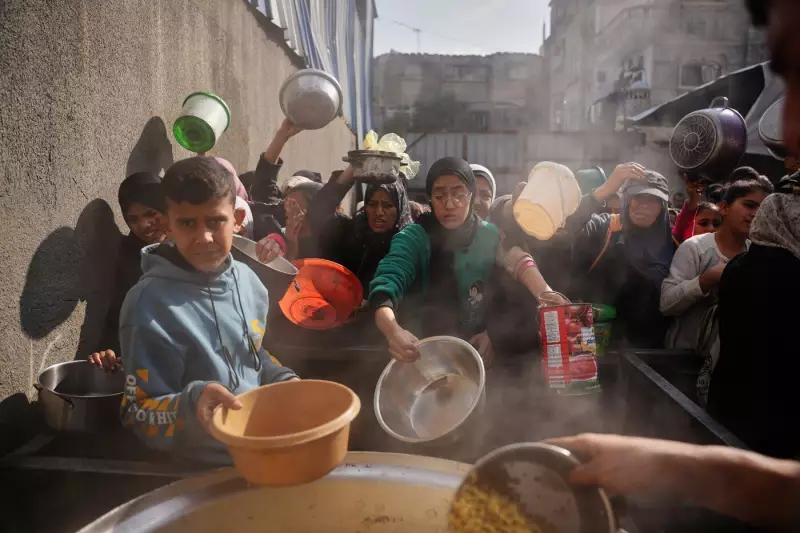
The reality for Palestinians in Gaza is one of daily desperation. A file photo from Wednesday, December 17, 2025, depicted Palestinian women in a frantic struggle to receive donated food at a community kitchen in Nuseirat, located in the central Gaza Strip. The image, captured by AP photographer Abdel Kareem Hana, serves as a stark visual testament to the ongoing struggle for basic sustenance. Long lines, distribution challenges, and sheer scarcity define the daily quest for survival, underscoring the gap between averting a statistical famine and meeting human needs.

Experts analyzing the situation point to a complex web of factors sustaining the crisis. These include persistent disruptions to aid corridors, logistical hurdles within the territory, and the overarching impact of the ongoing conflict. The delivery of food, water, and medical supplies remains inconsistent and inadequate for the scale of need.
The Human Cost of Continued Food Insecurity
The technical avoidance of famine does not equate to safety or health for Gaza's residents. Malnutrition, particularly among children and the most vulnerable, is rampant and has long-term consequences. The lack of nutritious food weakens immune systems, exacerbates existing health conditions, and stunts physical and cognitive development. The crisis extends beyond hunger to encompass a collapse in living standards, with clean water and sanitation also being major concerns.
Humanitarian organizations continue to sound the alarm, stating that the current level of aid is a stopgap measure, not a solution. They emphasize that without a significant and sustained increase in the flow of goods, along with greater security for aid workers and recipients, the specter of famine could quickly return. The situation remains highly volatile, and the progress made in preventing a formal famine is considered tenuous at best.
In conclusion, while experts acknowledge that the most extreme classification of famine has been avoided in Gaza as of late 2025, this represents a grim and partial success. The Palestinian population remains trapped in a severe starvation crisis, with their survival dependent on unreliable aid. The international community's focus is urged to remain on achieving not just the technical prevention of famine, but the complete alleviation of hunger and the restoration of dignified living conditions.