Canadian public health officials have identified an additional 26 individuals who were on a flight with a confirmed case of hantavirus, but these contacts are considered at low or minimal risk due to their seating arrangement, federal authorities announced on Thursday.
Current Status of Contacts
As of Thursday, nine people in Canada are classified as high-risk contacts and have been instructed to self-isolate. Seven others in Ontario, deemed low-risk, are also isolating after exposure to high-risk individuals. The 26 newly identified travelers were assessed by European health authorities as having no risk, but Canada is taking a precautionary stance.
“In Canada, we are taking a precautionary approach, and we have deemed them to minimal or low risk as opposed to no risk,” said Dr. Joss Reimer, Canada’s Chief Public Health Officer.

Precautionary Measures
Provinces and territories are contacting the 26 individuals to inform them of their potential exposure and to monitor for symptoms. However, Reimer noted that self-isolation is not required for this group. “We do not have any evidence that shows that the virus can spread from asymptomatic people. There is no reason for us to be concerned about contacts of contacts at this time,” she explained.
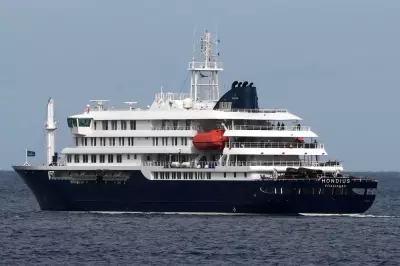
The outbreak is linked to the MV Hondius cruise ship, where a passenger died after contracting the Andes strain of hantavirus. The individual’s spouse, who had been on the same ship, traveled from Saint Helena to Johannesburg to Amsterdam, showing symptoms during the flight and later dying in a South African hospital.
Broader Outbreak Context
While the situation remains under investigation, the risk to the general Canadian population is low. “Further spread of the virus within Canada is not expected,” Reimer stated. However, she emphasized the severity of the virus warrants a cautious approach.
Federal officials have implemented temporary measures to prevent passengers and crew from the affected ship from boarding flights to Canada. As of Wednesday, there have been 11 reported cases, including three deaths, with eight lab-confirmed for the Andes virus, two probable, and one inconclusive pending further testing.
“At the moment, there is no sign that we are seeing the start of a larger outbreak,” said Dr. Tedros Adhanom Ghebreyesus, Director-General of the World Health Organization. “But of course, the situation could change.”
Understanding Hantavirus
Hantaviruses are primarily carried by rodents and can cause severe respiratory illness in humans, known as hantavirus pulmonary syndrome. Symptoms can appear up to six weeks after exposure, and the disease has a high case fatality rate of 20 to 40 percent. The incubation period can be as long as 45 days, necessitating extended monitoring of potential contacts.