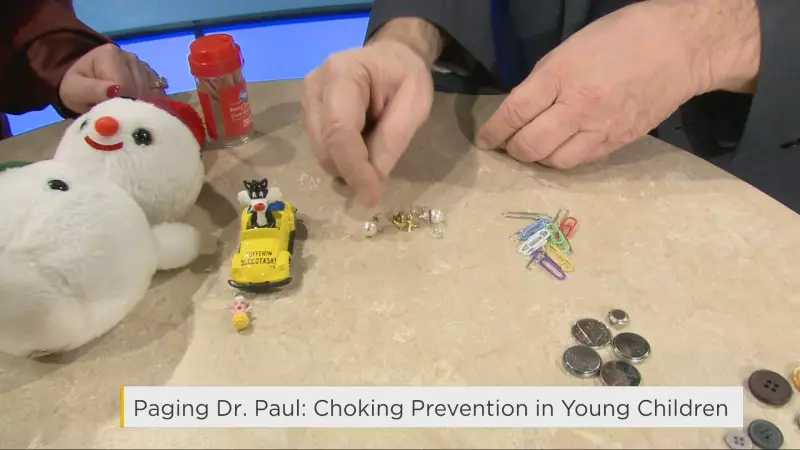
An Ottawa-based medical expert is issuing an important reminder to parents and caregivers about the ever-present danger of choking for young children. With the holiday season in full swing, a time when new toys and festive foods can increase risks, the advice comes at a critical moment.
Understanding the Risks and Common Hazards
Choking remains a leading cause of injury and death for young children, particularly those under the age of five. Their natural curiosity and tendency to explore the world with their mouths, combined with small airways and underdeveloped chewing and swallowing reflexes, create a perfect storm for potential accidents. Dr. Paul Beauchemin emphasizes that awareness is the first and most powerful line of defense.
Common household items pose significant threats. These include, but are not limited to:

- Food items: Whole grapes, hot dogs, nuts, popcorn, hard candy, and chunks of meat or cheese.
- Small objects: Toy parts, button batteries, coins, marbles, and pen caps.
- Latex balloons: Uninflated or broken pieces are a severe choking hazard.
Proactive Prevention Strategies from an Expert
Dr. Beauchemin outlines several key strategies that can drastically reduce the risk of a choking incident. Active supervision is non-negotiable; children should always be within sight and reach during meals and playtime. When it comes to food, caregivers should modify its form to make it safer.
"Food should be cut into small, pea-sized pieces for young children," advises Beauchemin. "Round, firm foods like grapes and cherry tomatoes must be quartered lengthwise. Encourage children to sit quietly while eating, not running, walking, or lying down."
Regular safety sweeps of the home are also crucial. Get down to a child's eye level to spot potential dangers on the floor and under furniture. Furthermore, every caregiver should be trained in infant and child CPR and choking first aid, as knowing how to react in an emergency is as vital as prevention.
Creating a Safer Environment for Exploration
Beyond immediate supervision, making long-term changes to the child's environment builds a foundation of safety. This involves carefully checking the age recommendations on toys and ensuring they are appropriate and in good repair, without small, detachable parts. A small-parts tester tube can be a useful tool—if an object fits inside, it is not safe for young children.
Dr. Beauchemin's guidance, shared in Ottawa, serves as a critical public health message for families across Canada. By combining vigilant supervision, proper food preparation, a hazard-free environment, and emergency preparedness, parents and guardians can create a safer space for their little ones to grow and thrive, significantly mitigating the terrifying risk of choking.