Piers Morgan Condemns NHS Proposal to Eliminate Gendered Titles
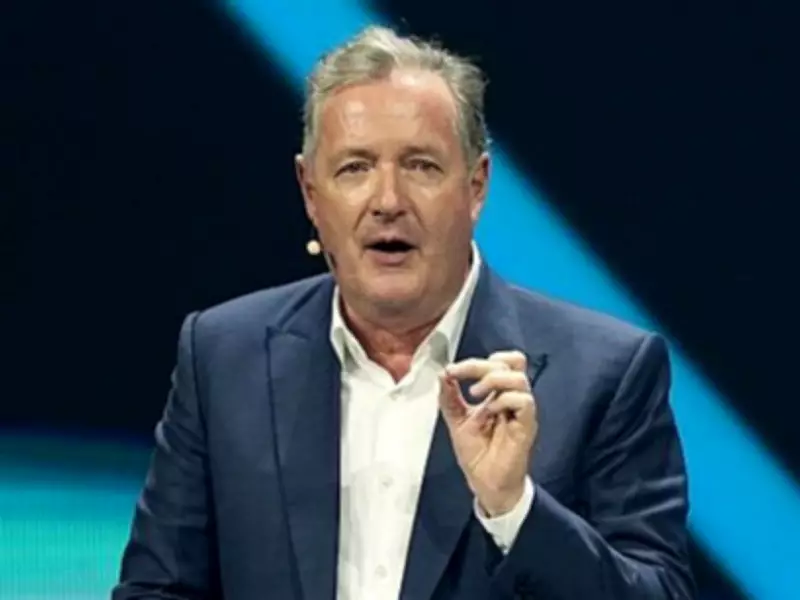
Controversial British media personality Piers Morgan has launched a scathing critique against new training guidelines from the United Kingdom's National Health Service (NHS) that suggest avoiding traditional gendered honorifics such as "sir" and "madam." The recommendation, aimed at fostering greater inclusivity for transgender and non-binary individuals, has ignited a fiery public discourse about language, respect, and minority rights.
Morgan's Blunt Rejection on Social Media
On January 30, 2026, Morgan took to the social media platform X to share an article from The Times headlined "Drop 'sir' and 'madam' to avoid offending trans parents, NHS told." In his characteristically direct manner, he expressed immediate frustration with the proposal.
"Oh f*ck off. Enough of this nonsense," Morgan began in his post. He continued with a rhetorical question: "I'll be offended if I don't get called 'Sir' – what about MY rights?" While acknowledging trans people's right to existence and equality, Morgan argued that linguistic overhauls should not be mandated for a small segment of the population. "I respect trans people's right to exist and to fairness/equality – but we can't rewrite all gender specific language to cater for a tiny minority," he stated.

Public Reaction and Support for Morgan's Stance
The response to Morgan's comments was swift and polarized, though many online commenters echoed his sentiments. Some mocked his insistence on the title "Sir," but a significant portion of respondents agreed with his perspective.
- One individual labeled the NHS guidance as "utter woke nonsense," while another described it as "ridiculous and insane."
- A commenter defended the traditional terms, stating: "Sir and Madam are classic words of respect and polite forms of address in English! If you don't like it, then move to another country."
- Another person questioned the influence of a minority, asking: "So when did less than 1% get to tell the rest of us what we can and cannot do?"
- One observer called the NHS recommendation "bizarre" and suggested it would be impractical to enforce.
Details of the NHS Training Materials
The controversy stems from training materials used by the Birmingham and Solihull Mental Health NHS Trust. According to The Times, these guidelines advocate for the use of neutral language to promote inclusivity, particularly when staff are unfamiliar with a service user's gender identity.
The materials explicitly advise against using gendered language for individuals not known to staff. Instead, they recommend:
- Using neutral pronouns like "they/them" when uncertainty exists about someone's pronouns.
- Avoiding assumptions based on vocal characteristics, noting that "It is inappropriate to refer to someone as 'sir' because they have a deep voice."
- Referring to people by their names to circumvent gendered terms entirely.
Critics, including Morgan, argue that this approach results in "robotic, impersonal language" that may feel uncaring to all patients, despite being framed as inclusive.
Broader Context and Ongoing Debates
This incident is not isolated but part of a larger, ongoing conversation about gender identity, language evolution, and institutional policies in healthcare and beyond. Similar debates have surfaced globally, with public figures and organizations grappling with how to balance tradition with progressive inclusivity measures.
Morgan's outspoken criticism highlights the tension between preserving conventional forms of address and adapting to more diverse societal norms. As discussions continue, the NHS's recommendations serve as a focal point for examining how public institutions can navigate these complex issues while maintaining respect and effectiveness in communication.