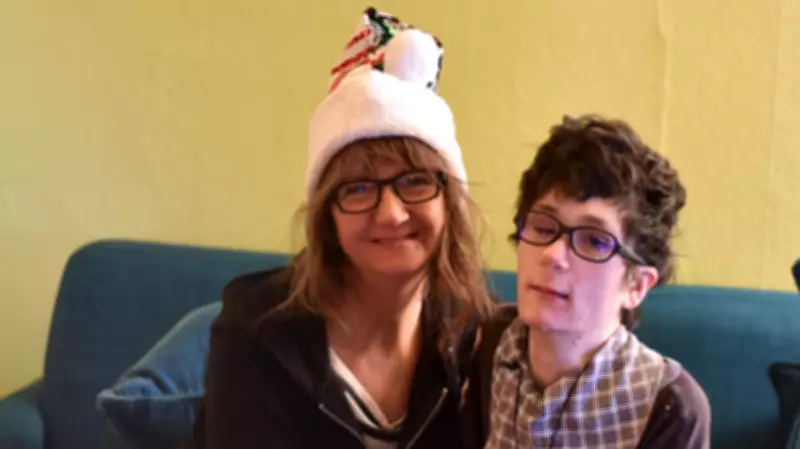
A Mother's Journey: From Medical Crisis to Acceptance with a Disabled Son
The doctor's urgent command broke through the hospital room tension. "Hold this bag of ice over his face," he instructed my husband, Johnny. "It will feel like you're suffocating him, but I assure you, you're not. We need to get his heart rate down — it's over 200." Johnny complied immediately, beginning our son August's traumatic entry into the world. Moments later, medical staff whisked our newborn down the hallway to the Neonatal Intensive Care Unit, connecting him to machines under harsh fluorescent lights while a team of specialists followed closely behind.
Initial Shock and Diagnosis
Alone in my postpartum room, confusion and fear overwhelmed me. What is wrong with him? The nurse delivered concerning news about his vital signs. August struggled to latch for feeding and weighed only 5 pounds, 12 ounces despite being full-term. His tiny mouth and rigid body compounded my feelings of maternal failure — anger at my body for not producing a "perfect" baby, terror that I might never see him alive again.
Visiting the NICU introduced a foreign medical vocabulary: "SVT," "sepsis," "neurogenic." Doctors described his profound weakness and low muscle tone, ordering extensive testing including blood work, X-rays, and MRIs. Specialists flooded his case — cardiologists, nephrologists, neurosurgeons, ENT doctors, and geneticists — each addressing different compromised body systems.

Medical Interventions and Emotional Toll
August endured invasive procedures to release a tethered spinal cord and correct colon malrotation. His racing heart required digoxin management. I remember his small form buried beneath medical equipment: wires, IV tubes, bandages, blood pressure cuffs, and pulse oximeters. He resembled a fragile bomb I feared to touch, yet nurses encouraged crucial skin-to-skin contact despite limited accessible space on his body.
Genetic testing revealed a terminal deletion of chromosome seven's long arm. Doctors delivered the devastating prognosis: among the few documented cases, none survived past teenage years. "Their teens?" I sobbed, interpreting this as a death sentence for my newborn.
NICU Reality and Coming Home
The NICU environment oscillated between profound grief and unexpected levity. I witnessed other infants' deaths through unspoken acknowledgments — removed family photos and mobiles, new critically-ill arrivals occupying vacant spaces. Sunday harp sessions during "quiet time" provided solemn reflection moments. Yet nurses also shared August's humorous traits: remarkably loud gas, "old man" snoring, and calming when cloth diapers covered his head.
After five weeks, August discharged with a feeding tube on spring's first day, 2007. We felt simultaneous excitement and terror leaving hospital security. Our private health insurance generated staggering medical bills I initially ignored, pretending they required Monopoly money payment. This avoidance reflected broader national crises — medical debt remains America's leading bankruptcy cause, crushing families already managing sick children's care.
Home Care Challenges and Relentless Advocacy
August's reversed sleep schedule and medical needs overwhelmed us. We maintained spreadsheets for medications, appointments, and care coordination for our older son Porter. Johnny's tech industry job instability provoked constant insurance anxiety — each policy change necessitated verifying every specialist's network status and resetting deductibles.
Determined to prove doctors wrong, I immersed myself in medical terminology: "proprioception" (body position sensing) and "supraventricular tachycardia" (erratic heartbeat). We pursued aggressive intervention, scheduling two to six weekly appointments requiring suitcase-packed essentials:

- Feeding pump and liquid nutrition
- Diapers, wipes, and comfort items
- iPad for distraction during procedures
- Glasses and hearing aids
We explored diverse therapies: occupational, physical, speech, music, hydrotherapy, therapeutic horseback riding, chiropractic, naturopathy, massage, Eastern medicine, acupuncture, and medical intuition. When August remained tube-dependent at age three, we fundraised for Austrian feeding clinic treatment that successfully weaned him months later.
Shifting Perspective and Acceptance
Chronic crisis mode exacted physical and psychological tolls. I developed complex regional pain syndrome and PTSD diagnosis, realizing unsustainable "Super-Mom" expectations. A podcast featuring another neurodivergent child's mother sparked transformation — her realization about accepting rather than fixing her son mirrored my journey.
I asked myself fundamental questions: Can I just love August as he is? Would I be failing him if I gave up the fight? This prompted profound change. I ceased relentless therapy chasing and accepted his permanent needs: diaper dependence, assistance with bathing, dressing, and safe feeding. I refused unnecessary sedated procedures that retraumatized him, recognizing medical intervention's dual hero-villain nature.
Present Reality and Future Considerations
August approaches his nineteenth birthday, surpassing initial life expectancy predictions. He receives Social Security income while Johnny and I earn caregiver wages, yet retirement planning for three people generates financial anxiety. Our "empty nest" expectations transformed into lifelong caregiving realities.
We prioritize self-care through exercise, chiropractic visits, and therapy. August's reduced medical appointments improve school attendance. Our interactions grew more relaxed since abandoning constant therapeutic framing. His daily routine involves:
- 7 a.m. awakening with assistance dressing and eating
- School bus transportation via wheelchair
- Communication device conversations about dogs and YouTube
- Therapeutic horseback riding he adores
- Car ride singalongs to "Eye of the Tiger" and "Back in Black"
Cognitively preschool-level despite teenage years, August enjoys his blanket, Abby doll, unified basketball, and extensive YouTube viewing. He'll never drive independently but experiences happiness surrounded by love.
Reflections on Maternal Identity
Retrospectively, I regret years measuring success through deficits — broken genes, challenging behaviors, logistical inconveniences. I overlooked August's radiant light: his charming personality, humor, empathetic hugs, and effortless "I love you, Mama" expressions. He harbors no resentment for medical restraint or genetic circumstances.
The ultimate maternal lesson emerged: loving August requires embracing his authentic self, releasing outcome fixation. He represents no "problem" needing correction. By relinquishing superhero expectations, I discovered profound peace in ordinary motherhood — flawed, human, and deeply connected to my remarkable son.