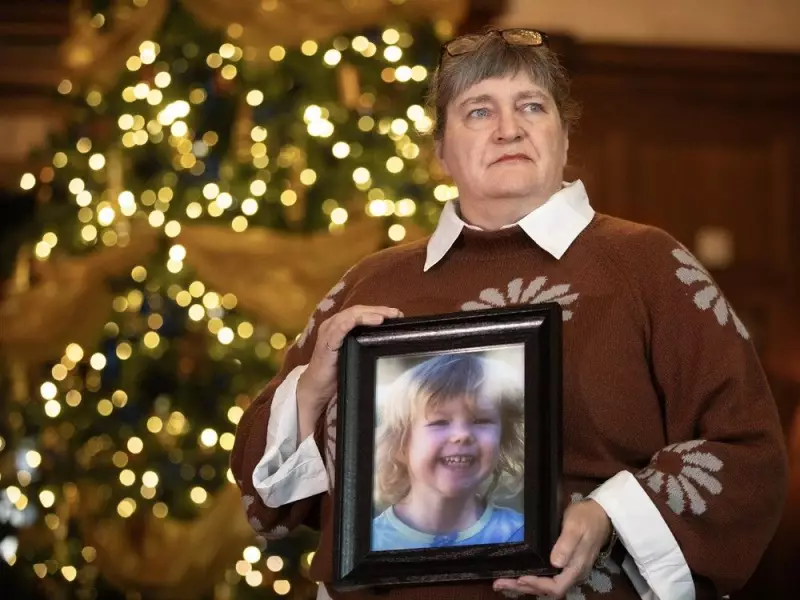
For many, the holiday season is a time of joy and family gatherings. For parents who have lost a child, it's a period marked profoundly by absence. In Edmonton, a support group for grieving parents is offering a beacon of hope and shared understanding during what can be the most difficult time of the year.
Cherished Memories Amidst the Pain
Gibson Glavin holds onto vivid memories of Christmases past with his sons. He recalls a winter day tobogganing near Fort Saskatchewan with his eight-year-old son, Brendan. After a few runs together, a determined Brendan insisted, "me do it." Glavin, though hesitant, let his son go solo.
He watched as Brendan successfully raced down the large, steep hill alone, cheered on by his siblings at the bottom. "It's a beautiful memory. My boy was growing up, and he was developing beautifully," Glavin reflects. "He struggled for a lot of things. But he was game. He was really game."

Tragically, Brendan, who had congenital heart disease, passed away in March 2002 at Edmonton's Stollery Children's Hospital following his third open-heart surgery. The family's world was irrevocably changed.
Navigating the Unimaginable
That first holiday season without Brendan felt like a blur of uncertainty for Glavin. He grappled with how to celebrate while ensuring his two other children still experienced Christmas. "It was a tricky thing," he admits, noting feelings of guilt were common, but the family persevered.
Years later, Glavin's other son, Andrew, brought a different kind of light to the holidays. A mischievous jokester, Andrew loved to tease his siblings by pretending to open their presents, a tradition that always got a reaction. "He was always trying to push people's buttons in a fun way, in a joking way," Glavin remembers fondly.
Devastatingly, Andrew passed away just three years ago from a condition similar to his brother's, plunging the family into grief once more.
A Life That Continues
For Glavin and the members of the Edmonton grieving parents group, the philosophy is not about "getting over" a loss, which they acknowledge is the most difficult experience a parent can endure. Instead, it's about building a life alongside the grief.
Glavin emphasizes that the most enduring memories are of his sons' joy and resilience. "Both these boys were, despite the hardships they had with their illnesses; they were enjoying life," he says. "Those are the things that I remember the most."
The group provides a crucial space for parents to share these memories and strategies for surviving the holidays. They acknowledge the sharp contrast between festive expectations and their personal reality, where celebrations are "tempered a great deal by who is missing." Their collective message is one of endurance: while the pain of loss remains, a life containing moments of joy, celebration, and remembrance is still possible. They are, as the group's sentiment echoes, built to survive.