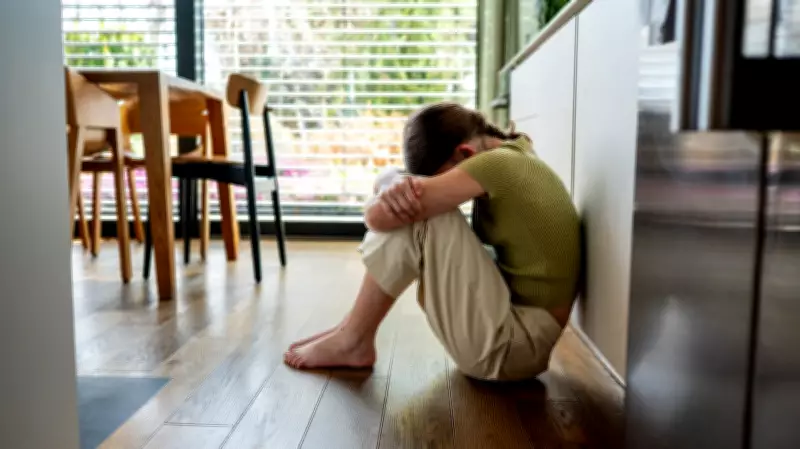
A disturbing scene in the film 'Marty Supreme' shows Timothée Chalamet's character being spanked with a ping pong paddle by Kevin O'Leary's character. While it may seem like a relic of another era, corporal punishment remains a common disciplinary method in many households. On social media platforms like Reddit, users share stories of being hit with wooden spoons, belts, hairbrushes, and other household items by parents and relatives.
Global Prevalence of Corporal Punishment
According to the World Health Organization and UNICEF, an estimated 1.2 billion children worldwide aged 0 to 18 experience corporal punishment in their homes each year. In 58 countries where severity is tracked, roughly 17% of children endured severe physical punishment in the past month alone, including being hit on the head, face, or ears or being struck hard and repeatedly.
Long-Lasting Psychological Effects
The long-lasting effects of corporal punishment extend far beyond physical scars. 'Adults who experienced corporal punishment as children may develop a heightened sensitivity to criticism or conflict, along with a shame-based self-concept that impacts their sense of self-worth,' said Vanessa Williams, a licensed clinical social worker and EMDR-certified therapist. 'They may show patterns of perfectionism in work and relationships, engage in people-pleasing, and experience emotional numbing, where they have difficulty identifying or expressing their emotions.'

Williams added that these individuals may struggle with trust and intimacy, feel fearful of vulnerability, and gravitate toward emotionally unavailable or predictable partners. They may also avoid conflict and find it difficult to set and maintain boundaries. 'I've also noticed many of my clients have a hard time resting without guilt,' she said.
Common Therapy Patterns
While the spanking might be over, the patterns it creates persist. The impact of corporal punishment follows people into adulthood and shows up in therapy in strikingly consistent ways.
Repressed Anger
Chloë Bean, a licensed marriage and family therapist and somatic trauma therapist, noted that one of the most common patterns is repressed anger. 'Many adults raised with corporal punishment learned to bottle up their anger because expressing it led to more punishment,' she explained. In adulthood, that anger often manifests in two ways: turned inward as self-criticism, shame, depression, addiction, self-harm, or neglecting personal needs; or leaking outward as irritability, short tempers, emotional outbursts, snapping at partners or colleagues, or even road rage.
Chronic Pain and Somatic Symptoms
Another frequent pattern is how the body holds onto these experiences. Bean noted that adults often present with chronic muscle tension, jaw clenching, migraines, digestive issues, and autoimmune flare-ups during periods of stress or emotional suppression. 'The body keeps the score in very real, physical ways,' she said.
Williams agreed, noting that many adults experience chronic muscle tension in the shoulders, jaw, or stomach, along with a heightened startle response and difficulty relaxing even in safe environments. Some notice strong physical reactions to raised voices, conflict, or criticism, such as a racing heart, nausea, or a sense of shutting down. 'These responses are often the nervous system reacting to cues that once signaled danger,' Williams explained.
Disorganized or Anxious Attachment
Bean explained that when a caregiver is both a source of care and pain, it creates confusion in a child's nervous system. In therapy, this often shows up as fear of conflict alongside strong emotional reactivity, avoidance in relationships, difficulty with intimacy, fear of abandonment or failure, attraction to emotionally unavailable or controlling partners, and feeling like they are 'too much' or 'not enough.' This push-pull dynamic is a hallmark of attachment trauma.

Williams echoed this, noting that when a caregiver is both a source of love and fear, it creates confusion around safety and closeness. 'As adults, this can show up in two ways: some people become highly accommodating and prioritize keeping the peace to avoid conflict, while others become guarded and struggle to trust that relationships are safe,' she said. 'Intimacy can feel vulnerable because closeness historically carried the possibility of harm or humiliation.'
Low Self-Esteem and Harsh Inner Narrative
Physical punishment can shape how someone sees themselves long term. 'In many cases, the message a child internalizes isn't 'I made a mistake,' but 'I am bad,'' Bean said. In therapy, this often appears as intense self-criticism, perfectionism, deep shame, and harsh judgment of others as a form of self-protection. The inner critic often mirrors the tone of childhood discipline.
Avoidance and Emotional Shutdown
Bean said many clients minimize their experiences by saying, 'It wasn't that bad,' or 'I turned out fine,' or 'That's just how it was.' But in therapy, the impact shows up in other ways: difficulty with vulnerability, avoidance of emotional conversations, dissociation during conflict, reactivity when others express emotion, viewing emotions as weakness, and numbing out through work, distraction, or addictive behaviors. 'This is how the nervous system learned to adapt,' she explained.
Williams added that emotional numbing is often a protective response. 'As children, some individuals learn to disconnect from feelings to cope with fear or pain,' she explained. In adulthood, that can look like functioning well on the surface but feeling emotionally distant or detached. In romantic relationships, people may care about their partner but struggle to access or express deeper emotions. 'Others describe feeling 'flat,' having difficulty identifying what they feel, or only recognizing emotions once they become intense,' she said.
Healing from Corporal Punishment
When children are physically punished, Bean said, they don't learn how to safely express emotions or regulate themselves in sustainable ways. Instead, they develop short-term coping strategies like suppression, ignoring their own needs, numbing emotions, dissociating from their bodies, or avoiding closeness.
Healing isn't about 'fixing' yourself but unlearning those adaptations and building something safer in their place. According to Bean, that process often includes learning emotional regulation, building safe and secure relationships, working with the body through somatic practices, softening the inner critic with curiosity and self-compassion, and exploring trauma-focused therapies like EMDR, somatic experiencing, or parts work (IFS).
'It's learning that conflict doesn't equal danger and that mistakes don't mean you will be hurt — but that has to be experienced on a deeper, body level, not just cognitively,' Bean explained. 'In therapy, we often slow things down. Instead of jumping to analyze the past, we build tolerance for feelings in the body.'
Over time, progress can look like being able to say 'that didn't sit well with me' without panic, less emotional shutdown and fewer sudden outbursts, more direct communication, greater self-trust, and an increased ability to rest and care for yourself without guilt. 'The goal isn't to blame parents,' Bean said. 'It's to untangle survival patterns that no longer serve you.'