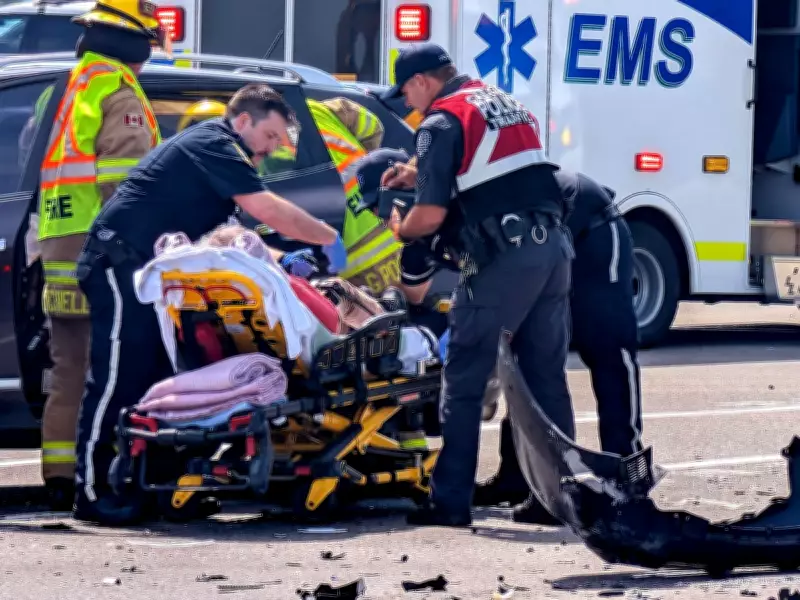
Hundreds of first responders and public safety professionals are convening in downtown Calgary this week for a two-day conference dedicated to improving mental health and wellness among frontline workers. The event, held at the Hyatt Regency, aims to address the growing crisis of mental health injuries in the field.
Alarming Statistics Highlight the Need for Action
According to the Canadian Institute for Public Safety Research and Treatment (CIPSRT), approximately 44 percent of public safety personnel exhibit symptoms of a mental health injury, including anxiety, depression, post-traumatic stress disorder, and suicide risk. Donna King, CIPSRT's executive director, emphasized the profound impact of these statistics. 'The people we rely on to keep our communities safe are struggling,' she said, noting that early intervention is crucial for faster recovery and reduced risk of long-term injury.
Keynote Speakers Address Systemic Gaps
Andre Picard, a prominent health journalist and Order of Canada appointee, highlighted systemic failures in Canada's healthcare system regarding mental health support for first responders. 'Mental health has always been the poor cousin in our health care system,' Picard stated. He stressed that accessing mental health care is challenging for the general public and even more so for first responders, who face higher rates of mental illness. 'If our first responders don't have good work conditions, we're not going to have good first response. That's the reality,' he added.

Pierre Poirier, Ottawa's chief paramedic and executive director of the Paramedic Association of Canada, identified a trifecta of high call volumes, lack of downtime, and increasing violence during responses as major contributors to mental health deterioration. 'We suffer in terms of our mental wellness,' Poirier said. With over 25 years as an advanced care paramedic, he called for urgent action to prevent burnout and retain personnel. 'We've got to figure out how to keep public safety personnel safe,' he urged.
Personal Experiences Underscore the Trauma
Poirier, who also served as a firefighter-paramedic in Sherwood Park for 15 years, reflected on the lasting psychological impact of the job. 'I absolutely believe that what we do is oftentimes taken for granted in terms of the trauma that we experience on a regular basis,' he said. 'We see bad things.' The conference aims to develop strategies to mitigate these effects and foster a culture of support within the public safety community.