During a routine acupuncture appointment, Jennifer Young, a 38-year-old college professor and mother of four, experienced a revelation that connected decades of chronic pain to a trauma she thought she had left behind. As acupuncturist Jade inserted fine needles, she asked about "old trauma," prompting a journey into the physical and emotional scars of Young's past.
The Physical Mystery and a Hidden History
Years earlier, a neurologist diagnosed Young with severe degenerative disc disease in her cervical spine, a condition seemingly at odds with her life as a suburban mom and academic. She had assumed her persistent neck pain stemmed solely from these bulging discs. During the session, however, she mentioned a long-ago surgery: the removal of a malignant tumor from the base of her skull when she was just 19.
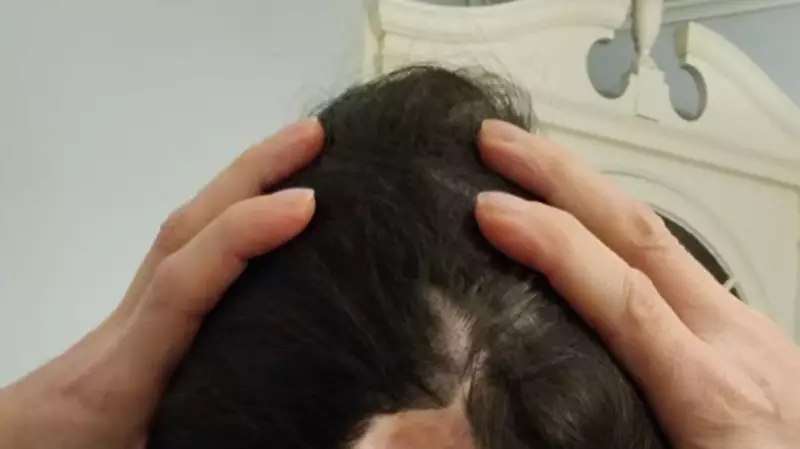
Jade, intrigued, asked to see the scar. With permission, she tenderly parted Young's hair, her thumbs tracing the contours of a lime-sized hole where part of the occipital bone had been removed. This was the first time in years anyone had asked to see or examine the site of her teenage cancer surgery. In that moment, a new possibility emerged: that her chronic pain was not just from disc disease, but also from the physical aftermath of that old operation and how her muscles had reattached.

The Body Keeps the Score: Unseen Emotional Scars
Jade's words about "uncovering old trauma" resonated on a deeper level. Young realized she had been carrying the emotional weight of her cancer diagnosis for half her life without fully acknowledging it. "It finally dawned on me that, even after continuously interacting with the world and understanding how it has shaped me, I never truly realized that surviving cancer as a young adult could still have an enormous impact on my life decades later," she reflects.
This experience aligns with a broader understanding of trauma. According to the National Council for Mental Wellbeing, 70% of U.S. adults—roughly 235.1 million people—have experienced at least one traumatic event. As body alignment expert Lauren Roxburgh states, "your body expresses what your mind suppresses." Repressed emotions can manifest as physical tension, fatigue, or illness.
A Rush of Memories and a Path to Integration
As the acupuncture needles worked, memories flooded back. Young saw her 19-year-old self, meticulously hiding the bald spot from surgery and the skin graft scar on her buttock. She recognized that in her effort to conceal these physical marks, she had also buried the associated fear and pain. Psychiatrist Bessel Van Der Kolk, author of "The Body Keeps the Score," notes that trauma often involves "not being seen, not being mirrored, and not being taken into account."
Now a mother to children the same age she was at diagnosis, Young felt compelled to reconnect with that younger version of herself. She began intentionally unpacking that chapter of her life through writing and conversation. In a significant act of visibility, she submitted a survivor profile to a melanoma community on Instagram, including a photo of her head scar.
"I almost hit delete a dozen times!" she admits. But the supportive response connected her to others touched by cancer, making her feel that her 19-year-old self was finally being seen and understood.
Healing Is About Moving Forward, Not Erasing the Past
Young's journey underscores that healing from trauma isn't about forgetting or erasing the past. "True healing will only come if I accept every scar and allow each version of myself to be seen," she concludes. The physical wounds healed long ago, but the scars—both visible and invisible—are stories the body carries.
Her story is a powerful reminder that old traumas heal not when we hide our scars, but when we finally let them speak. For Young, healing now means bringing every part of herself forward, a possibility that feels newly within reach.
Jennifer Young is a long-term melanoma survivor, writing professor, and author working on a memoir. She lives in New York with her family.