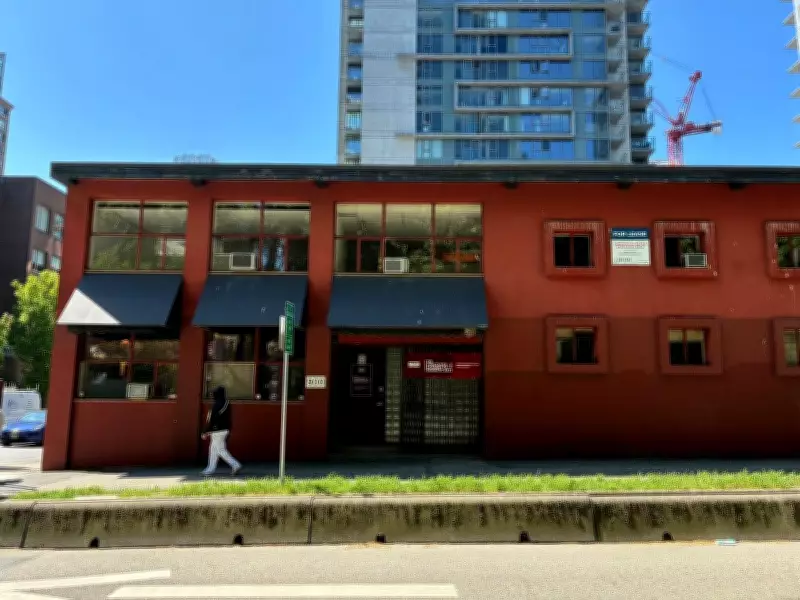
Last week, Vancouver Coastal Health (VCH) announced it would reopen the Thomus Donaghy Overdose Prevention Site (OPS) at a new location on Helmcken Street in downtown Vancouver. This decision comes amid a devastating overdose crisis, with downtown Vancouver recording the second-highest rate of overdose deaths in VCH's territory, according to Dr. Patricia Daly, VCH's chief medical officer.
Political Opposition to OPS
In response, Vancouver Mayor Ken Sim ordered city staff to do everything within their means to prevent the service from reopening, citing public order concerns. Sim garnered support from his ABC Vancouver colleagues on city council to pass a motion opposing the site. This reaction mirrors similar political stances across Canada, where overdose prevention sites are often blamed for community challenges like homelessness and affordability issues.
Scientific Evidence on Crime and Public Disorder
But do OPS actually increase crime and public disorder? Scientific studies from cities worldwide—including Vancouver, Toronto, Barcelona, Sydney, and New York—have consistently found no increases in crime following OPS implementation. All nine published studies examined police-recorded crime statistics, including drug trafficking, assaults, robberies, petty thefts, and homicides. Only one study, in New York, reported small increases in property crime around one OPS, but no such increases around another.

Regarding public disorder, research shows OPS are associated with declines or no changes in measures such as discarded syringes and public drug consumption. This evidence contradicts claims that OPS exacerbate neighborhood problems.
Political Scapegoating
Despite this clear body of evidence, Sim has followed the path of other political leaders by scapegoating OPS for broader societal issues. In Ontario, Premier Doug Ford described OPS as "the worst thing that can happen to a neighbourhood" and pledged to remove funding, despite lacking supporting evidence. However, in March 2025, the Ontario Superior Court granted a temporary injunction to keep a Toronto OPS open, noting that closure would lead to more overdoses, deaths, and spread of blood-borne diseases.
In Alberta, Premier Danielle Smith's government commissioned a review of seven OPS in 2019, forming a hand-picked panel that largely ignored peer-reviewed scientific literature. Following the report, Alberta cancelled plans for new OPS and removed funding for a busy site in Lethbridge.
Conclusion
The evidence is clear: overdose prevention sites save lives without increasing crime or public disorder. Politicians must stop scapegoating these facilities and instead focus on evidence-based solutions to the overdose crisis and underlying issues like homelessness and affordability.