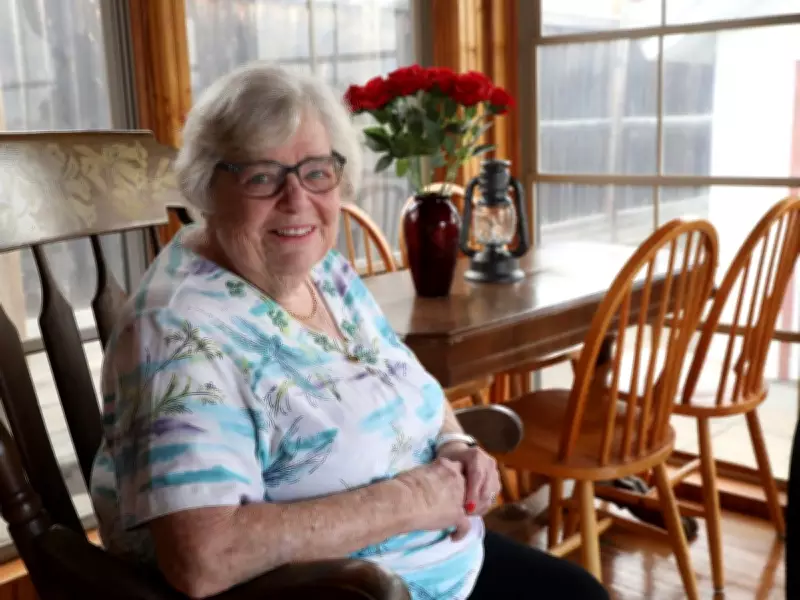
In January 2021, at the height of the COVID-19 pandemic, Sharon Charlebois spent three weeks at the Civic hospital battling a life-threatening case of the virus. The Kanata woman had not been feeling well after Christmas and tested positive for the coronavirus disease. Initially, her symptoms seemed mild, but her condition quickly deteriorated, and she began struggling to breathe.
On Jan. 3, her husband called an ambulance that rushed her to the Civic campus of The Ottawa Hospital. She was admitted to the intensive care unit with dangerously low oxygen levels and was given 100 per cent oxygen. Doctors warned she was at a critical period and might need to be placed on a ventilator. When they asked Charlebois whether she wanted to be resuscitated, she was confused. “I must have been quite out of it because I remember thinking, ‘Why are you asking me this?’ Dying isn’t something you usually consider,” she recalled.
Charlebois, who is now 78, was suffering from the most severe complication in patients with COVID-19: acute respiratory distress syndrome (ARDS). The syndrome, which can also be related to sepsis, severe pneumonia, and other illnesses, is an immune reaction to infection or trauma, causing hyper inflammation and filling the lung’s air sacs with fluid. Treatments are limited, and it is frequently fatal. In the early days of the pandemic, the mortality rate in COVID-19 patients with ARDS was more than 50 per cent.

As the pandemic began to fill ICUs with extremely sick patients, scientists at The Ottawa Hospital rushed to develop an experimental stem cell treatment to modulate patients’ immune response to COVID-19. Not long after she was admitted to hospital, Charlebois was asked whether she would take part in the clinical trial involving intravenous mesenchymal stem cell (MSCs) therapy, which can promote healing by harnessing the body’s ability to heal and repair itself. Family members encouraged her, so she said yes. She hoped the research would help others. “I didn’t want anyone else to go through what I went through,” she said.
Five years later, Charlebois’ memories of the period remain fragmented, but she is convinced of one thing: The experimental stem cell treatment developed by Ottawa scientists helped save her life. She is completely recovered from ARDS. “Thank God I did it,” she said.
The precise impact of the treatment on Charlebois’ recovery cannot be fully known, but the research showed promise as a treatment for ARDS. Patients who received treatment with MSCs showed about 40 per cent improvement over those who did not. And, tellingly, patients in the blinded trial who received MSCs reported a significant improvement in their health six months later compared to those who did not. Patients only learned later which arm of the trial they had been in.
Dr. Duncan Stewart, a researcher at The Ottawa Hospital, said a 40 per cent improvement in patients who were given the stem cell treatment “is not trivial.” Ottawa Hospital researchers had previous experience working with MSCs to treat patients with septic shock, which also causes the body’s immune system to go into overdrive. Scientists at the hospital were among the first in the world to demonstrate the ability of the stem cells to modulate the immune system in cases of hyper inflammation — to reprogram a patient’s immune system.
This experimental treatment offers hope for patients with severe COVID-19 and other conditions causing ARDS, potentially reducing mortality and improving long-term outcomes.