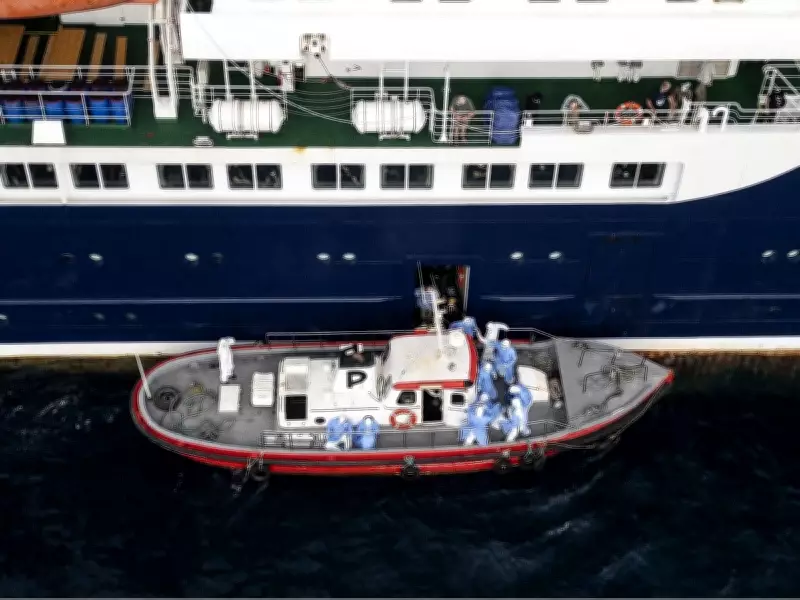
A cruise ship grappling with a deadly hantavirus outbreak evacuated three individuals on Wednesday, including two in serious condition, and is now sailing toward Spain's Canary Islands to disembark the remaining approximately 150 passengers.
Evacuations and Repatriation Plans
The two symptomatic individuals evacuated from the MV Hondius have not yet tested positive for the virus, according to operator Oceanwide Expeditions BV. A third person, who is asymptomatic, was a close contact of a passenger who died earlier in the voyage. The company also stated that infectious disease specialists are being flown in from the Netherlands to support care on board.
Spanish Health Minister Mónica García confirmed that the vessel left Cape Verde on Wednesday and is expected to arrive at the Granadilla de Abona port in Tenerife on Saturday. The outbreak has triggered a cross-border response, with authorities coordinating evacuations, screening, and repatriation across several countries.

García noted that all remaining passengers and crew are asymptomatic. “Unless a medical condition prevents it, all foreign passengers will be repatriated,” she said, following a protocol led by the European Commission with support from the World Health Organization. The 13 Spanish passengers and a crew member will be taken to a military hospital in Madrid for quarantine.
Regional Concerns and Public Health Risk
The Canary Islands’ government, which oversees health care in the archipelago, stated it has not received an official request from Spain’s central administration for the ship to dock. Regional President Fernando Clavijo expressed frustration, questioning why passengers must spend three days sailing to a Canary port when they could be evacuated by air from Praia International Airport in Cape Verde.
WHO Director-General Tedros Adhanom Ghebreyesus emphasized that while evacuations have taken place, the overall public-health risk remains low. Swiss authorities have confirmed a case of hantavirus in a passenger from the ship who is being treated in Zurich.
Understanding Hantavirus
Hantavirus is typically transmitted by inhaling contaminated particles from rodent droppings, often in enclosed spaces. The ship departed southern Argentina in early April and visited remote islands in the South Atlantic before the outbreak emerged. Severe cases can lead to hantavirus pulmonary syndrome, causing fluid buildup in the lungs. Early symptoms resemble flu but can worsen quickly. Person-to-person transmission is unusual, with the Andes strain being the only variant capable of rare human-to-human transmission.
The first patient, a Dutch man, and his wife traveled in South America before boarding the ship in Argentina on April 1. Both have since died. A patient who returned from the first leg of the voyage in late April is being treated at University Hospital Zurich, testing positive for the Andes variant. The patient is in isolation, while his asymptomatic wife is self-isolating as a precaution. The Swiss government stated that the contagion risk to the public is low and further cases in Switzerland are unlikely.