Burst Pipes Cause Devastating Flooding at Douglas Institute Research Facilities
Burst plumbing pipes triggered extensive flooding throughout research laboratories at the Douglas Mental Health University Institute in Montreal on Monday afternoon, January 26, 2026. The incident represents the latest in a series of infrastructure failures plaguing the century-old Verdun facility, where staff have repeatedly warned about deteriorating conditions.
Widespread Damage to Neuroscience Research
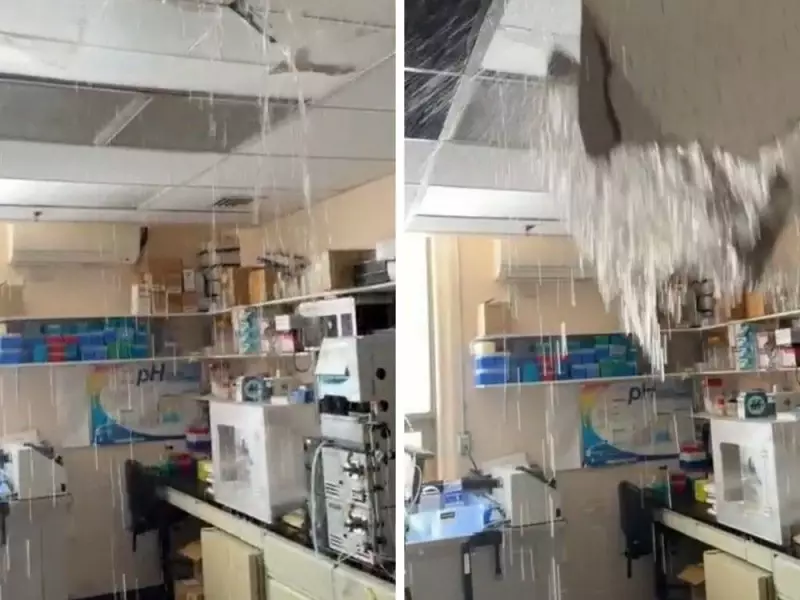
The flooding affected approximately a dozen laboratories across two floors of the historic Lehmann Pavilion, a building constructed between 1894 and 1910. Water poured from ceiling tiles for nearly two hours, drenching sophisticated scientific equipment used for critical neuroscience research.
"There was a lot of damage," stated neuroscientist Sylvain Williams, who works in one of the impacted labs. "The rooms are filled with very sophisticated and expensive instruments. The water just went through the machines."

Video footage from the incident showed water cascading diagonally from ceiling panels, creating what appeared to be an indoor storm. Workers attempted to contain the flow by positioning large garbage bins beneath the worst leaks, but significant damage had already occurred.
Research Setbacks and Space Challenges
The flooded laboratories specialize in investigating depression, Alzheimer's disease, and other neurological conditions. These facilities support 17 scientific investigators who supervise approximately 75 graduate students. The incident creates immediate challenges for research continuity, as the institute faces limited options for relocation during repairs.
"There's going to be a bit of a setback here for a while," added Williams, who holds a Canada Research Chair on human neural circuits and memory. "There's not much of an alternative in terms of finding new space."
Longstanding Infrastructure Concerns
Monday's flooding marks the second such incident at the Douglas research facilities within two years, with a previous flood having triggered an electrical fire. These problems occur against a backdrop of documented infrastructure deficiencies at the aging campus.
According to government assessment criteria, 65 percent of buildings on the Douglas campus are classified as being in poor or very poor condition. This troubling statistic formed part of a National Assembly petition recently organized by Québec solidaire MNA Alejandra Zaga Mendez, who represents Verdun. The petition, signed by over 600 individuals, urges the provincial government to accelerate renovation plans for the facility.
Modernization Project Stalled
The flooding incident highlights ongoing concerns about the stalled modernization project for the Douglas Institute. Six years ago, the Coalition Avenir Québec government announced a $5.4 million investment to upgrade both the Douglas and the Institut national de psychiatrie légale Philippe-Pinel. While $2 million was initially allocated for preliminary planning, the project has since been suspended.
"The government had assigned several engineers and architects to work on this beautiful project to modernize the Douglas hospital and research centre," Williams recalled. "But unfortunately, the whole project—after months and months and years of work—was put on ice by the CAQ government. Now we're uncertain whether the project will ever replace buildings here."
Government Response and Ongoing Challenges
Catherine Barbeau, press attaché to Health Minister Sonia Bélanger, described the flooding video as "deplorable" and emphasized that such situations should not occur in healthcare facilities. Barbeau noted that $435 million in additional infrastructure funding has been invested in major healthcare projects since last year, though she did not specifically address whether the Douglas modernization project would be revived.

The incident adds to a growing list of infrastructure problems at the Douglas, including previous reports of overcrowded emergency rooms with patients on floor mattresses and deteriorating patient care environments. Staff held a news conference in June highlighting these issues, displaying photographs of missing windows and unsanitary conditions while urging government action.
"The situation here is appalling, both for the patients, but also for the research centre," Williams told The Gazette. "It's really unfortunate because the Douglas is a leader in Canada and the world in neuroscience and research into mental health, but unfortunately, we have these buildings that can't be renovated."
Officials from the West Island health authority, which oversees the Douglas Institute, were not immediately available for comment following the flooding incident. The event was first reported by the Journal de Montréal, bringing renewed attention to the infrastructure challenges facing one of Canada's leading mental health research institutions.