On a cold Saturday morning in February, I am volunteering at an outpatient addiction treatment clinic in Baltimore. My Uber driver warns me it is a very dangerous neighborhood. I have traveled about an hour from Washington, D.C., where I live. I am here to share business management methods and operational tools with the team, based on a class I teach at Georgetown and my job as a management consultant.
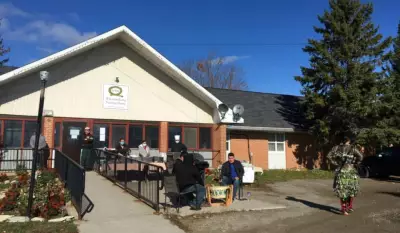
The driver drops me off in the parking lot. As I walk toward the entrance, I see an armed guard at the door. I walk past him into a large open waiting room, bright and clean. The right wall is lined with staff sitting behind glass partitions like bank tellers, but big, heavy-looking curtains hang from the ceiling at each window. I check in and sit against the back wall. I try not to stare, but I am curious about the curtains. I look around at patients coming and going. A young woman enters the clinic with the skinniest legs I have ever seen, like two drawing pencils in colorful, patterned leggings. She rushes down a hallway as if late for something, and I wonder where she is going.
Most patients are men in dark, battered jackets that do not look very warm, with hoods up and heads down. No one makes eye contact with me. I am suddenly aware of my warm, beige cashmere coat and Stella McCartney bag. I feel ashamed and ridiculous that I wore these things, that I even have these things. Still, my unconscious bias makes me feel my family's story is somehow different from those in this waiting room.

As I wait for my friend, the doctor who runs the clinic, I think about why I am here. In 2017, my youngest sister, Jenny, died from liver failure due to prolonged use of prescription opioids and alcohol. She was a 44-year-old suburban mom. Since her death, I have tried to learn as much as I can about the opioid crisis and be part of the solution. Or, more selfishly, maybe I am just here to do penance for my role in her death.
I experienced the entirety of my sister's struggle and death in six gruesome days at Kenmore Mercy Hospital in Buffalo, New York. That week, my sister Colleen and I stayed in Jenny's hospital room every night. All day and night, Jenny moaned for Dilaudid, a synthetic opioid she had previously been prescribed. For the first three days, I held Jenny's hand a lot and touched her hair. I do not think I had ever touched my sister's hair before, but now I feel it all the time on my right hand. I put drops in her eyes, rubbed her swollen feet, and fed her Ensure. She was in and out of consciousness but never lucid enough to talk coherently. I could not remember the last time I had a conversation with her. When was the last time I told her I loved her?
When I think about that week, I remember a series of degrading and horrific incidents, one worse than the next: the first time I saw my sister's severely jaundiced skin and light green eyes covered with bubbles from liver failure; shuffling Jenny to the bathroom all night long; my mother signing Do Not Resuscitate forms; full bags of bloody fluid hanging from Jenny's bed; and finally her death. I watched my sister die with my parents on either side of her hospital bed, a picture I will never unsee. No wake. No funeral. Her estranged husband stole her body from the hospital without our consent and left her ashes in a funeral home a few days later, unwilling to pay the bill.
I was on a plane back to Washington, D.C., the day after she died, shocked that I was no longer the oldest of three sisters, just the older of two.
The bone-crunching grief of this experience was compounded by the stigma unfairly associated with certain types of death: suicide, drug abuse, alcoholism, mental illness. You see it in euphemistic obituaries with vague explanations like passed away unexpectedly or died after a long struggle, descriptions that do a disservice to both the living and the dead. My coping mechanism has always been reading, and there are tons of materials about grieving the death of a parent, spouse, child, even pets. But I found only one book, Surviving the Death of a Sibling by T.J. Wray, who lost her 43-year-old brother, that captured exactly how I felt on that flight back to D.C. Wray wrote, The year my brother died I stopped breathing, but no one noticed.

Our siblings are with us at the beginning of our lives, and most of us take for granted they will be there as we approach the end. Yet surviving adult siblings are often forgotten mourners; the focus of grief is usually on parents, spouses, and children. As a surviving adult sibling, I am the lowest member in the hierarchy of sorrow, well below my parents and Jenny's two children. I have only recently learned about the psychology of this type of bereavement, called disenfranchised grief. It is not openly acknowledged, socially mourned, or publicly supported. Immediately after her death, when people asked if I had siblings, I wanted to answer, I have two sisters. Colleen is great. Her youngest just graduated from college. And ... well ... Jenny's dead. But I never did.
Volunteering and trying to be an advocate have become my version of grieving. I have shared our family's story, at least the parts I know about, as honestly as I can. I have written opinion pieces and talked about my mistakes on national television. I have tried to learn about addiction, more accurately referred to as substance use disorder (SUD), to understand how our family never realized Jenny had this issue, never had an honest conversation about what was happening to her. Instead, we rationalized away the warning signs and accepted her increasingly threadbare explanations for them, ultimately enabling her. Jenny did not do a single stint in rehab or have any interventions. I am not ashamed of my sister for struggling with drugs and alcohol, but I am so ashamed of myself for not being educated about it sooner.
In the years since my sister's death, my swells of grief are usually triggered by childhood memories. For many summers while my two sisters and I were in grammar school, my parents would take us camping in Chautauqua County, New York. Colleen, Jenny, and I would build forts, catch fireflies, try to catch sunfish, and collect kindling for campfires. But our favorite activity was putting on shows at the spider, a metal jungle gym that looked like a gigantic tarantula. We spent hours planning routines and practicing. Even though Jenny was the youngest and only about 4 or 5 years old, she was fearless, doing all the difficult flips with me on the high bars. On show nights, my parents would walk down to the spider after dinner, my mom in a Buffalo Bills sweatshirt and my dad in his 82nd Airborne hat. It is one of my most vivid childhood memories. I can still feel the warm metal behind my knees, hear the crickets, and smell the grass.
Another recurring memory is when we girls were ages 4, 6, and 8, and my dad would take us tobogganing during the long Buffalo winters. The four of us scooched to fit on the long sled going down the chute, so fast, over and over. But only Jenny got the free ride back up the hill with my dad pulling her on the toboggan while Colleen and I waddled back up in our puffy jackets from K-mart. Since her death, I have tried to remember my sister, not in her hospital bed, but flipping fearlessly on the spider or laughing on the toboggan, with her red cheeks and light green eyes, getting pulled up the snowy hill by my dad.
Back in Baltimore, I am waiting for another Uber at the end of the day, and I am so glad I came. It is an amazing operation, and I feel lucky to have been a small part of this dedicated team for a few hours. I eventually even learned that the long curtains at the glass windows are for privacy as patients take their medications. On my way out, I notice a sign on the wall that I did not see on my way in. It is written in multicolored markers with big artsy letters, advertising a program called Women Who Want to Change Their Lives, meeting on Saturday mornings. I bet that is where the skinny-legged girl was going. I hope she made it on time. The sign is so positive and inviting, I want to go with her. But more than anything in the entire world, my heart aches to be able to attend that program with my sister. I feel the tears coming as I get into my Uber, and I realize that nothing about our family's story is different at all.
Kelly O'Connor is a management consultant and lives in Washington, D.C. She has been a patient advocate in the opioid crisis since 2017, including a TEDx Talk, My Introduction to Narcan. Need help with substance use disorder or mental health issues? In the U.S., call 800-662-HELP (4357) for the SAMHSA National Helpline.