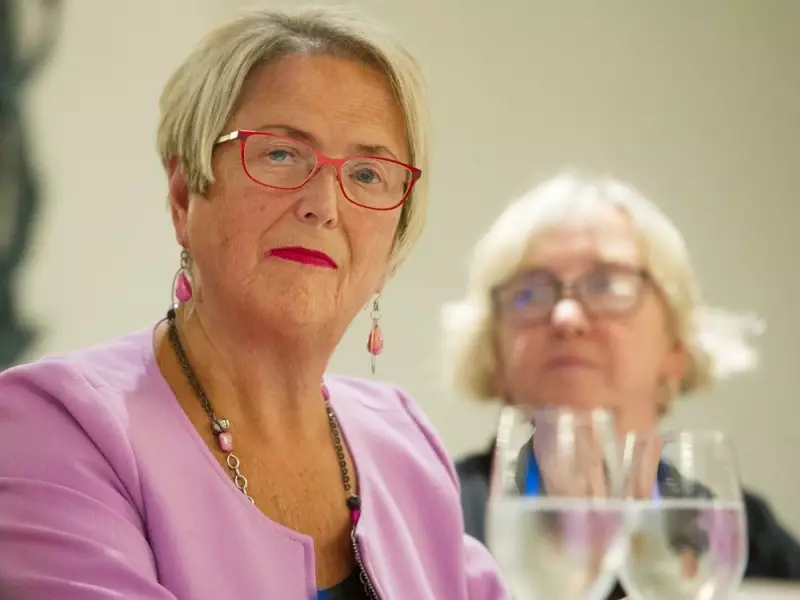
Judy Darcy, British Columbia's first-ever Minister of Mental Health and Addictions, has publicly stated that the recent decision to merge her standalone ministry back into the broader Health Ministry is a significant error. The revelation comes alongside the publication of her memoir, which details her deeply personal connection to the portfolio's challenges.
A Personal Mission Born from Tragedy
Darcy's memoir, Learning from the Heart: the battles of a feminist, union leader and politician, recounts a pivotal moment early in her term. During a visit to the psychiatric emergency department at Surrey Memorial Hospital, she entered a sterile "safe room" designed to prevent patient self-harm. The experience triggered a powerful flashback to her own mother's struggle with mental illness and addiction.
"Suddenly I began to weep," Darcy writes. She recalled seeing her mother restrained for electroconvulsive therapy decades earlier. "I cried openly and unashamedly: Poor little mommy. Poor little mommy." Her mother ultimately died by suicide from a barbiturate overdose, a fact then-Premier John Horgan was unaware of when he appointed Darcy in 2017, calling it "one of the toughest jobs" in cabinet.

Policy Focus Led to Tension
According to political commentator Vaughn Palmer, Darcy's policy focus on decriminalization and safer supply initiatives for drug users frequently put her at odds with the premier's office. Her advocacy was informed by her personal history, which she used sparingly to combat the stigma surrounding addiction and mental health. "By sharing my mother’s story, it could combat the tremendous stigma that still surrounds mental illness and addiction," she explained.
A Life of Advocacy and Controversy
The memoir delves beyond her political career, tracing a life of activism. The daughter of a Holocaust survivor and a Danish resistance fighter, Darcy was once a communist and Maoist. She rose to lead the Canadian Union of Public Employees (CUPE), facing sexism and bullying. The book also contains lighter moments, such as her subversive tenure as "Miss York University" in a long-defunct Canadian university beauty pageant.
Darcy's critique of the ministry merger underscores her belief that the addiction and mental health crisis requires dedicated, focused leadership. Her story highlights the complex intersection of personal experience, public policy, and political administration in tackling B.C.'s ongoing opioid emergency.