The Sealed Beginning: A Life Built on Hidden Truth
In 1977, when I entered this world, my original birth certificate was immediately locked away by court order. The fundamental truth of my origins became forbidden knowledge, forcing me to grow up shadowed by an identity I could never fully claim. This was not an isolated incident but part of a systemic practice spanning from the 1940s to the 1970s, now known as the "baby scoop era." During this period, millions of young mothers faced immense pressure, societal shame, and outright coercion to surrender their newborns.
The Psychological Cost of Closed Adoption
Families fearing the disgrace of "illegitimate" pregnancy often sent daughters to maternity homes, predominantly operated by religious organizations. There, social workers and moral authorities insisted that closed adoption represented the only path to cleansing this perceived shame. No one paused to consider the profound psychological consequences or how these early maternal separations would permanently shape infants' lives. Trauma takes root the moment that primal bond is severed, long before we possess language to articulate the resulting emptiness.
I carry what specialists term pre‑verbal trauma—a wound embedded in my body and nervous system that manifests through attachment difficulties, persistent fears of love vanishing, and deeply ingrained narratives about my worthiness. My adoptive parents were genuinely benevolent, compassionate people who provided me with a life filled with love, support, and opportunity. I have always felt fortunate, even grateful, for what society called my "second chance." Yet despite this stable upbringing, I experienced persistent disturbances: chronic anxiety, depression, identity confusion, and an unshakable sense of emptiness.

The Legacy of Abandonment Fear
Adoption planted an early, invisible vulnerability to abandonment that fundamentally influenced how I navigated existence. Constantly bracing for inevitable loss, I became convinced people would eventually leave. When my adoptive mother died tragically during my teenage years, it felt like confirmation that even those who loved me most could disappear without warning. Years later, within an emotionally abusive marriage, abandonment assumed a different form—not sudden loss but a gradual, daily erosion of safety, affection, and self-worth.
Substance abuse became the repository for all my fear and uncertainty. Moving through life without a steady sense of self, perpetually expecting abandonment, left me profoundly ungrounded. Alcohol offered temporary steadiness, a chemical anchor. Rather than discovering who I was, I mastered how to disappear. Three decades slipped away reinforcing the belief that numbness was safer than feeling, that escape was easier than confronting what I couldn't yet comprehend.
Midlife Reckoning and Unsealed Records
Now, seven years divorced and six years into hard‑won sobriety, I'm finally recognizing the trauma I never realized I carried. When my adoptive father died four years ago, grief returned unexpectedly. I began grieving both my mothers anew: the one who relinquished me and the one who provided love. His death strained my family; my current husband struggled to support my grief adequately, creating temporary fractures. Everything landed in the same emotional territory—abandonment. Grieving alone. Falling apart alone. Sitting with pain no one could help me hold.
The lifelong pattern of loss and betrayal, coupled with survival coping mechanisms, had hollowed me until I resembled little more than a shell. Midlife has become the stage where I'm attempting to rebuild what should have existed from the beginning. What I couldn't have known without access to family history was my genetic predisposition to borderline personality disorder (BPD), a condition experts estimate to be approximately 40% heritable. Genetics alone don't cause BPD but create vulnerability that trauma can ignite and intensify.

The Diagnostic Revelation
In my case, symptoms didn't appear in clean, recognizable patterns. Avoidant and paranoid personality disorders emerged simultaneously, each adding layers of confusion. Collectively, they tangled with trauma fallout—fear, mistrust, emotional volatility—making underlying conditions nearly impossible to discern. When late diagnoses finally arrived, they explained a lifetime of unease, fear, and emotional chaos I'd been desperately trying to outrun.
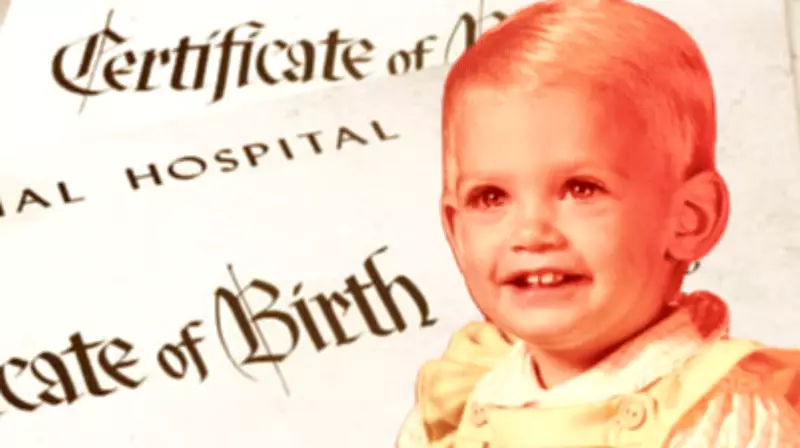
Last year, just as I began intensive therapy to mend internal fractures, Minnesota's adoption laws changed. The state where I was born unsealed long‑hidden records of "illegitimate" births, granting adoptees legal right to our histories. Although I always possessed an amended birth certificate naming my adoptive parents as legal parents, I could now request the original document.
Meeting My Biological Mother Through Paper Trails
All previous information about my biological mother consisted of a single typed sheet, likely authored by my biological grandmother. It listed basic details: height, weight, eye color, temperament. I also had her senior photograph—the only image I'd ever seen. The resemblance was remarkable. The document stated she relinquished me from "fear of a lifetime of regret," though I've never known whether this reflected her genuine belief or a narrative others imposed.
I wept opening the envelope containing my identity. Those sharing this moment couldn't comprehend why a birth certificate mattered so profoundly. Having always known their origins, they lacked reference points for empathy. Beyond my birthplace and mother's name and birthdate, it was an empty page. No name for me, not even "baby girl" placeholder—just a blank line where I began. Seeing this stirred familiar sadness, reminding me how little acknowledgment accompanied my arrival. My father's line remained empty too, the "illegitimate" box marked yes.
Discovering Genetic Mirrors
Yet for the first time, knowing her name made her feel real. Through research, I uncovered fragments revealing a woman who lived privately and unconventionally. She made ends meet through various jobs but her true passion involved energy work and healing others. She was an empath who trusted the universe, angel numbers, and crystal healing power. A non‑conformist who never fit societal standards and, as far as I can determine, never desired to.
People with BPD frequently experience unstable self‑image and chronic meaning‑seeking, which can make unorthodox or spiritually expansive belief systems feel grounding or validating. Their heightened sensitivity and tendency to question conventional narratives often draw them toward mystic spiritualism or energy‑based frameworks offering coherence where traditional structures failed. Non‑conformity and frustration with societal norms can also emerge from years feeling misunderstood, invalidated, or constrained by expectations mismatched to internal experience.
The similarities astonished me, creating feelings of near‑completion. This wasn't merely why I am this way—it reflected who I've always been. She married and divorced, afterward reinventing herself and living under an alias until her 2020 death. The only trace of her passing was a state record. No obituary, memorial, or celebration of life. Nothing marking she had ever existed. Her end felt like my beginning.
Healing Generational Wounds
This leaves me contemplating difficult questions about pain she carried and how her mental burdens might mirror what I navigate today. I wonder whether she lived with similar emotional intensity and whether genetic threads precipitating my BPD were woven through her life too. During her era, mental health faced stigma rather than care, so whatever pain she endured would have been dismissed and silenced—much like my birth.
Since I can no longer ask her, this remains speculation. But given BPD's genetic predisposition, intensified by adversity and trauma, I personally believe we shared this disorder. My life cannot be separated from the era that attempted to erase its beginning. Living with fractured self‑identity and mental disorder might have received earlier treatment had my history been known.
Finding my mother, however late and incomplete, returned something missing since birth. Learning who she was provided self‑reflection no amended record could offer. I can finally stand in my truth. Now, slowly rebuilding myself, I recognize the quiet part of her that has always been within me.
Building New Foundations
Today, my current husband and I maintain sobriety and strength together, supporting each other through all challenges. He has stated that enduring what I experienced would have overwhelmed him. His words provided validation and helped me see abandonment isn't inevitable—some people consciously choose to remain.
I have two adult children, the only people sharing my genetics. They are precious beyond unconditional parental love. Through my blended family of five children total, I've learned I belong to something larger than myself. The journey from sealed records to self‑understanding continues, but now I walk it with open eyes and healing heart.