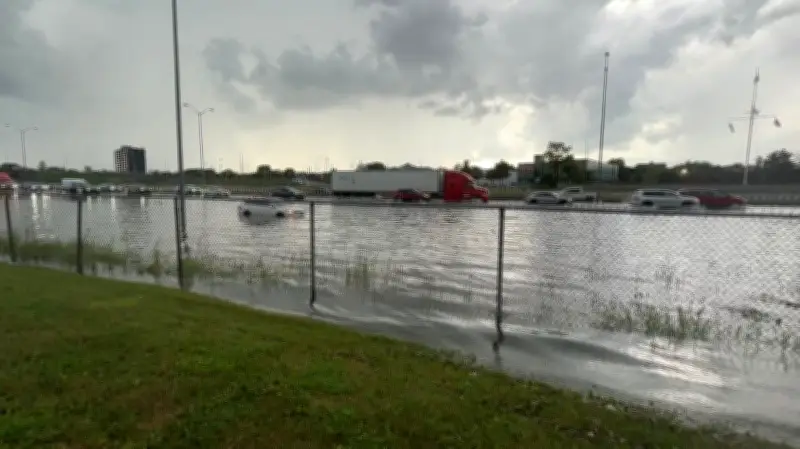
Record rainfall on Canada Day has led to millions of litres of raw sewage being discharged into the Ottawa River, according to city officials. Environment Canada reported that Ottawa received more than 100 mm of rain on July 1, 2026, breaking previous records for the date. The heavy downpour overwhelmed the city's combined sewer system, triggering combined sewer overflows (CSOs) that released untreated wastewater directly into the river.
Infrastructure Overwhelmed by Extreme Weather
The city of Ottawa confirmed that the volume of rain exceeded the capacity of its wastewater treatment plants and storage tunnels. As a result, emergency discharges occurred at multiple outfalls along the Ottawa River. City engineers noted that such overflows are designed to prevent basement flooding but come at an environmental cost. The Ottawa Riverkeeper organization expressed concern about the impact on water quality and aquatic life.
Environment Canada meteorologist David Phillips stated, "This was an unprecedented rainfall event for the region. We saw rainfall rates of up to 30 mm per hour at the peak of the storm." The storm also caused flash flooding on Highway 417 in Ottawa's west end, stranding several vehicles and prompting road closures.

Health and Environmental Concerns
Ottawa Public Health has issued a warning for residents to avoid contact with the Ottawa River and its tributaries for at least 48 hours following the overflow. Bacteria and pathogens in raw sewage pose risks of gastrointestinal illness and skin infections. The city is monitoring water quality and will update the public when it is safe to resume recreational activities.
"This is a stark reminder of the vulnerabilities in our aging infrastructure," said Ottawa Mayor Mark Sutcliffe. "We need to invest in climate-resilient systems to prevent such incidents in the future." The city has been working on a $200-million project to expand storage capacity, but it is not yet complete.
Comparison to Previous Events
This is not the first time Ottawa has faced sewage overflows after heavy rain. In 2017, a similar event released about 200 million litres of sewage over two days. The current discharge volume is still being calculated but is expected to be in the tens of millions of litres. Environmental groups have called for faster implementation of green infrastructure solutions, such as rain gardens and permeable pavements, to reduce runoff.
Ottawa Riverkeeper Laura Reinsborough said, "Every overflow is a failure of our system. We must prioritize nature-based solutions to absorb stormwater and protect our waterways." The group is urging the city to accelerate its Wet Weather Flow Management Plan, which aims to reduce CSOs by 80% by 2030.