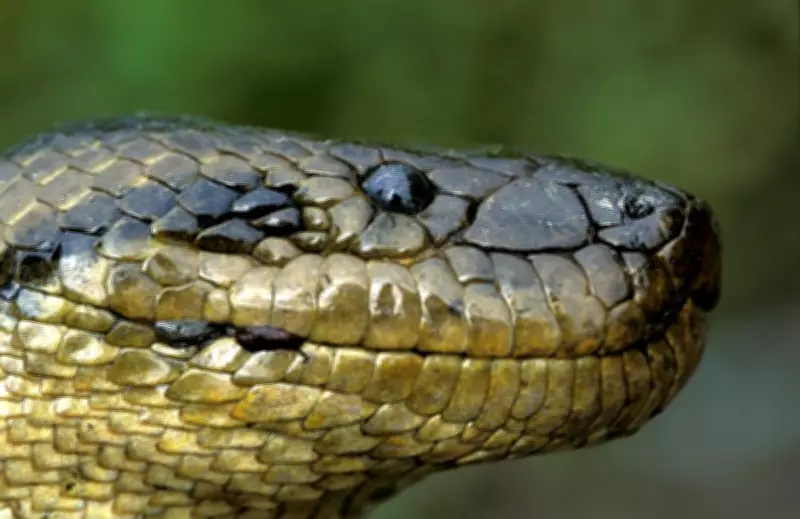
Snake Cannibalism More Common Than Previously Thought, New Study Reveals
New research published in a recent scientific journal has uncovered compelling evidence that cannibalism among snakes occurs far more frequently than previously documented, challenging long-held assumptions about serpentine behavior and ecology.
Widespread Evidence of Cannibalistic Behavior
Researchers have compiled an extensive database of over 500 documented cases of snake cannibalism across at least 207 different species, revealing that this behavior is not merely an anomaly but a widespread phenomenon with significant ecological implications. The study, which represents the most comprehensive analysis of snake cannibalism to date, demonstrates that this behavior has evolved independently multiple times throughout snake evolutionary history.
"Going from a few scattered reports to compiling more than 500 documented events was honestly astonishing," says Bruna Falcao, a master's student at the University of Sao Paulo in Brazil who conducted the research. "Each new record reinforced the idea that cannibalism in snakes is not an anomaly or a rare curiosity, but a widespread and ecologically relevant behaviour that we had been systematically underestimating."

Research Origins and Methodology
The groundbreaking study originated when Falcao discovered a preserved Brazilian lancehead viper containing a younger snake of the same species in its stomach during 2022. This discovery prompted her to initiate a comprehensive investigation into snake cannibalism, with documented cases dating back as far as 1892. The research team meticulously analyzed records spanning multiple continents and taxonomic groups, revealing that cannibalistic behavior appears to have evolved independently at least 11 different times throughout snake evolutionary history.
"Cannibalism may have also arisen independently in the snake evolutionary tree at least 11 times," explains study co-author Omar Entiauspe-Neto, a PhD student at the University of São Paulo. "This suggests multiple evolutionary pathways leading to similar behavioral outcomes across different snake lineages."
Patterns and Variations Across Species
The research identified distinct patterns of cannibalistic behavior across different snake families. Among the most cannibalistic groups were snakes from the Colubridae family, which includes species such as venomous boomslangs. This family accounted for approximately 29% of all documented cannibalism cases, with researchers suggesting that many instances may be related to scarcity of alternative food sources.
Elapids, which include cobras and kraits, were responsible for about 19% of recorded cannibalism events. Conservation scientist Max Jones recalled a particularly notable 2019 case involving a male cobra consuming a female that had been seeking to mate, highlighting the complex social and reproductive dynamics that can lead to cannibalistic encounters.
Gender Dynamics and Reproductive Strategies
The study revealed fascinating gender-based patterns in cannibalistic behavior among certain snake species. In green anacondas, for example, females are significantly larger than males and practice polyandry, meaning multiple males mate with the same female. Researchers observed that females will typically surround themselves with a harem of suitors, select the strongest males for mating, and then consume smaller, inferior males.
"This behavior may serve dual purposes," explains Entiauspe-Neto. "By consuming smaller males, females potentially reduce sperm competition while simultaneously conserving energy resources needed for producing fertilized eggs."
Maternal Cannibalism and Offspring Protection
The research also documented numerous cases of maternal cannibalism, where mother snakes consume their own eggs. This behavior appears particularly common among snakes in the boa family, which are known for exhibiting maternal care. Researchers suggest several potential explanations for this phenomenon, including the removal of dead or nonviable eggs to prevent odors that might attract predators to the nest area.

"Eating those nonviable offspring could protect the viable offspring," says Entiauspe-Neto. "We found a high proportion of boa family snakes engaging in this behavior, which aligns with their tendency toward maternal investment in offspring survival."
Ecological Significance and Future Research
The comprehensive study fundamentally alters scientific understanding of snake behavior and ecology, revealing that cannibalism plays a more significant role in snake population dynamics and evolutionary strategies than previously recognized. Researchers emphasize that this behavior likely serves multiple ecological functions, including population regulation, resource allocation, and reproductive strategy optimization.
Falcão notes that despite the extensive findings, significant questions remain unanswered. "None of us expected that snakes could be so cannibalistic, and no one was talking about it," she reflects. "The more we were searching, the more cases we found. While this study provides crucial insights into serpentine dietary habits, there is still much more research needed to fully understand the ecological and evolutionary implications of this widespread behavior."
The research team hopes their findings will inspire further investigation into snake behavior and contribute to more comprehensive conservation strategies that account for the complex ecological relationships revealed by this groundbreaking study.