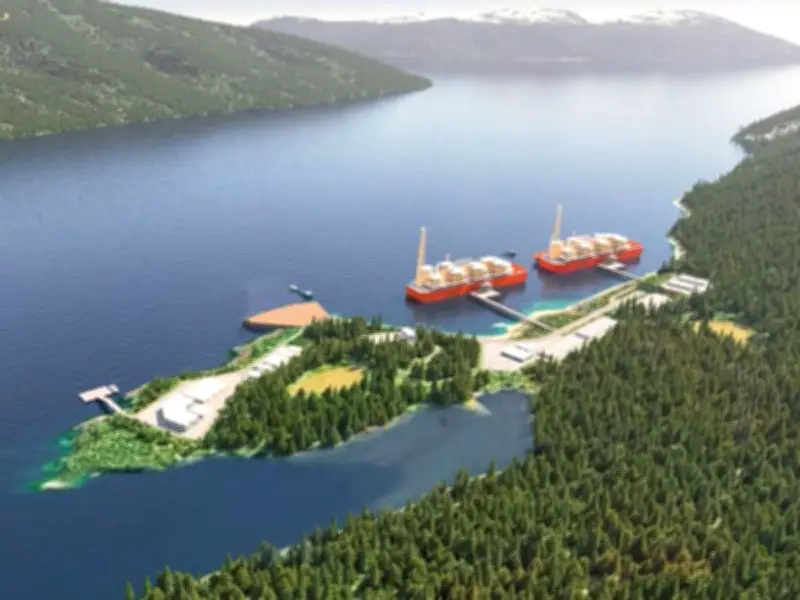
An Indigenous-led LNG project in northwest British Columbia has reached a landmark agreement to supply Germany with one million tonnes of liquefied natural gas annually for the next two decades. This deal, signed between the Ksi Lisims project and the German state-owned energy utility Securing Energy for Europe (SEFE), represents a critical step in bolstering Germany's energy security amid ongoing geopolitical tensions stemming from the war in Ukraine and rising instability involving Iran.
The Nisga'a Nation, the driving force behind the Ksi Lisims project, has positioned itself as a key player in global energy and geopolitics, becoming a trusted supplier to a major European ally. This achievement underscores the potential of Indigenous-led initiatives to drive economic reconciliation in Canada.
A legacy of perseverance
Karen Ogen, of Gitxsan and Wet'suwet'en ancestry and a neighbour to the Nisga'a, highlights the decades-long struggle of the Nisga'a Nation to control their own destiny. Their journey began with the landmark Calder case in the 1970s, which paved the way for land-claims negotiations and the inclusion of Section 35 in the Canadian Constitution. The subsequent modern-day treaty with Canada and British Columbia empowered the Nisga'a to chart their own economic course.

Over the past decade, the Nisga'a chose to strengthen their economic future by pursuing an LNG project on their own land. This reflects a tradition of trade that predates colonial times, when Indigenous nations exchanged goods along grease trails, understanding the link between trade and security.
Overcoming skepticism
When the Nisga'a first embarked on their LNG journey, neither the federal nor provincial governments were as supportive as they are today. Many observers doubted the project's viability. However, the Nisga'a and their partners remained steadfast in their vision.
Upon completion, the proposed LNG facility is expected to be one of the largest in the world, with the lowest emissions. The plant aims to be fully electrified, and when powered by BC Hydro, its emissions would be 94 percent below the global average.
Economic benefits and reconciliation
The project promises generational revenue for the Nisga'a Nation, employment opportunities, and economic growth for northern British Columbia. It will also generate tax revenues that could help offset the province's significant budget deficit.
British Columbia Premier David Eby and federal Natural Resources Minister Tim Hodgson stood alongside Nisga'a President Eva Clayton to announce the deal with Germany. The Nisga'a are advancing both the provincial and national economies.
This is the kind of economic reconciliation Canada needs, and more of it is required. Across British Columbia and Canada, First Nations are stepping up to lead in the economy. Examples include the Treaty 8 nations in the northeast's natural gas sector, the Haisla Nation's Cedar LNG project, over 20 First Nations with agreements on the Coastal GasLink pipeline and LNG Canada, the Stonlasec8 partnership on the Westcoast Energy line, and the involvement of the Musqueam and Squamish Nations in Tilbury LNG and Woodfibre LNG, respectively.