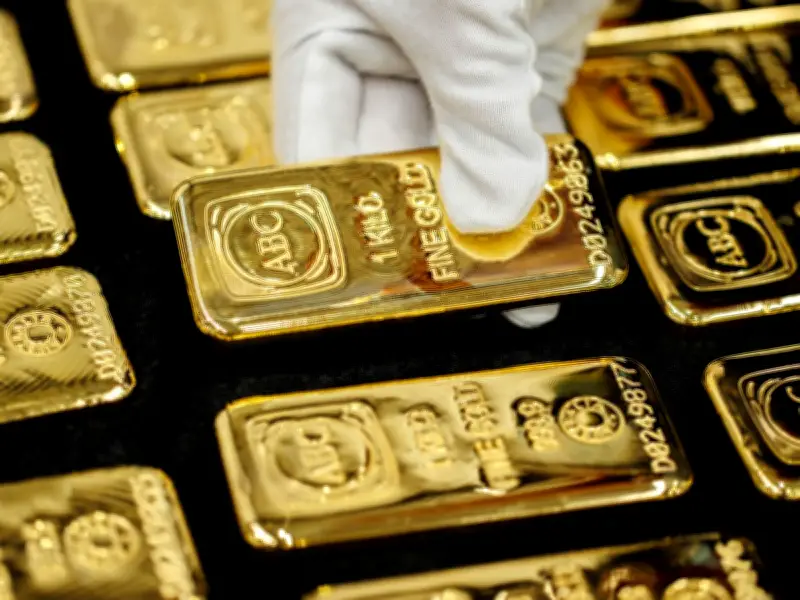
Gold found support following three days of losses as traders weighed a resumption of fighting in the Middle East and the U.S. Federal Reserve’s interest-rate path. Bullion gained as much as 1.5% and was trading around US$4,100 an ounce.
Renewed conflict in the Middle East
The latest attacks in Iran, which the U.S. Central Command said were to degrade the country’s ability to disrupt commercial shipping in the Strait of Hormuz, came hours after President Donald Trump said he thought a ceasefire was “over.” Iran responded by targeting U.S. bases in Bahrain, Kuwait and Qatar, according to the semi-official Iranian Students’ News Agency.
Impact on interest-rate expectations
For gold traders, renewed conflict in the Middle East raises the prospect of the Federal Reserve keeping interest rates higher for longer to deal with the inflationary impact of higher energy prices. Higher rates are negative for non-yielding bullion.

Gold has found support ahead of US$4,050 an ounce and is now bouncing as the dollar and yields trade soften, said Ole Hansen, head of commodity strategy at Saxo Bank A/S. “All in all, the price action in the last 24 hours strengthens my belief we have moved from capitulation to consolidation in gold,” he said.
Gold’s decline since late February
Gold is down by more than a fifth since the Iran war started in late February, with a wave of profit-taking bringing a three-year bull run to an end and recently pushing the metal below US$4,000 on several occasions. The selloff has led banks to slash price forecasts throughout the year. HSBC Holdings PLC on Thursday trimmed its average price for 2026 by 6.3% to US$4,560 an ounce, following similar cuts by investment banks including UBS Group AG, Deutsche Bank AG and Goldman Sachs Group Inc.
Other precious metals and market data
Spot gold traded 1.1% higher at US$4,120.49 an ounce at 3:44 p.m. in New York. Silver advanced 2.8% to US$59.91 an ounce, while platinum and palladium also gained. The Bloomberg Dollar Spot Index, a gauge of the U.S. currency, was little changed.