Colossal Winter Storm Brings Chaos to Eastern and Southern United States
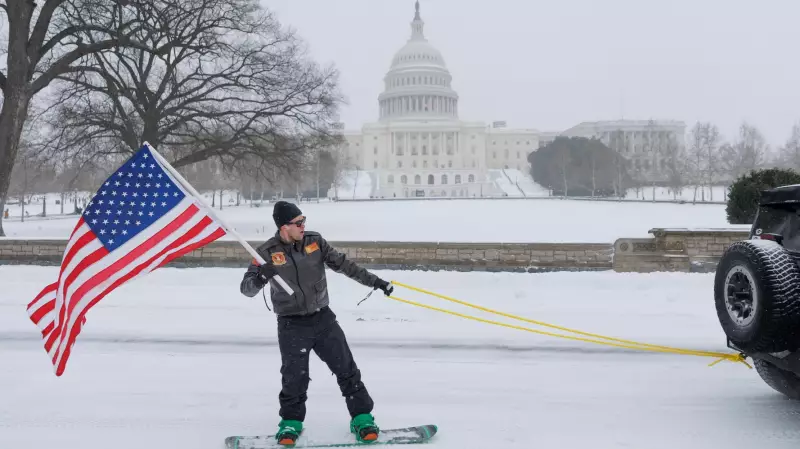
The work week began with a massive winter storm continuing to unleash its fury across the northeastern United States, following a weekend of widespread disruption. The colossal weather system, which has impacted millions from the southern states to New England, brought a dangerous combination of heavy snowfall, freezing rain, ice accumulation, and plummeting temperatures.
Widespread Snowfall Halts Transportation and Daily Life
Deep snow accumulations exceeding one foot (30 centimeters) stretched across a staggering 1,300-mile (2,100-kilometer) corridor from Arkansas through to New England. This substantial snowfall effectively paralyzed transportation networks, leading to impassable roads, widespread school cancellations, and significant flight disruptions. Forecasters predicted even higher totals in the hardest-hit regions, with some areas potentially receiving up to two feet (60 centimeters) of fresh snow.
Major airports along the Eastern Seaboard, including those serving Philadelphia, Washington, Baltimore, and the New York-New Jersey metropolitan area, felt the brunt of the storm's impact. Flight tracking data revealed approximately 12,000 cancellations and nearly 20,000 delays on Sunday alone, with disruptions expected to persist into Monday.

Local Impacts from Massachusetts to Mississippi
In communities like Falmouth, Massachusetts, located about an hour south of Boston, heavy snowfall came down in sheets, effectively closing the town. Local minister Nell Fields described shoveling out seven inches (18 centimeters) of snow just to let her dog outside, with more accumulation expected.
"I feel that the universe just put a big, huge pause on us with all the snow," Fields remarked, adding that she held church services despite the conditions. She viewed the weather as an unexpected gift, stating, "I'm sorry it's disrupted things, but it's given us some silence, and maybe we're using this time to think about what's really important, and that's community and taking care of each other."
Meanwhile, in New York City, residents like January Cotrel on Manhattan's Upper East Side embraced the snowfall. Her block traditionally closes during major snowstorms, allowing for sledding and snowball fights. "I pray for two feet every time we get a snowstorm. I want as much as we can get," she said. "Let the city just shut down for a day and it's beautiful, and then we can get back to life."
Dangerous Cold and Ice Create Additional Hazards
As the precipitation moved through, bitterly cold air followed in its wake. Meteorological data indicated that the contiguous United States experienced its coldest average low temperature since January 2014, at 9.8 degrees Fahrenheit (minus 12.3 Celsius). This average would have been even lower without record warmth reported in Florida.
The National Weather Service issued cold weather advisories and extreme cold warnings from Montana to the Florida Panhandle. Temperatures plunged to zero degrees Fahrenheit (minus-18 Celsius) or lower in many locations, with wind chills making conditions feel even more severe. This deep freeze threatened to refreeze roads early Monday, creating a dangerous repeat of the weekend's treacherous travel conditions.
In the southern states, freezing rain presented the primary danger, coating roads with ice and bringing down trees and power lines. Mississippi Governor Tate Reeves declared the event the state's worst ice storm since 1994, prompting the largest-ever deployment of ice-melting chemicals—200,000 gallons (750,000 liters)—along with salt and sand to treat roads.
"That doesn't mean the danger is behind us," Governor Reeves cautioned during a Sunday news conference, urging residents to avoid driving unless absolutely necessary and to check on friends and family.
Power Outages and Human Toll
The storm's impact extended to critical infrastructure, with hundreds of thousands of customers losing power according to outage tracking data. Tennessee and Mississippi were particularly hard-hit by electrical failures. At the storm's peak, authorities reported that approximately 213 million people were under some form of winter weather warning or advisory.

Tragically, the severe weather contributed to several fatalities. New York City Mayor Zohran Mamdani reported at least five individuals found dead outside as temperatures plummeted on Saturday, though investigations into the exact causes were ongoing. In Louisiana's Caddo Parish, the state health department confirmed two men died from hypothermia directly related to the storm conditions.
As communities from the Deep South to New England begin the arduous task of digging out, the storm serves as a stark reminder of winter's formidable power and the importance of preparedness and community resilience in the face of extreme weather events.