Solar storms are not even in my top five list of threats to humankind, but they are still worth talking about. Especially because there may be an easy way to protect ourselves from the worst effects of solar storms.
A Brief History of Solar Storms
Nobody knew anything about such storms until two centuries ago, when a big one scrambled all of the world's long-distance communications. But the technology was new. Electricity had few practical uses. The solar storm was therefore just a transitory nuisance, not a global disaster.
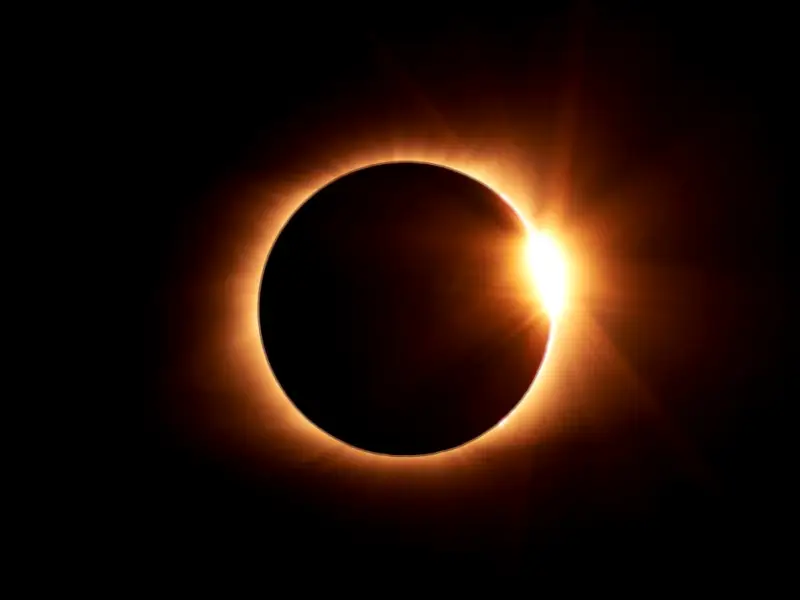
It became known as the Carrington Event, named after Richard Carrington, the British astronomer who witnessed the solar storm, a "coronal mass ejection" from the Sun on Sept. 1, 1859. Thinking laterally, he linked it to the worldwide electrical outage that happened only a few hours later.

It stirred a lot of interest in the scientific community. It turns out that these Carrington-like events happen quite often.
There hasn't been one as big as the 1859 monster since then. However, smaller "mass ejections" are blasted out of the Sun two or three times a day during the peak phase of the 11-year sunspot cycle, and most of them are travelling in or close to the ecliptic (the plane of the Earth's orbit).
Even at Solar Maximum only one or two per month hit our planet, because we are a moving target.
The biggest one was in 775, when we know (from carbon-4 isotopes trapped in the rings of ancient trees) that a solar storm 10 to 100 times more powerful than the 1859 incident hit our planet. Now it would be a catastrophe, even if it were only the same strength as Carrington's event.
Potential Catastrophe
When massive solar storms smash into the Earth's magnetic field they deliver energy and charged particles that scramble satellite electronics.
On the ground, huge electrical currents surge through power grids and transformers, often not just knocking them offline (fixed within a day or two) but burning them out (one or two years to replace them).
No internet, no GPS, no co-ordination in just-on-time delivery systems. An eight-billion-strong world trying to cope largely with surviving pre-1950s technologies, and probably on the brink of famine while they struggle to rebuild a 2020s world. Not a terminal disaster, but you'd pay a lot to avoid all that. What kind of protection could you buy?
Introducing StormWall
Here come the scientists with an idea called StormWall. The idea, published this month in Space Weather, is that human beings can reduce the impact of incoming geomagnetic (solar) storms on Earth by more than half by releasing huge canisters of a neutral gas (lithium, barium or sodium gases) or even plain salt water in orbit.
Six heavy-lift rockets (Musk's Starship or China's Long March 9) would lift the canisters into a geosynchronous orbit, 36,000 km/23,000 miles from Earth but still within its magnetic field. There they would wait, perhaps for many years, until monitor satellites spot a solar storm headed for Earth that is big enough to kill human electrical and electronic devices.