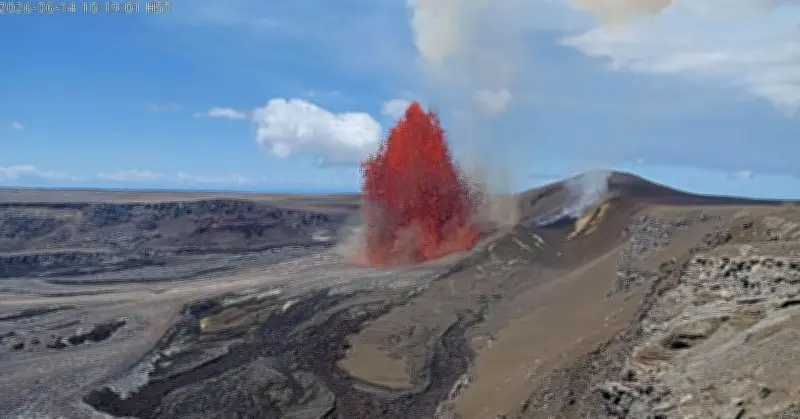
Kilauea volcano erupted for the 49th time in the ongoing Halemaʻumaʻu eruption series, with lava fountains reaching 300 feet as of Sunday morning at 10:02 a.m. The eruption began early Sunday, and experts predict fountains will grow rapidly in the coming hours.
Eruption Details
The 49th episode of the Halemaʻumaʻu eruption started without warning, as is typical for Kilauea. The U.S. Geological Survey reported that fountains were already 300 feet high within the first hour. Seismic activity and volcanic gas emissions have increased, prompting officials to monitor the situation closely.
What to Expect
Scientists expect the fountains to escalate quickly, potentially reaching heights of several hundred feet. The eruption is confined to the summit caldera within Hawaii Volcanoes National Park, which remains closed to the public for safety. Previous episodes have lasted from a few days to several weeks.

Safety Measures
Hawaii County Civil Defense has issued warnings about volcanic ash and sulfur dioxide emissions, which can affect air quality downwind. Residents and visitors are advised to stay informed and avoid restricted areas. The National Park Service continues to monitor conditions and will update closure status as needed.
Background
Kilauea has been erupting intermittently since 2021, with the current series of episodes beginning in December 2024. Each episode involves lava fountains and flows that build a growing cone within Halemaʻumaʻu crater. The 49th episode marks a continuation of this active phase, which has drawn significant scientific interest and tourism attention.
Authorities urge everyone to check official sources for real-time updates and to follow safety guidelines. The eruption poses no immediate threat to populated areas but highlights the dynamic nature of Hawaii's volcanic landscape.