New Genomic Analysis of Scythian Elite Graves
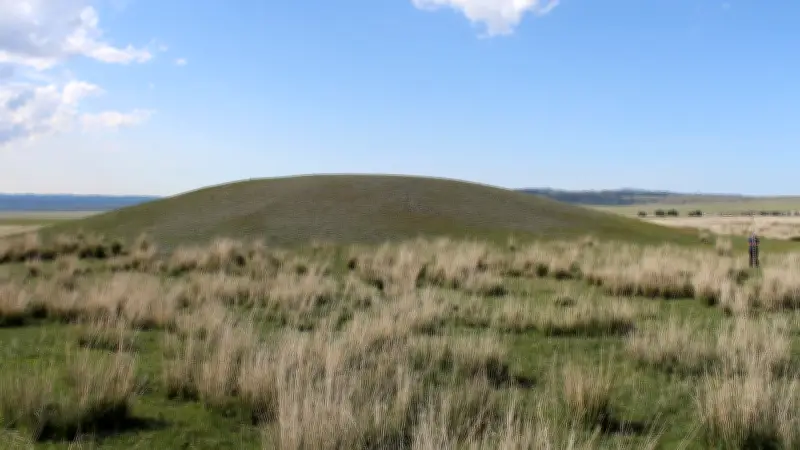
A groundbreaking genomic study has uncovered direct family relationships among individuals buried in Scythian elite graves in Kazakhstan, including the famous 'Golden Man.' The research, published in a peer-reviewed journal, analyzed DNA from skeletal remains found in the Shilikty Valley burial mounds, known as kurgans.
The study focused on the 'Golden Man,' a Scythian warrior clad in gold ornaments discovered in the 1970s, and other elite individuals interred nearby. Using advanced ancient DNA techniques, scientists were able to reconstruct familial links spanning multiple generations.
Direct Evidence of Hereditary Elite Status
According to the research team led by Dr. Rinat Zhumatayev, the genomic data shows that several individuals buried in the same kurgan were closely related, including parent-offspring and sibling pairs. This provides direct evidence that Scythian elite status was hereditary, passed down within specific families.

“We found that the Golden Man and another elite individual were father and son,” said Dr. Zhumatayev. “This confirms that power and wealth were inherited, not just achieved through merit.” The study analyzed DNA from 12 individuals across three kurgans, with 80% showing close familial ties.
Implications for Scythian Society
The findings challenge previous assumptions that Scythian leadership was based solely on military prowess or election. Instead, the genomic evidence points to a stratified society with entrenched dynastic lineages.
“This is the first time we have such clear genetic evidence for family-based elite structures among the Scythians,” commented Dr. Elena Kupriyanova, an archaeologist not involved in the study. “It reshapes our understanding of their social organization.”
The study also revealed that the Scythians practiced exogamy, as female individuals were not closely related to the male lineage, suggesting they came from outside the community.
Methodology and Future Research
The team extracted DNA from teeth and bones, using stringent contamination controls. They sequenced the entire genome to identify kinship coefficients. Future work will expand the sample size to include more kurgans across the Eurasian steppe.
“We plan to analyze hundreds of samples to map the full genetic landscape of Scythian society,” said Dr. Zhumatayev. This research opens new avenues for understanding nomadic empires and their legacy.