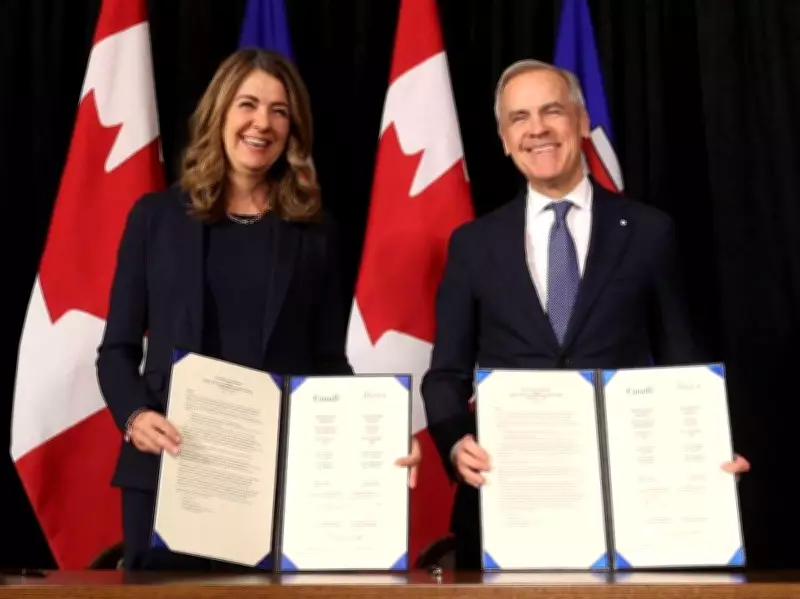
In Canada, First Nations comprise a small racial minority of five percent of the population, yet they must be consulted before any project or law can proceed. This reality poses a significant hurdle for the recently announced pipeline deal between Alberta Premier Danielle Smith and Prime Minister Mark Carney.
The federal and Alberta governments have advanced a climate and energy agreement that could see construction on an oil pipeline to the West Coast start as early as September 2027. The agreement builds on a memorandum of understanding signed in November. However, despite the optimistic timeline, two major obstacles remain: First Nations approval and securing private-sector investment.
First Nations Consent Required
Prime Minister Carney has already stated that no pipeline will proceed without prior consent from First Nations. This includes not only Alberta First Nations, who have shown willingness to negotiate economic benefits, but also British Columbia First Nations, whose territory the pipeline will cross. B.C. First Nations are notoriously anti-development, and their intransigence has grown since the passage of the provincial Declaration of the Rights of Indigenous Persons Act (DRIPA), which provides no incentive for compromise. Courts have upheld that the right to consultation effectively amounts to a veto over industrial projects.

Government Signals and Concessions
The Carney Liberals have sent encouraging signals but nothing definitive. They agreed with Alberta to double the industrial carbon tax to $130 per tonne by 2040, an improvement from the Trudeau-era target of $170 per tonne by 2035. They also plan to shift pipeline review from the Impact Assessment Agency to the Canada Energy Regulator, a move that could streamline approval. Additionally, they have reportedly accepted a preliminary new route to B.C.'s northern coast, which may eventually end the ban on tanker traffic imposed under Trudeau.
Timeline and National Interest
Alberta and Ottawa have agreed to a rapid approval timeline of September 1, 2027, and the pipeline will be designated as a project in the national interest, a label the federal government had previously been reluctant to grant.
Investor Hurdles
Beyond First Nations consent, Alberta must find private-sector investors to underwrite the project, which could cost as much as $30 billion. This financial challenge adds another layer of uncertainty to the deal.
While the agreement marks a positive step, the path to construction remains fraught with obstacles that could derail the pipeline before a single section of pipe is laid.