Metro Vancouver is urging residents to prepare for more stringent water restrictions this summer as regional snowpack levels are significantly below normal and forecasts indicate one of the hottest seasons on record.
Early Stage-2 Restrictions Imposed
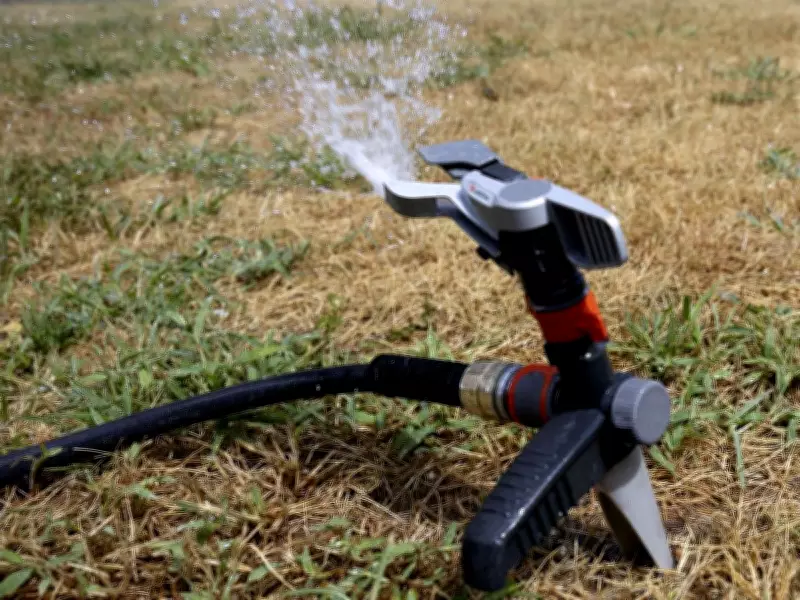
For the first time, the region has skipped directly to Stage-2 watering restrictions in May, bypassing the usual Stage-1 rules that permit once-weekly lawn watering. Stage-2 bans residential and non-residential lawn watering until mid-October. Currently, homeowners can still water trees, shrubs, and flowers using sprinklers only between 5 a.m. and 9 a.m.
Snowpack Levels and Drought Risk
A report from Metro's water services directors reveals that snowpack levels on May 1 were about 30 percent lower than last year after a warm, dry spring—an early indicator of summer water availability. The region warns that stricter measures are imminent.

On June 1, Stage-3 restrictions are expected to prohibit sprinkler use for watering, along with car and boat washing, and filling pools and hot tubs. Linda Parkinson, a policy and planning director for the district's water services, stated at a water committee meeting that these unusually early restrictions aim to conserve drinking water, mitigate drought impacts, and maintain emergency reserves.
“The most recent time we went to Stage-2 was in 2023, in August,” said Parkinson. “And the last time we went to Stage-3 was in 2015, which was the drought year.”
System Vulnerability and Construction
Metro Vancouver supplies drinking water to over three million people across 21 municipalities and one treaty First Nation, drawing from three mountain reservoirs—Capilano, Seymour, and Coquitlam—and delivering about one billion litres of treated water daily. Summer demand rises to nearly 1.5 billion litres per day.
Conservation efforts are compounded by the fact that one of two major water crossings from the North Shore mountains is offline due to construction of the Stanley Park Water Supply Tunnel, a project replacing a 1930s-era water main to boost capacity and seismic resilience, expected to be completed in 2029. Officials note that reduced capacity makes the system more vulnerable during peak summer demand, potentially causing drops in water pressure that could affect firefighting capabilities.
“Protecting the system for essential and emergency needs is the priority,” the directors' report states.
Forecast and Preparedness
Environment and Climate Change Canada predicts 2026 could be one of the hottest years on record, with above-normal temperatures and below-average rainfall across B.C.'s south coast. “The province is telling us to prepare for drought conditions and a super El Niño event this summer,” said Mike Brannon, director of operations and maintenance for the district's water services. “Water use peaks by 50 percent in the summer. That additional demand may result in lower water pressure while the current phase of the Stanley Park water supply tunnel construction is underway.”