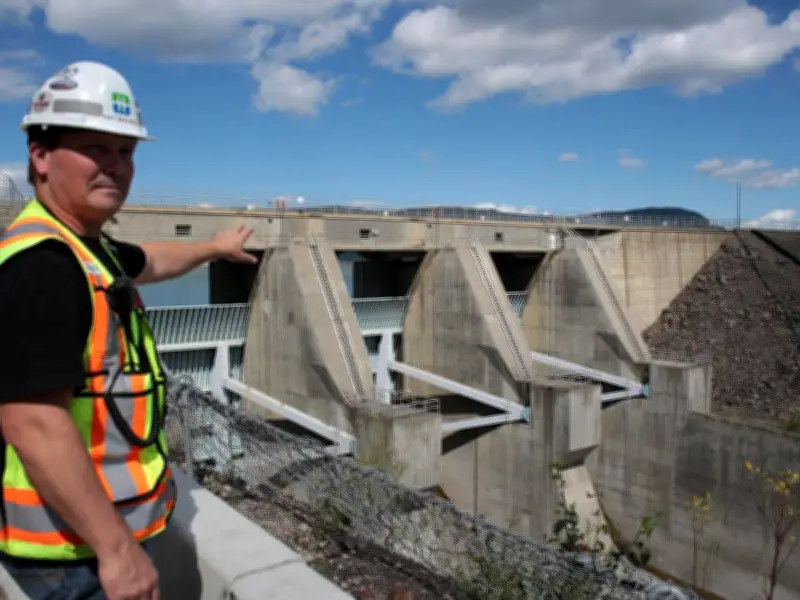
B.C. Hydro's engineering studies as far back as the 1970s bypassed Site E as a location for hydroelectric development on the Peace River in favor of Site C, now the John Horgan Dam, which was deemed the most economical option for what was to be B.C. Hydro's last major dam.
The government of Premier Gordon Campbell later closed the door on future hydroelectric development on the Peace River in the province's Clean Energy Act, specifically listing Site E among dams B.C. Hydro would be banned from pursuing.
However, Energy Minister Adrian Dix this week put the possibility of Site E back on the table as an option to provide firm power that backs up intermittent resources such as wind and solar. "Large hydro is good for the climate," Dix said on Monday. "Large hydro is good for the economy, and we have proven it in B.C. in the past decades, and I believe we can do it again."

Building Site E is not a given, Dix noted. B.C. Hydro is only beginning work to assess its viability, along with a hydro dam on the Homathko River on Bute Inlet on the Central Coast. The John Horgan Dam was controversial—it flooded prime agricultural land and caused downstream environmental impacts, issues that would resurface if Site E goes ahead. Its budget also rose from an initial estimate of $8.8 billion to over $16 billion.
What is Site E?
Site E is on the Peace River at the confluence of the Alces River, less than four kilometers from the Alberta border. It was identified in surveys during the 1950s among other potential locations for hydroelectric development on the Peace River. B.C. Hydro picked that survey's Site A to build its first dam, now the W.A.C. Bennett Dam and its massive Williston Reservoir, which opened in 1968. The Peace Canyon dam, completed in 1980, was Site B on the surveyors' list. Site C, now John Horgan Dam near Fort St. John, was put on hold in the 1980s and 1990s, deemed unnecessary at the time, before being greenlit by Campbell's government in the early 2000s and completed in 2025.
How did Site E get back on the table?
Dix said Site E resurfaced as an option as part of an exercise B.C. Hydro kicked off a year ago when it opened a request for proposals for the private sector to provide base load power to help backup intermittent renewable wind and solar projects. "We wanted to see everything, not just the stuff that was consistent with the Clean Energy Act," Dix said in an interview. He said B.C. Hydro has received 106 responses to the call for proposals, which included geothermal, biomass, and utility-grade battery storage solutions. However, "two projects that have been on the horizon for some time"—Site E, an up-to-750-megawatt dam, and the Homathko project of up to 900 megawatts—were also raised as ideas, and the province will be "pursuing early review permits to take a look, in detail, at these projects," Dix said.