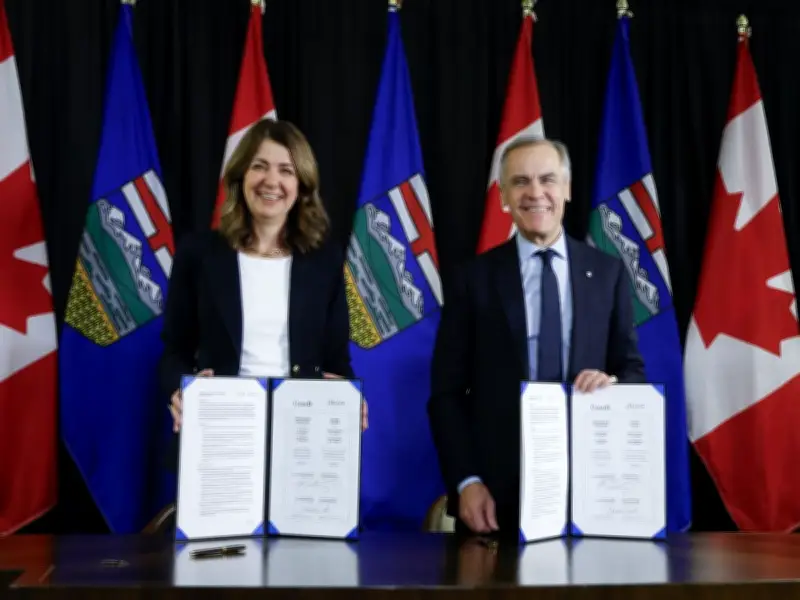
Alberta is expected to take a significant step forward on Thursday by submitting its West Coast oil pipeline proposal to the federal Major Projects Office, marking a key moment for the province's pipeline ambitions and the Alberta-Ottawa energy accord. The submission, pledged by Canada Day, would allow the project to be considered for expedited approval as a nationally significant development.
Pipeline Proposal Details and Industry Expectations
The proposed pipeline aims to transport one million barrels per day of Alberta bitumen to the British Columbia Coast for export. Industry leaders are closely watching several key issues, including whether the pipeline will run from Alberta to the northwest Pacific Coast or south to the Port of Vancouver, and whether private sector proponents will take a stake in the venture.
“I would say investments are riding on this, jobs, job certainty … We can’t just keep talking about energy being (Canada’s) superpower and not do something about it,” said Gurpreet Lail, CEO of Enserva, an industry group representing energy services, supply, and manufacturing firms. “We still need to see tangible changes to make that happen.”

Political Shift and Federal Support
The message from the federal government surrounding oil and gas has shifted “like night and day,” according to industry observers. During the Calgary Stampede last year, Prime Minister Mark Carney stated it was “highly, highly likely” his government would consider a proposed oil pipeline to the Pacific Coast as a project of national interest. By November, the pipeline and the Pathways carbon capture project were part of an energy memorandum of understanding (MOU) signed by both governments.
The MOU also removed several divisive energy and environment policies announced by the former Trudeau government, such as the Clean Electricity Regulations and an emissions cap on Canada’s oil and gas industry. In a video posted Tuesday, Carney detailed the rationale for changing Canada’s approach to conventional energy development, citing shifting energy security concerns and strong demand for Canadian heavy crude in Asia following the Trans Mountain expansion.
Pathways Carbon Capture and Industry Alignment
Industry players are also looking for signs of progress on the Pathways carbon capture network in northern Alberta, a multibillion-dollar project aimed at decarbonizing oilsands production. The sector has expressed concerns about the province’s industrial carbon levy going up, and alignment between the two levels of government and the Oil Sands Alliance is seen as crucial.
“Does it look like the industry is in on (the deal) or is their resistance growing? I think it’s pretty clear that the province and the feds are trying to actually make something happen here,” said Mark Little, former Suncor Energy CEO and a key figure in the formation of the alliance in 2021. “Every month that goes by, the tension keeps building.”
Next Steps and Potential Impact
The province’s announcement on Thursday is expected to provide long-awaited specifics about the initiative. The pipeline proposal, initially pitched by Premier Danielle Smith to the Carney government last year, would be approved under Ottawa’s Bill C-5, alongside industry advancement of the carbon capture project.
“I am confident that my government will do everything we can so that those projects can be built,” Carney said in an interview last July. The energy MOU signed in November also included commitments to remove barriers to energy development, signaling a new era of cooperation between Alberta and Ottawa.