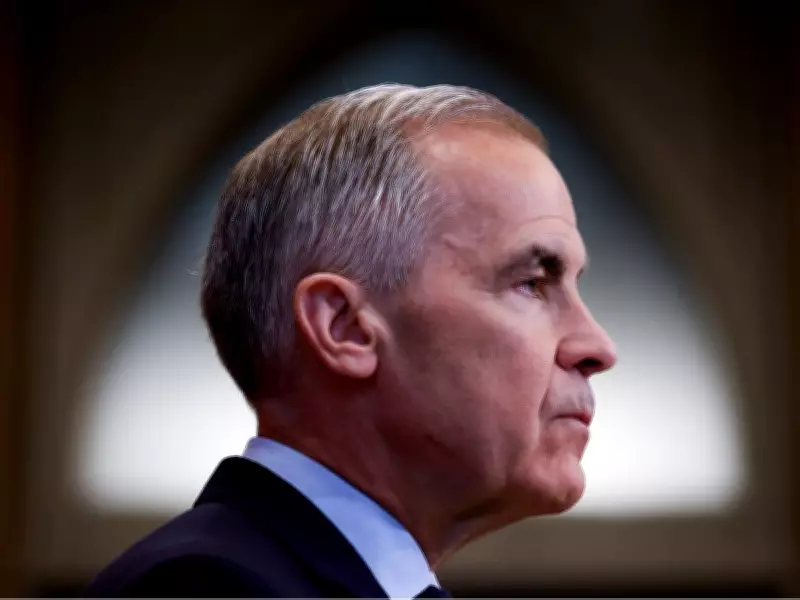
Prime Minister Mark Carney has described Honda's decision to abandon its electric vehicle (EV) project in Alliston, Ontario, as a "disappointing decision." The announcement came on Thursday, coinciding with reports that the Japanese automaker recorded its first-ever annual loss of $2.7 billion.
Carney's Response
Speaking at a press conference in Ottawa on Thursday, Carney stated, "It's a decision that reflects the broader strategic position and financial position of that company. It's part of a global series of decisions that they've taken." He emphasized that despite this setback, the global shift toward lower-emission and zero-emission vehicles is expected to continue, both worldwide and in Canada.
Carney also noted that consumer choices in the automotive market will play a crucial role in the transition. "But those are choices for Canadians," he remarked, pointing to shifting market demands.

Honda's Statement
Honda Canada released a statement on Thursday, explaining that the indefinite suspension of the project is due to evolving business conditions, a change in strategy, and shifting customer demand. The company plans to refocus its efforts on hybrid models. Honda made clear that no government funds had been transferred to the company, despite future funding commitments from both the federal and provincial governments.
Financial and Trade Context
Honda's first annual loss of $2.7 billion is attributed to heavy costs associated with its EV plants and trade policies implemented by U.S. President Donald Trump. The project's cancellation was first reported by Japanese publication Nikkei Asia.
The EV project was initially announced in 2022, with the federal government committing $131.6 billion through the Strategic Innovation Fund (now the Strategic Response Fund), and the province of Ontario matching that investment. Honda confirmed that no funds from these commitments were received.
Industry and Diplomatic Reactions
The auto industry has stressed that Canada's competitiveness in the sector depends on its integration with the U.S. market. In March, Japan's Ambassador to Canada, Kanji Yamanouchi, noted during an interview that stable access to the U.S. market is critical for ongoing Japanese investment in Canada.
Impact on Employment and Production
Honda remains committed to its existing Alliston plant, which produces the Honda Civic and CR-V models. In 2025, the company built approximately 400,000 vehicles in Canada, including 198,000 Civic units and 202,000 CR-V units. Nearly 60 percent of Honda vehicles sold in Canada last year were hybrid models.
While current employment levels remain unchanged, the decision means the loss of 1,000 jobs that were promised under the new EV plant. The company has not announced any layoffs at this time.