Calgary's Safeworks Supervised Consumption Site Closes After Nearly a Decade
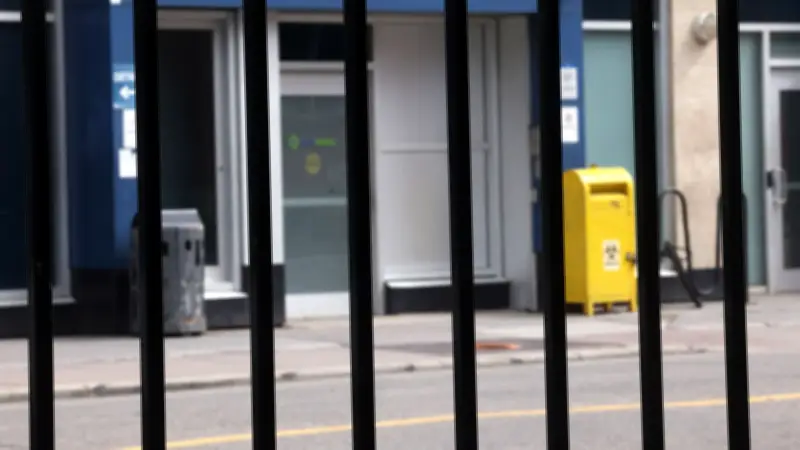
The Safeworks supervised drug consumption site at the Sheldon M. Chumir Health Centre in Calgary will cease offering monitored injection services on June 30, 2026, ending nearly a decade of harm reduction operations. While the site's treatment, support, and referral services will continue in the same space, the closure marks a significant shift in Alberta's approach to the addiction crisis, moving from harm reduction toward a treatment-focused model under the Alberta Recovery Model.
The site, which opened in October 2017 under the NDP government, saw more than 45,500 visits in 2025, with an average of 562 unique clients per month. In 2025, staff attended to 701 adverse events, including administering oxygen or naloxone, with no calls made to EMS. Since January 2017, overdose reversal staff at sites across Canada reversed more than 58,444 overdoses, according to a 2024 report by the Canadian Centre on Substance Use and Addiction.
Clients and Advocates Voice Concerns Over Closure
Jay, a 41-year-old client who declined to provide his surname, said he used the site multiple times before achieving three years of sobriety with staff help, but relapsed and relied on the site again. He warned, "It's terrible — there's going to be more (use) on the streets … you'll see people dying everywhere again, people die standing." He emphasized that staff saved his life multiple times during fentanyl overdoses. "People think we're garbage, a cancer and this is the only place that will take us in," he said.

Cecilia Nimijean, 25, who used to inject crystal meth at the site, credited Safeworks staff with helping her get sober in April 2025. "If you told them you want to get sober, they refuse to give you (drug paraphernalia) and will help you get clean," she said. She now mentors vulnerable youth through therapeutic horse riding. However, she expressed mixed feelings about the closure, saying public drug use will spread, and that mandatory treatment is a bad idea: "You've got to be ready to make that choice by yourself."
Lindsay, 39, who uses the site three times daily, called the closure "the worst thing ever. They don't have anywhere that's safe to go." She said the site "has kept me alive" and warned that taking away services will make drug users worse.
Origins of the Opioid Crisis and Alberta's Initial Response
The opioid crisis in Alberta escalated after pharmaceutical-driven overprescribing in the U.S. led to dependency, and doctors later reduced doses, pushing users to the street drug market. In 2015, more than 360 people died from overdoses in Calgary, with 113 deaths in the first three months of 2016. By 2025, Calgary saw 272 deaths from substance use, with more than 24,000 emergency department visits and over 8,700 hospitalizations. Dr. Karen Grimsrud, then Alberta's chief medical officer of health, said in 2017, "These aren't statistics. They are people dying every day in Alberta."
In response, the NDP government established an Opioid Emergency Response Commission in May 2017, leading to expanded opioid agonist treatment, naloxone kit distribution, and the creation of supervised consumption sites. Dr. Katrina Milaney, a public policy professor at the University of Calgary, led research that found 80% of surveyed users would use a supervised consumption site, and 85% had never been asked by a healthcare provider about their substance use. The Safeworks site was established based on those recommendations, with a $260,000 grant from Alberta Health.
Political Conflict and Community Impact
The site quickly became a source of political conflict. While overdose-related emergency department visits in Calgary dropped by 20% after the site opened, fatal overdoses rose to 271 in 2018 from 249 in 2016, reflecting the growing crisis. Police reported a 276% increase in drug-related complaints in the 250-metre zone around Safeworks in 2018, compared to an 11% decline citywide. Residents grew frustrated with public drug use in Central Memorial Park, leading to calls for change.

The United Conservative Party, led by Jason Kenney, took power in 2019 and froze funding for the site, calling for a review. A 2020 review panel questioned the site's effectiveness, citing increased EMS calls and disorder, though researchers criticized the report as methodologically flawed. Dr. Ginetta Salvalaggio, a professor at the University of Alberta, co-authored a commentary stating the report "is fundamentally methodologically flawed, with a high risk of biases."
Despite rising overdose deaths during the COVID-19 pandemic, the province moved to close supervised consumption sites in Red Deer, Edmonton, and Lethbridge, and now Calgary. Premier Danielle Smith's government advanced the Alberta Recovery Model, focusing on treatment over harm reduction. Minister of Mental Health and Addiction Rick Wilson said in March 2026, "Drug consumption services were introduced during a very different time … people need more than survival — they need hope, they need treatment."
Beltline Residents and Businesses React
Beltline residents have mixed feelings. Pat Dargue, who lives near the Chumir, said the area feels safer with increased police presence, and she hopes the closure will bring a better citywide response. Local author Tony May, who has lived in the area since 1988, said he has experienced verbal harassment and seen discarded needles, but worries the problem will worsen citywide. David Low, executive director of the Victoria Park Business Improvement Area, said, "People often assume that we would be celebrating, and I don't really see this as a victory." He noted that inhalation has replaced injection as the preferred consumption method, making the site less relevant, and that users already use Central Memorial Park openly.
Peter Oliver, a director on the Beltline Neighbourhoods Association board, said the closure will worsen the problem as users turn to bathrooms, alleys, and parks, and that the mobile response solution is "a fairy-tale solution." He added, "Without addressing homelessness and housing and mental health, we're just sweeping the problem around."
Unanswered Questions and Future Plans
Calgary Mayor Jeromy Farkas said he has questions about the province's net increase to addictions and recovery capacity, and wants tight collaboration on law enforcement and proactive deployment of support teams. The province plans to establish 11 long-term live-in addiction treatment facilities across Alberta, including a 150-bed involuntary treatment centre in Calgary's deep northwest, by early 2027. The province reports opioid-related fatalities in Alberta have dropped 39% since a 2023 peak, with Calgary seeing a 65% decline, now consistent with pre-pandemic levels.
However, experts remain skeptical. Dr. Jennifer Jackson, an associate professor at the University of Calgary, called the closure a "bad decision" that will lead to more public drug use and overdoses, straining emergency services. She noted that forced treatment is not supported by research evidence and that a detox centre in Calgary has a months-long waitlist. She argued for more supervised consumption sites across the city rather than closing the only one. A study from the Canadian Centre of Recovery Excellence found the closure of Red Deer's overdose prevention site in 2025 did not increase drug mortalities, but Jackson disputes its validity, saying the province was "marking its own homework."
Kathy Christiansen, executive director of Alpha House Society, said the organization will continue street-level outreach and crisis response, and may expand its Beltline presence if needed. She emphasized that vulnerable Calgarians need a range of options to get clean, and that the focus remains on connecting individuals to longer-term solutions.