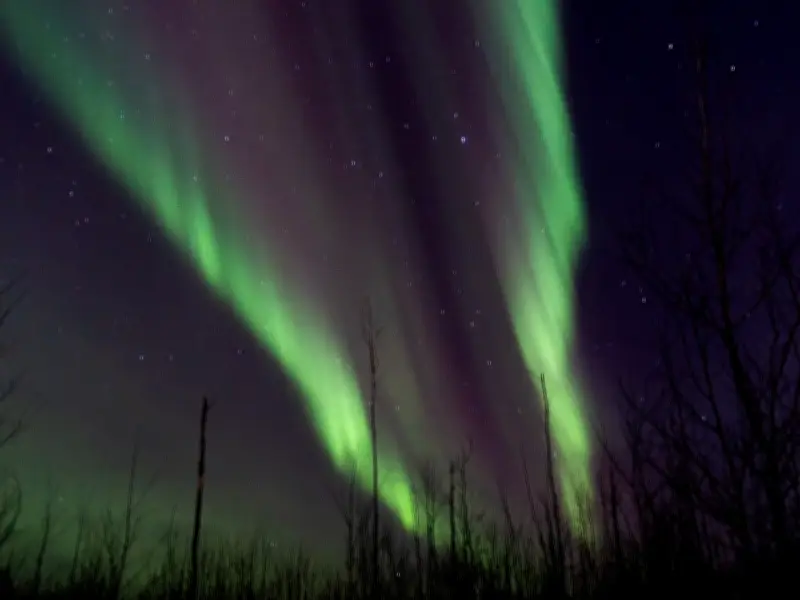
A powerful geomagnetic storm is set to illuminate the night sky across Canada, offering a rare chance to witness the northern lights from coast to coast. The National Oceanic and Atmospheric Administration (NOAA) has issued a G3 geomagnetic storm watch for Thursday and Friday, following a solar flare on Wednesday that launched three coronal mass ejections (CMEs) toward Earth.
What Is a G3 Geomagnetic Storm?
NOAA classifies G3 as a "strong" geomagnetic storm. During such events, intermittent satellite navigation and low-frequency radio navigation problems may occur, and HF radio can be intermittent. Aurora has been seen as low as Illinois and Oregon in the United States, meaning much of Canada should have excellent viewing opportunities.
When to See the Northern Lights
NOAA's current forecast predicts the CME arrival around mid-afternoon EDT on June 4. The passage would likely continue into the evening and possibly overnight on June 5. However, there is uncertainty: some models suggest arrival six to eight hours earlier, while others indicate up to eight hours later. If the CME arrives too early, much of the activity could occur before dark, reducing visibility. Late spring also brings later sunsets and fewer hours of darkness, so timing is crucial. Check the Space Weather Prediction Centre for the latest updates.

Where to Look
Strong geomagnetic storms can push auroral activity into the northern U.S., meaning the lights should be visible across much of Canada. The best viewing conditions are expected in Eastern Canada, where skies are forecast to be largely clear overnight Thursday. On the West Coast and in the Prairies, more cloud cover may limit views. For the best experience, head away from city lights and brightly lit areas. If the display appears faint, try using your smartphone camera, as it is often more sensitive to auroral light than the human eye and can reveal hidden colors and details.
Solar Activity Behind the Storm
The Sun emitted a strong solar flare on June 3, peaking at 7:28 a.m. ET, classified as X1.0. NASA's Solar Dynamics Observatory captured the event. The resulting CMEs are eruptions of plasma and magnetic fields that interfere with Earth's magnetic field, triggering the colorful aurora borealis.