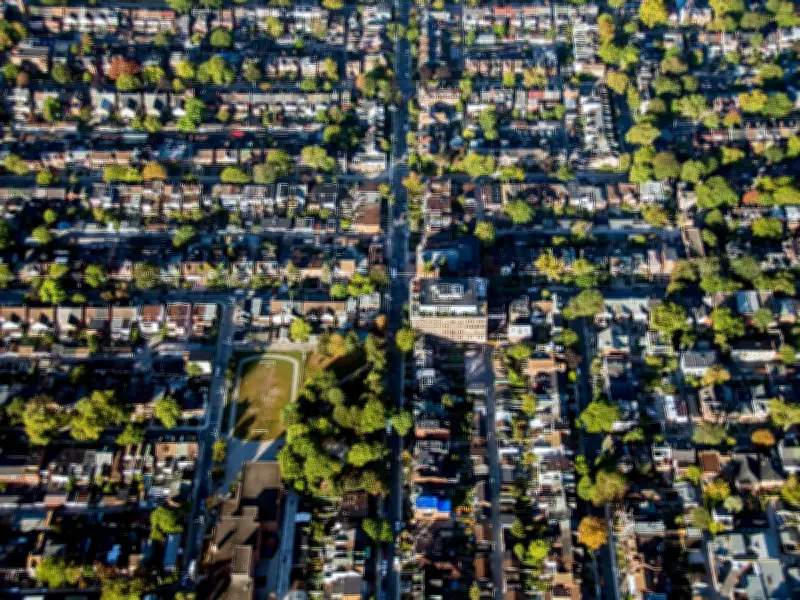
Leading up to the Bank of Canada's first rate cut in June 2024, every real estate watercooler in Canada was buzzing with talk of a looming mortgage 'renewal shock' or 'renewal cliff.' These phrases gained traction in October 2023, when RBC Capital Markets analyst Darko Mihelic estimated that roughly six in 10 bank mortgages would renew through 2026, with payments climbing as much as 48 per cent.
Mercifully, defaults refrained from spiralling, thanks to a convenient cocktail of falling rates, rising incomes, government mortgage limits, accumulated home equity (a chunk of which later evaporated) and government-pushed lender forbearance. All of this helped stabilize Canadian real estate values after a painful dip from the highs of winter 2022. In the end, almost everyone survived the 2022-23 real estate earthquake, albeit with a hit to their home equity.
But what if that quake wasn't the only one? What if it was just a foreshock to the next tremor — one that's building beneath our feet today? For the record, I'm no housing bear who likes to write drama for clicks. Nor do I enjoy being the Debbie Downer on a day when Canadian Real Estate Association (CREA) data shows that last month's average home prices just rose double the typical April move. (CREA's main price measure, the MLS Home Price Index, slipped 0.1 per cent month over month in April.)

But it's also nice to be realistic. Beyond improving affordability and pent-up demand, most of the fundamentals have looked decidedly unwell: shrinking population (mostly due to Canada's expulsion of temporary residents — who generally rent, albeit rental demand drives home values, too), well-publicized condo weakness, government supply initiatives (which, granted, have yet to produce much fruit in the owner-occupied market), stretched household debt and an oppressive cost of living, full-time employment that looks like it's topping out, surging housing completions (mostly rentals, which affect home values due to the substitution effect), and general economic uncertainty.
But all of that takes a back seat to the heavyweight cyclical driver of price moves: interest rates. Nothing flatlines housing demand faster than mortgage rates on the march. And interest rates answer to one master above all others: inflation. Most inflation metrics that matter have been pointing straight up the last two months, courtesy of Iran's chokehold on oil shipping through the Strait of Hormuz. Central bankers are hoping (praying?) that Iran will give in and let oil start flowing again soon. But after Wednesday's U.S. producer prices print landed at nearly triple the estimates, that prayer is starting to look unanswered.
Downing in doom over real estate is a fool's errand, and certainly not smart over the long run. However, ignoring the straight line from geopolitical tensions to housing markets is equally unwise. The path from Hormuz to Canadian home prices runs through inflation and interest rates, and the current data suggests a bumpy ride ahead.