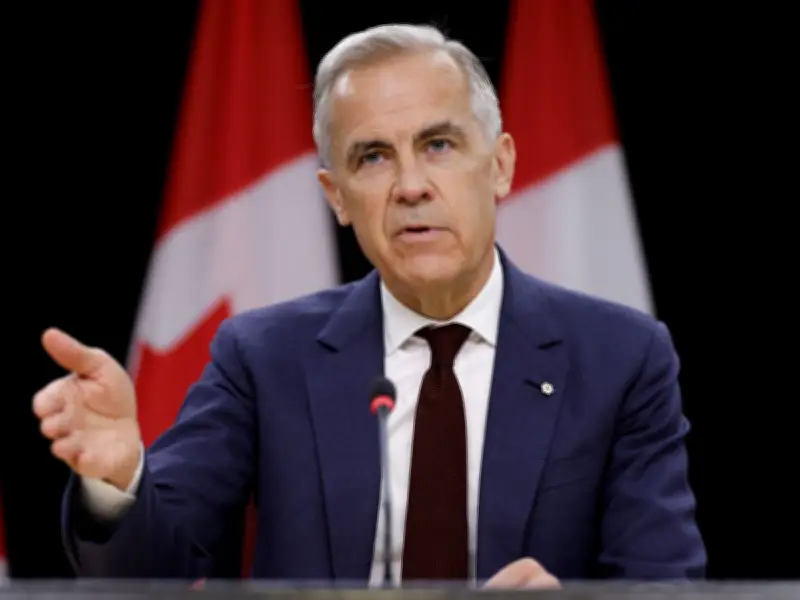
Prime Minister Mark Carney has acknowledged that Canada's greenhouse gas emissions will exceed previous projections in the coming years, marking his clearest admission yet that the country's near-term climate targets are likely unattainable under his current policies.
Carney's Energy Strategy Unveiled
In the second installment of a video series called Forward Guidance, Carney outlined his government's energy strategy, arguing Canada faces a three-part crisis: affordability pressures from global oil volatility, economic vulnerability due to heavy reliance on U.S. markets, and the mounting challenge of the climate transition.
“The climate plan we inherited from the previous government was well-intentioned and well-suited for the times in which it was designed. The climate crisis is still with us and our commitment to fighting it is absolute. The certainties of the world of 2015 are long gone,” Carney said, referring to the year Justin Trudeau was first elected prime minister.

Emissions Will Rise in Near Term
Carney made clear his government will not curb growth in the oil and gas sector to meet nearer-term emissions targets. “The changes we have made will mean that our emissions will be higher in the next few years than they were projected to be under the previous government's plan. But in my judgment, that plan was not sustainable over the long term,” he said.
He argued the previous strategy would have driven up costs for households already under strain, undercut Canada's ability to supply allies with energy, and deepened regional divisions.
2030 Target in Doubt
The comments represent Carney's strongest indication yet that Canada's target of cutting emissions 40% to 45% below 2005 levels by 2030 will be difficult to achieve under his current policies. He has previously left his commitment to the benchmark unclear while emphasizing a 2050 net-zero goal.
Public opinion appears to align with Carney's approach. A recent Nanos Research Group poll for Bloomberg News found 55% of Canadians want the government to prioritize growing oil and gas exports, compared with 35% who would prefer it meet its 2030 emissions target. The same poll showed 61% of Canadians support or somewhat support building a new pipeline to the northwest coast, even if British Columbia opposes it, up from 56% in December 2025.
Rollback of Trudeau's Climate Framework
Elected last year on a promise to turn Canada into a “superpower” in both conventional and clean energy, Carney has unwound major pieces of Trudeau's climate framework. He scrapped the consumer carbon price and agreed with Alberta to weaken the trajectory of the industrial levy.
Canada is already the world's fourth-largest oil producer, but most of its crude is sold to the U.S. at a discount. That dynamic has begun to change with the expansion of the Trans Mountain pipeline to the Pacific coast. Carney has also pledged federal support for a new pipeline through British Columbia, a proposal Alberta is expected to formally unveil this week.
“The goal remains the same, but as times have changed, we must change our plan to get there,” Carney said.