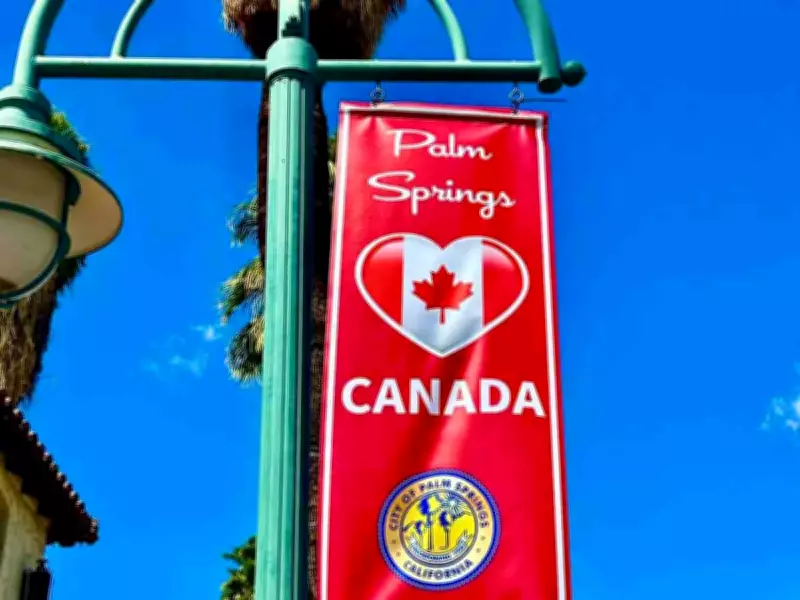
The number of Canadians returning from travelling to the United States increased for the first time since Donald Trump was elected as president, possibly hinting that people's hostility toward our neighbour could be thawing.
The number of returnees rose 1.4 per cent in April from a year ago, fuelled by a 5.8 per cent increase by car, although return air trips fell 8.1 per cent, according to Statistics Canada on Monday. It was the first time cross-border trips increased since December 2024, the agency said.
“Basically, what you’re finding is there’s a bit of an equilibrium happening,” Wayne Smith, director of the Institute for Hospitality and Tourism Research at Toronto Metropolitan University, said. “There’s only so many people who are going to boycott. You’re going to have some drop-off of the boycott over time.”

He said traffic during the long Easter weekend was one reason for the increase in April.
Still, it may still be a long time before the number of Canadians travelling to the U.S. returns to pre-Trump times, given that the number of automobile trips is still down by a third compared with two years ago.
Furthermore, the pullback in Canadian travel to the U.S. might be worse than initially thought, according to a recent University of Toronto study that tracked cellphone data. It estimated Canadian travel to major U.S. cities fell by a year-over-year median of 42 per cent.
The authors said Statistics Canada data hasn't captured the full magnitude of the pullback since it misses people who cross the border for shorter stays in fewer locations.
The U of T study dovetails with media reports of a drop in visitors to snowbird destinations such as Florida, to border states like New York, New Hampshire and Vermont and to major tourist destinations such as Las Vegas and Disney World.
“However, one of the most underreported findings is the marked decline in visits to large metropolitan economies,” authors Karen Chapple, Yihoi Jung and Jeff Allen said in the report.
Tourist and business travel has fallen in tech centres such as San Francisco and Houston, they said. The second-largest decline was recorded in Grand Rapids, Mich., likely a victim of the tariffs since the area is closely tied to Ontario's automotive industry.
But the U.S. loss is Canada’s gain.
Nearly nine in 10 Canadians plan to travel as much or more in 2026, with 92 per cent of them having one trip in Canada on the agenda while 70 per cent are avoiding the U.S., according to a new survey by the Business Development Bank of Canada (BDC).
“Domestic demand is no longer a side story,” the report said.
It said that if travelling Canadians replaced one overnight stay abroad with one in their home country, that could boost gross domestic product by $4.6 billion.
Still, people are making compromises to adjust for tighter budgets, including choosing more affordable accommodations, adjusting travel dates, travelling during the off-season and making shorter trips.