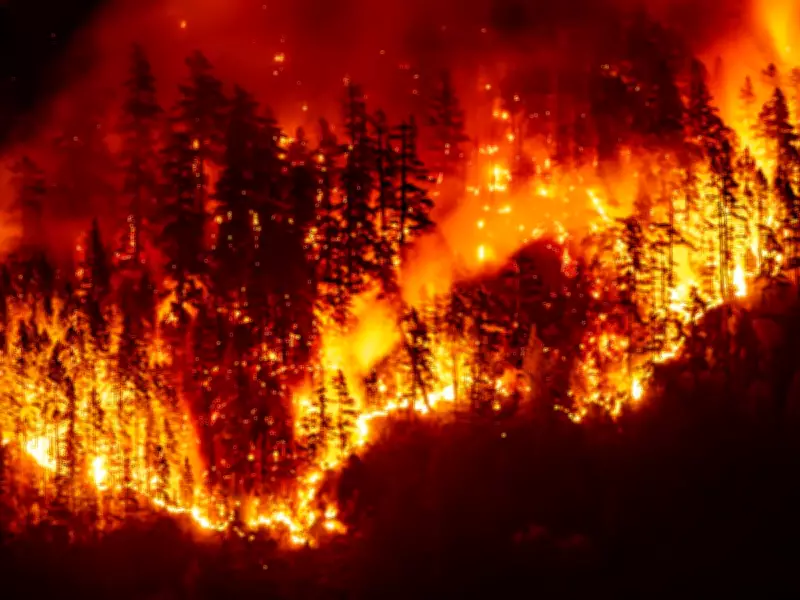
A new report from the C.D. Howe Institute warns that natural catastrophes such as wildfires, storms, and earthquakes threaten to deplete the reserves of Canada's property and casualty insurers. The report calls on the federal government to create a government-backed reinsurance scheme to protect the insurance industry and potentially lower premiums for consumers.
Current system leaves Canadians vulnerable
According to the report, many Canadians lack sufficient insurance to cover risks in their regions, such as earthquakes in British Columbia and Quebec. The current system relies on an industry-funded bailout fund, which critics say puts healthy insurers at risk and contributes to rising premiums. Limited government assistance is also blamed for leaving many Canadians uninsured or under-insured against catastrophic events.
Proposed government backstop
The report's author, Thorsten V. Koeppl, a fellow-in-residence at the C.D. Howe Institute, argues that a properly constructed government backstop would address long-standing weaknesses in Canada's insurance regime. Under his proposal, the government would use its ability to borrow more cheaply than private insurers to cover extreme risks associated with natural hazards. The government would assume industry-wide losses above certain thresholds and charge a premium reflecting the cost of backstopping the risk.

Koeppl suggests that the reinsurance scheme would build reserves over time by charging insurers premiums proportional to their underwriting. Insurers would then pass these costs on to customers through the private market. He also recommends making insurance coverage against natural hazards mandatory or default, with an opt-out only if homeowners forgo government assistance after a regional disaster. Spreading risk across the country, regardless of where events like earthquakes occur, could lead to more affordable premiums.
Benefits of the scheme
The report notes that high-risk exposure has led private insurers to charge hefty premiums or withdraw coverage altogether. A string of rare, extreme events with large losses can strain the industry's capacity to underwrite insurance, leading to higher prices, tighter coverage limits, and even withdrawal from certain perils. A government backstop would stabilize the market, expand coverage, and protect taxpayers through a mechanism to recover public funds used to backstop risk.
Koeppl emphasizes that a federal backstop for natural disaster risk is a sound economic idea and should be an essential feature of Canada's property and casualty insurance market. The report comes as climate change increases the frequency and severity of natural disasters, putting additional pressure on the insurance system.