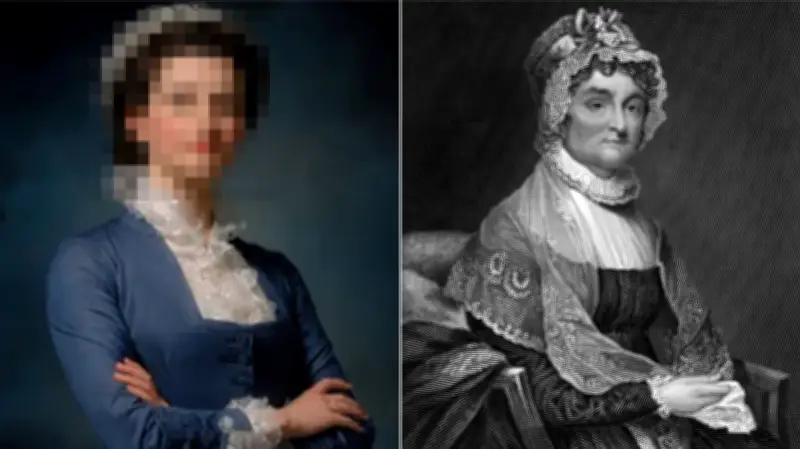
The Freedom 250 website, launched ahead of the United States' 250th birthday, features AI-generated portraits of Revolutionary War figures that historians say are rife with inaccuracies. The images, posted on the site's history page, depict figures in nearly identical blue garb with strikingly similar faces, deviating from surviving historical portraits.
AI Beautification Sparks Criticism
Users on social media quickly flagged the portrayal of Abigail Adams. Laura Maria Motta wrote on X, "This is not Abigail Adams. This is an AI generated image that looks nothing like the portraits of her that exist and were painted from life." Another user, @OlympicChenpion, remarked, "OMG they yassified her," referencing excessive beauty filters.
Kari Winter, professor of global gender and sexuality studies at the University at Buffalo, told HuffPost that the women's faces are "obvious products of AI created for purposes of beautification rather than information," reinforcing a misogynistic ideology that women's value is defined by cookie-cutter beauty. She also noted that the men's faces are interchangeable, as if "real historical people in their gritty specificity do not matter."

Historical Inaccuracies and Misinformation
The portraits suggest that everyone in the Revolutionary Age dressed in blue with white frills, an odd notion that imposes conformity and implies all founders were wealthy gentry, Winter added. Isabelle Roughol, host of the podcast Broad History, told HuffPost that the images demonstrate why she avoids AI portraiture, as AI datasets are trained on modern images, leading to anachronistic clothing—some costumes resembling the Gilded Age rather than the 18th century.
Roughol emphasized that the site presents these images as scholarly and accurate, which is particularly troubling. She noted that while historical entertainment like Bridgerton is understood as fiction, Freedom 250 claims authenticity, potentially spreading misinformation about marginalized groups, especially women, who have historically been sidelined in war narratives.
Expert Recommendations for Accurate History
Winter called the portraits "an outrageous travesty of history" and a logical outgrowth of a post-truth administration. She urged readers to turn to real historical sources, recommending Ken Burns's PBS series "The American Revolution" (2026) and several books: Amanda Vaill's "Pride and Pleasure," Carol Berkin's "Revolutionary Mothers," Russell Shorto's "Revolution Song," Stacy Schiff's "The Revolutionary," Annette Gordon-Reed's "The Hemingses of Monticello," and David Waldstreicher's "The Odyssey of Phillis Wheatley."
Roughol suggested that reframing history to ask "who are we forgetting?" can help resurface women's roles, such as leading boycotts of tea and linens during the revolution. She concluded, "We just do not need these images to exist to engage with this part of history in an exciting, visual way."