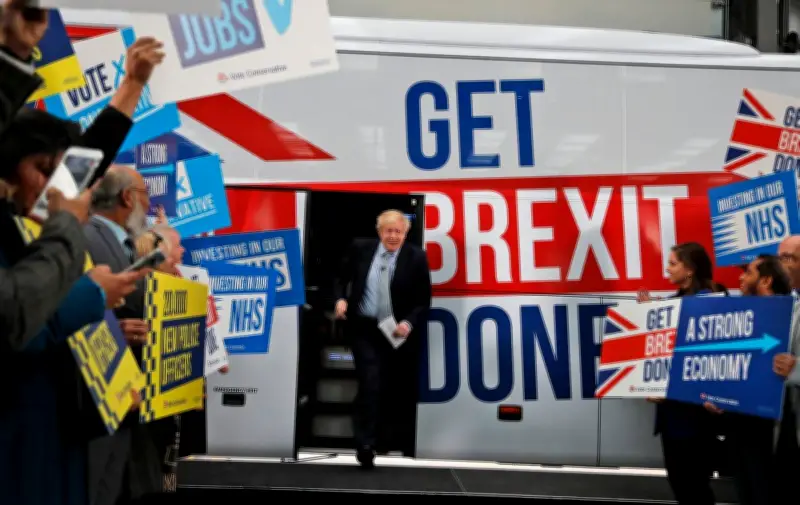
A decade after the historic referendum, Brexit continues to deeply divide Britain and cast a long shadow over its economy, according to a comprehensive review by The Associated Press. The decision to leave the European Union, finalized in 2020, has led to persistent trade friction, labor market disruptions, and political polarization that show no signs of abating.
Economic Drag and Trade Barriers
The economic impact has been stark. The UK's gross domestic product is estimated to be 5% to 6% smaller than it would have been had it remained in the EU, according to a 2025 report from the London School of Economics. New customs checks and regulatory divergence have added an average of 3% to the cost of goods traded with the EU, Britain's largest trading partner. Exports of food and live animals to the EU fell by 46% in the first year after the post-Brexit trade deal took effect.
Small businesses have been hit particularly hard. A survey by the Federation of Small Businesses in 2025 found that 62% of exporters reported increased paperwork costs, and 28% had stopped selling to the EU entirely. “The bureaucratic burden is suffocating for small firms,” said Tina McKenzie, policy chair at the FSB. “Many have simply given up on European markets.”

Labor Shortages and Political Fallout
Ending free movement of labor has exacerbated shortages in key sectors. The number of EU-born workers in the UK fell by 1.2 million between 2019 and 2025, according to the Office for National Statistics. Agriculture, hospitality, and healthcare have been most affected. In 2025, the National Farmers Union reported that 40% of fruit and vegetable growers had to leave crops unharvested due to a lack of seasonal workers.
Politically, Brexit remains a fault line. The ruling Conservative Party has been fractured, with successive leaders struggling to manage the fallout. The opposition Labour Party, which initially backed a second referendum, now avoids the issue, fearing voter backlash. “Brexit is the ghost that never leaves the room,” said Professor Anand Menon, director of UK in a Changing Europe. “It has reshaped party politics and eroded trust in institutions.”
Divisions Persist Among Public
Public opinion remains sharply divided. A 2026 poll by YouGov found that 42% of Britons think leaving the EU was a mistake, while 38% say it was the right decision. The rest are unsure. The divide is generational: 60% of those under 35 think Brexit was wrong, compared to 30% of those over 65. Geographically, London and Scotland lean strongly pro-EU, while many rural and post-industrial areas in England remain pro-Brexit. “The referendum didn't settle anything; it just changed the terms of the argument,” noted Sir John Curtice, a leading political analyst.
Looking Ahead
As the 10th anniversary passes, there is little consensus on the way forward. Some business groups and opposition MPs advocate for a closer relationship with the EU, including rejoining the single market. However, the current government has ruled out any return to EU institutions. “We have left the EU, and we are not going back,” a government spokesperson stated. Meanwhile, the European Union has moved on, focusing on other priorities. The UK's role on the world stage has also shifted, with new trade deals signed with Australia and New Zealand, but the economic gains from these have been modest compared to the losses from leaving the EU.