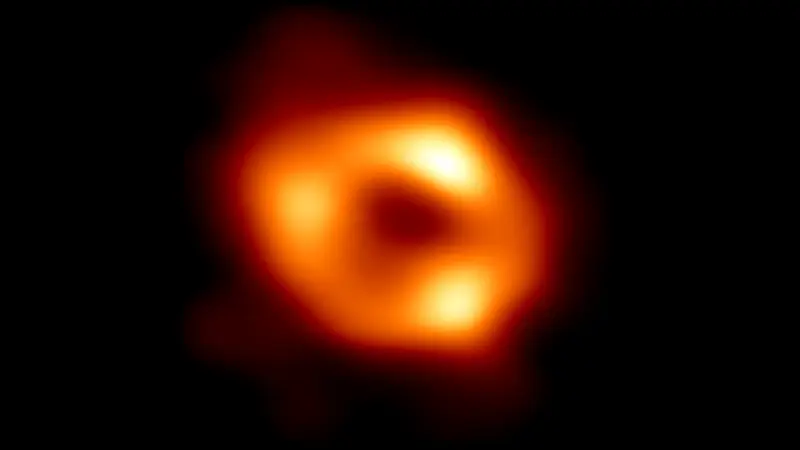
Astronomers have made a groundbreaking discovery: a wind blowing from Sagittarius A*, the supermassive black hole at the center of our Milky Way galaxy. This finding, based on observations from the Event Horizon Telescope and other instruments, reveals that even relatively quiet black holes can drive powerful outflows of gas and dust.
What Is the Galactic Wind?
The wind is a stream of charged particles and gas ejected from the vicinity of the black hole. While supermassive black holes are often associated with violent jets and intense radiation, Sagittarius A* is relatively dim. However, this discovery shows that it still has a significant impact on its surroundings.
How Was It Detected?
Using data from the Atacama Large Millimeter/submillimeter Array (ALMA) and other observatories, scientists traced the movement of gas clouds near the black hole. They found evidence of a high-speed outflow, moving at millions of kilometers per hour, originating from the accretion disk around Sagittarius A*.

Implications for Galaxy Evolution
This wind could help explain how black holes regulate star formation in galaxies. By pushing gas away, the wind can shut down the birth of new stars, affecting the galaxy's growth over time. The discovery also challenges assumptions about the activity of supermassive black holes in spiral galaxies like the Milky Way.
Future Research
Further observations with next-generation telescopes, such as the James Webb Space Telescope and future X-ray observatories, will help astronomers understand the full dynamics of this wind and its role in shaping our galaxy.