Smoke from Northern Wildfires Drifts into Edmonton
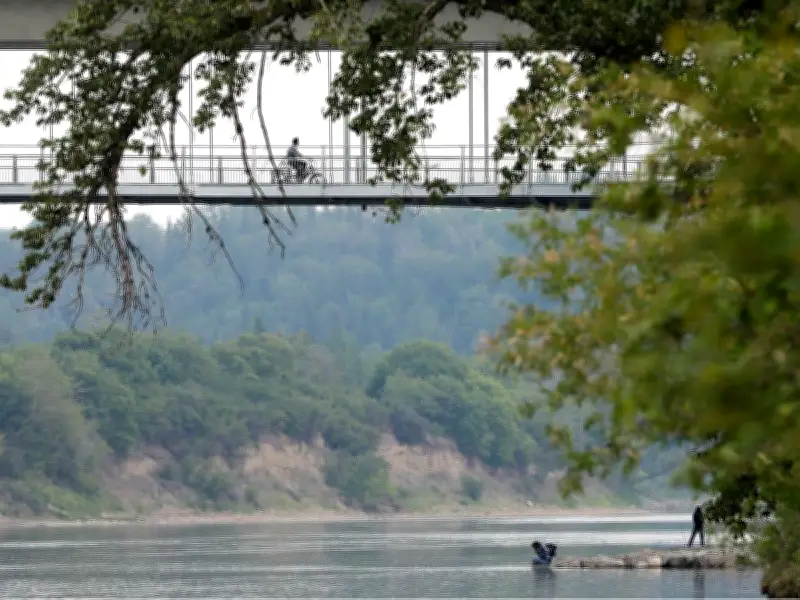
Many Edmontonians woke up Monday morning to a stoppage in the already June record rainfall, but when they looked outside, they likely saw a haze of smoke in the air. Wildfires from northern Saskatchewan and Manitoba have resulted in heavy smoke filtering into the region, and it’s expected to last a few days.
Meteorologist Explains Smoke Source
“The extreme northern portion of Saskatchewan and Manitoba have been exceptionally dry, and it’s quite warm as well up in those areas… even into the southern portion of the Northwest Territories,” said Brian Proctor, meteorologist with Environment Canada, in a phone call with Postmedia on Monday morning. “It’s got some really significant wildfire activity occurring in northeast Saskatchewan and northern Manitoba, and we’re not seeing any relief from that for a while.”
Monday’s Forecast and Air Quality
Monday’s forecast calls for a mix of sun and cloud and a high of 27 C. There’s a 30 per cent chance of showers and wind gusts of up to 40 km/h are expected. Thunderstorms could be in store Monday evening, and local smoke could turn into fog patches overnight. Air quality in the northeast area of the province is in the moderate-to-high-risk range, but Proctor said Edmonton’s air quality is forecast for low to moderate risk on Monday. “I don’t think we’ll be heavily impacted by it, but it will problematic for people with respiratory issues,” said Proctor.

Record June Rainfall Broken
Over the weekend, Edmonton broke a 112-year record for June rainfall. The previous record was set in 1914 with 216.5 mm of rainfall, and currently the city has endured 265 mm of rain. The all-time record for rainfall in a single month in Edmonton was when 282 mm fell in July, 1901. Over the next two days, there’s a 30 per cent chance of scattered showers.
Uncertainty in Precipitation Forecast
“In general terms our forecast over the next couple of days is such, it’s kind of in the middle of whether we’re going to achieve it or not to be perfectly honest. Whether or not the precipitation we get is sufficient or widespread enough to hit our stations remains to be seen,” said Proctor. “One of problems with these kind of weather events is we tend to get some embedded convection into the rain shield so other areas receive more precipitation than what we’re reporting at some of our stations.”
Warmer Temperatures Ahead of Canada Day
Proctor said the Edmonton region will be warmer than normal on Monday and Tuesday, as Canada Day approaches, but as July begins, more unsettled patterns of weather are expected. “Over the next couple days, we’re actually warmer than normal. We’ll be reaching 26 C or 27 C, and our normal highs are around 22 C… but we may not see it start to really warm up until further into July,” said Proctor.
Climate Change Driving Weather Volatility
In recent years, Albertans have experienced increasingly volatile weather, with extreme cold in winter and a growing number of summer heat waves, droughts and heavy rainfall events. Proctor says climate models suggest these kinds of swings are becoming more common as the climate changes. “One of the things I would say when we look at some of our climate change is our modelling associated with climate change. There’s a clear signature coming out of the models,” said Proctor. “We’re seeing high variability in the models and output, so high variability in terms of climate events or storm events. So more big rainfalls, more drought events, more heat and cold events is what we seem to be experiencing over the last few years.”