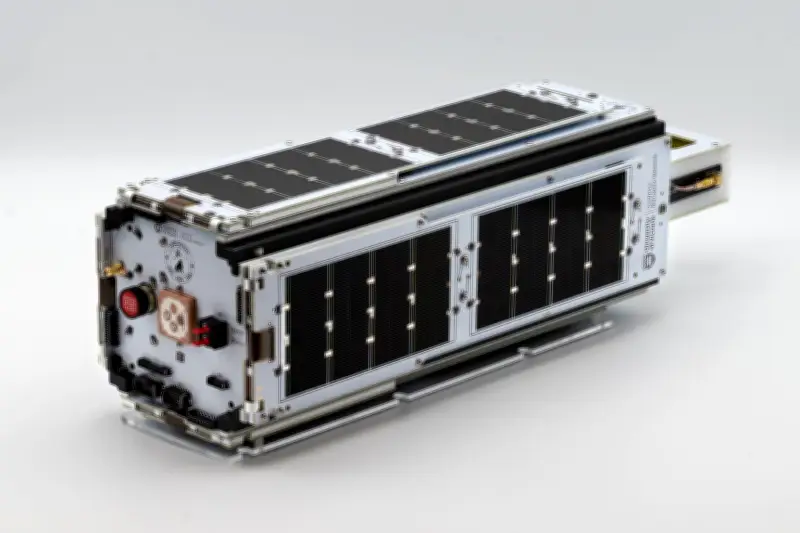
A satellite designed at the University of Victoria is set to launch into orbit aboard a SpaceX rocket from California. The CubeSat, named MARMOTSat, will study the ionosphere while also sharing a satellite radio system with users around the world.
CubeSat Mission Details
MARMOTSat is a small satellite, measuring just 10 centimeters on each side, built by a team of students and researchers at the University of Victoria. Its primary mission is to investigate the ionosphere, the layer of Earth's upper atmosphere that is ionized by solar radiation. Understanding the ionosphere is crucial for improving radio communications and GPS accuracy.
The satellite will also host an open-source radio system that allows amateur radio operators globally to experiment with satellite communications. This initiative aims to democratize access to space technology and foster international collaboration.

Launch and Deployment
The satellite will be launched as part of a rideshare mission aboard a SpaceX Falcon 9 rocket from Vandenberg Space Force Base in California. The launch is scheduled for later this month, pending final approvals. Once in orbit, MARMOTSat will deploy from the rocket and begin its data collection operations.
According to Dr. Alexander Doknjas, the project lead at the University of Victoria, “MARMOTSat represents a significant step forward in our ability to study the ionosphere while also engaging the global community of radio enthusiasts. We are excited to see it reach orbit.”
Scientific and Educational Impact
The data gathered by MARMOTSat will help scientists better understand space weather and its effects on Earth. The ionosphere can disrupt satellite communications and navigation systems, so improved monitoring can lead to better predictions and mitigation strategies.
The educational component of the project is also notable. Students involved in designing, building, and testing the satellite have gained hands-on experience in aerospace engineering and project management. The open-source radio system encourages learning and innovation among amateur radio operators worldwide.
This launch marks another milestone for British Columbia's growing space sector, which includes companies and research institutions working on small satellites and space technologies.